
The 109-Day Wonder: When Bihar's Harihar Singh Led a Cabinet Without Portfolios
- Date & Time:
- |
- Views: 40
- |
- From: India News Bull
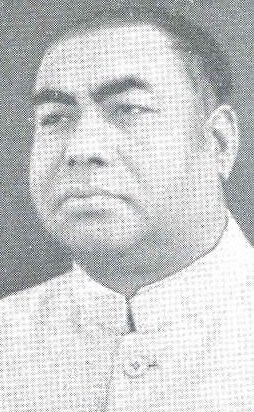
Harihar Singh was sworn in as Bihar's ninth chief minister on February 26, 1969.
New Delhi:
As Bihar prepares for another crucial election, its political history reveals the enduring unpredictability of the state's power dynamics. Over fifty years ago, Harihar Singh became chief minister during a period of political turmoil and resigned before he could even allocate portfolios to his cabinet ministers.
By mid-1968, Bihar was experiencing severe political instability. When Bhola Paswan Shastri stepped down as chief minister on June 29, the state fell under President's Rule for 242 days. Despite seven months of negotiations, no political party could secure a majority.
Elections were eventually conducted in February 1969, but the results only intensified the political fragmentation.
The once-powerful Congress party managed just 118 seats in the 318-member Assembly. Other parties secured varying representation: the Samyukta Socialist Party (SSP) claimed 52 seats, the Bharatiya Jana Sangh (BJS) won 34, the Communist Party of India (CPI) captured 25, the Praja Socialist Party (PSP) secured 18, and Raja Kamakhya Narain Singh's Janata Party obtained 14 seats.
This election produced one of the most divided political landscapes in Bihar's history.
The Congress party in Bihar suffered from deep internal divisions. Factions had formed around several leaders including KB Sahay, Mahesh Prasad Sinha, and Satyendra Narain Sinha. Additionally, OBC leader Ram Lakhan Singh Yadav, who was denied a party ticket, contributed to the internal discord. Numerous MLAs also supported former Chief Minister Binodanand Jha, who had established the Loktantrik Congress Dal.
Nationally, the Congress party was approaching a split between the established Congress (O) and Indira Gandhi's faction, Congress (R).
In early 1969, Bihar's Congress leadership was determined to avoid repeating the 1967 scenario when they lost power to a non-Congress coalition. They formed an alliance with the Shoshit Dal, Raja Kamakhya Narain Singh's Janata Party, the Swatantra Party, and several independent legislators. Harihar Singh, a Rajput MLA from Buxar, was selected to lead this precarious coalition.
Harihar Singh began his political journey with the Congress party, winning from Dumraon in 1952. After being denied a ticket in 1957, he contested as an independent candidate but lost. Later joining the Swatantra Party, he unsuccessfully contested from Rajauli in 1962. Between 1960 and 1966, he served in the Legislative Council. In 1967, he reclaimed Dumraon as an independent candidate and subsequently rejoined the Congress before the 1969 midterm elections.
A Bhojpuri poet and close associate of BP Mandal, Singh had previously served as agriculture minister in Mandal's cabinet after helping topple Mahamaya Prasad Sinha's government.
Harihar Singh was sworn in as Bihar's ninth chief minister on February 26, 1969, ending 242 days of President's Rule. His administration began with significant challenges. A faction led by Daroga Prasad Rai opposed the coalition and specifically objected to including Raja Kamakhya Narain Singh of Ramgarh, who faced legal complications.
Due to these disputes, no ministers were sworn in alongside Singh. The first group of ministers took their oaths on March 7, 1969, including Kamakhya Narain Singh and his brother. Rai boycotted the ceremony, accusing Singh of breaking promises. The dispute escalated to the Congress Working Committee, where senior leaders disagreed over Kamakhya Narain Singh's inclusion. Under mounting pressure, Kamakhya Narain Singh resigned on March 28, and his mother, Shashank Manjari Devi, replaced him in April. She became the only female member of the cabinet.
Harihar Singh expanded his ministry to include 33 members, representing the Congress, Janata, Jharkhand, Hul Jharkhand, and Shoshit Dal parties. While upper castes dominated the cabinet, it included representation from backward classes, Scheduled Castes, Scheduled Tribes, and Muslim communities. Several ministers were sworn in but never received their portfolio assignments before the government collapsed.
Just four months after taking office, Harihar Singh's coalition government fell apart. On June 20, 1969, his administration lost a crucial vote on animal husbandry department grants, defeated by a margin of 164 to 143.
Multiple ministers defected or abstained from voting, leaving Singh with no alternative but to resign immediately. His cabinet remained incomplete, with numerous ministers still awaiting portfolio assignments.
Shortly afterward, the Congress party split nationally into Congress (O) and Congress (R), reflecting the political chaos already evident in Bihar.
Harihar Singh passed away in March 1994. His political legacy continued through his sons, Amrendra Pratap Singh, who served as a minister in Nitish Kumar's cabinet, and Mrigendra Pratap Singh, a former MLA and minister in Jharkhand.
Source: https://www.ndtv.com/india-news/assembly-elections-2025-when-bihar-had-a-chief-minister-without-a-functioning-cabinet-9566750