
Supreme Court Orders CAQM to Detail Delhi-NCR's Air Pollution Prevention Measures After Diwali Monitoring Failure
- Date & Time:
- |
- Views: 49
- |
- From: India News Bull
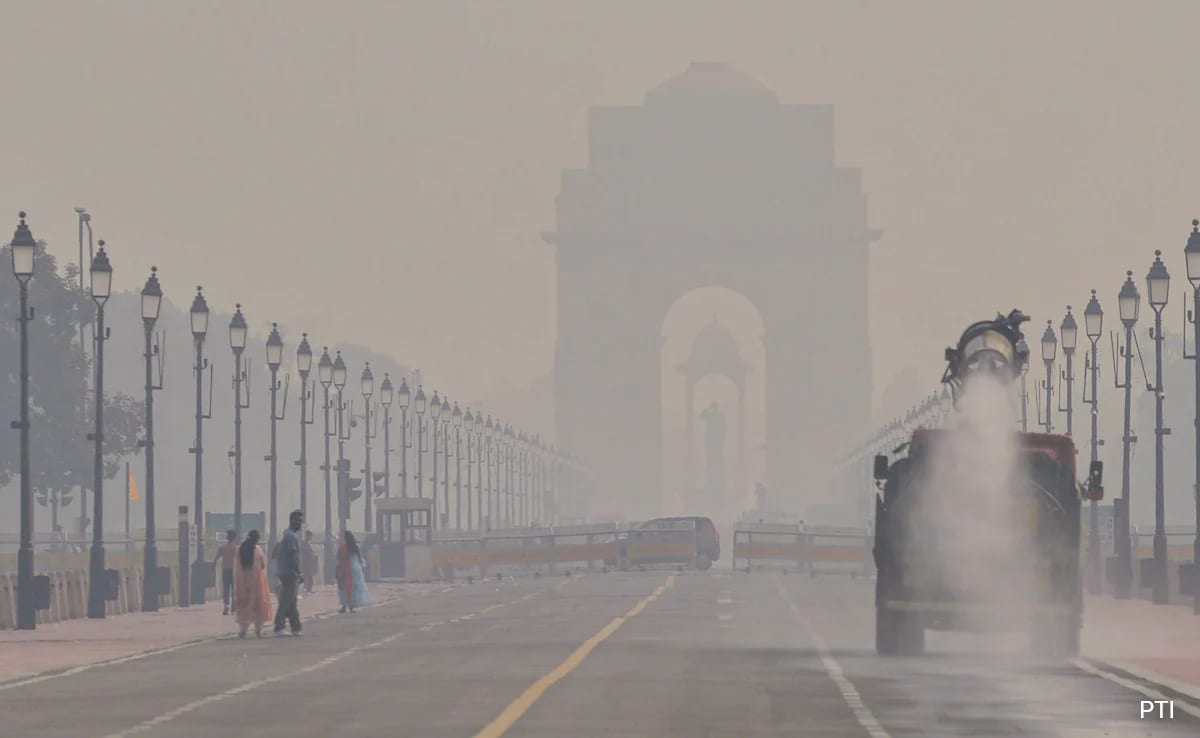
The Supreme Court requested the Commission for Air Quality Management (CAQM) to submit an affidavit outlining measures taken to prevent air quality deterioration in Delhi-NCR after learning that numerous air monitoring stations were reportedly non-operational during Diwali.
New Delhi:
On Monday, the Supreme Court directed the Commission for Air Quality Management (CAQM) to file an affidavit specifying actions undertaken to prevent deterioration of Delhi-NCR's air quality, following reports that many air monitoring stations remained non-functional during Diwali celebrations.
Chief Justice of India (CJI) B.R. Gavai and Justice K. Vinod Chandran were presiding over a Public Interest Litigation (PIL) concerning air pollution control in the national Capital and surrounding NCR region.
Senior advocate Aparajita Singh, serving as amicus curiae in the case, highlighted media reports indicating that only nine out of 37 air quality monitoring systems in Delhi were operational during Diwali.
"The CAQM needs to provide a report on the current air pollution status. During Diwali, only 9 out of 37 monitoring systems in Delhi were functioning," Singh informed the Bench led by CJI Gavai.
The amicus curiae emphasized that previous Supreme Court directives specifically required authorities to implement pre-emptive measures rather than waiting until air quality reached severe levels.
After hearing the submission, the apex court ordered: "The CAQM is required to place on record an affidavit detailing what steps are proposed to be taken to prevent pollution from becoming severe."
The Court also requested clarification regarding the operational status of air quality monitoring systems, following media reports highlighting widespread malfunctioning of these stations.
The CAQM's counsel informed the Bench led by CJI Gavai that a report had already been submitted on the previous hearing date but could not be addressed due to time constraints.
However, the amicus suggested filing a fresh affidavit addressing both the malfunctioning monitoring systems and planned measures in light of the worsening air quality situation.
Representing the authorities, Additional Solicitor General (ASG) Aishwarya Bhatti assured the Supreme Court that the required report would be submitted by the relevant authorities, including the Central Pollution Control Board (CPCB), which maintains the monitoring data.
This development occurred shortly after the Supreme Court, while permitting limited sale and use of green crackers in Delhi-NCR during Diwali, had cautioned that "commercial considerations and the festive spirit should take a back seat when it concerns the environment and health."
In its October 15 order, the Bench led by CJI Gavai had allowed the sale of NEERI-approved crackers from October 18 to 20, limiting their use to specific hours.
The Supreme Court had clarified that this relaxation was "only on a test case basis," subject to post-Diwali air quality data.
To ensure compliance, the apex court established a detailed enforcement mechanism: only licensed traders could sell approved products bearing NEERI-issued QR codes, while district administrations and police were assigned to form patrolling teams to prevent prohibited crackers from being sold.
The Court had also instructed the CPCB and State Pollution Control Boards to monitor air, water, and soil quality from October 14 to 25 and submit a report to the Supreme Court.
Source: https://www.ndtv.com/india-news/supreme-court-seeks-affidavit-detailing-delhi-ncrs-pollution-curb-measures-9568871