
Shashi Tharoor Calls for End to Dynasty Politics in India: "Time to Trade Dynasty for Meritocracy"
- Date & Time:
- |
- Views: 59
- |
- From: India News Bull
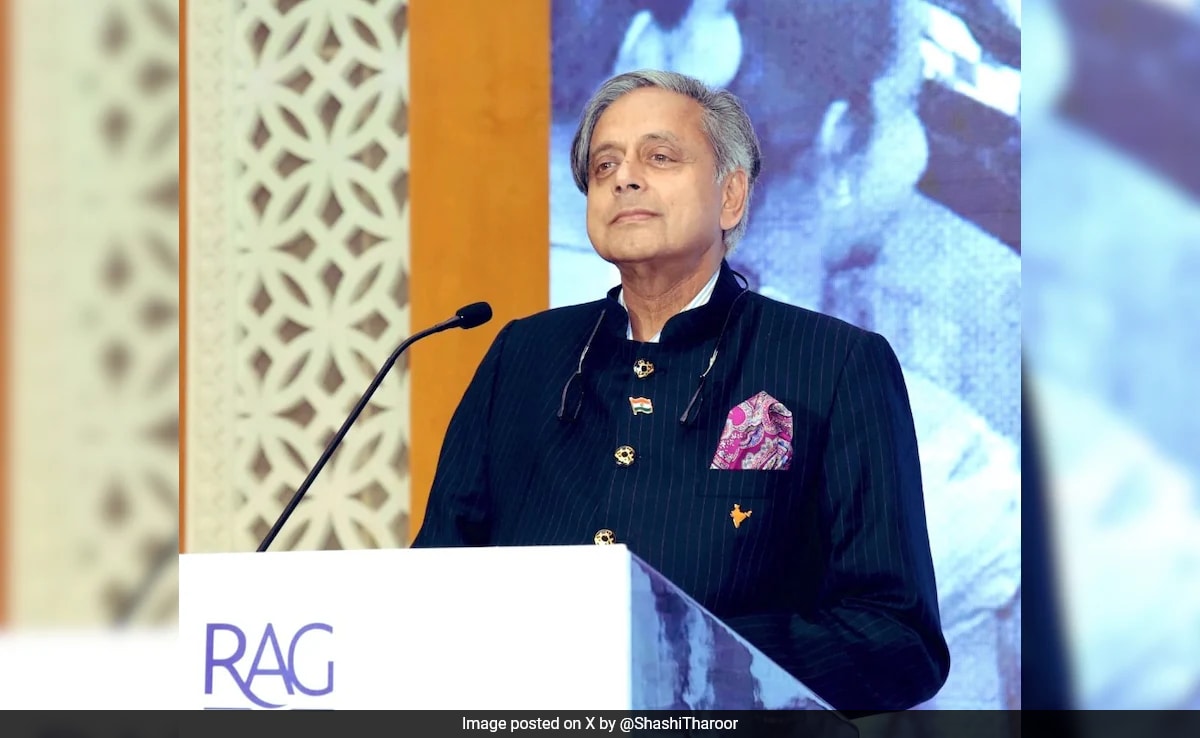
The full promise of democracy - government of the people, by the people, for the people - remains unrealized as long as Indian politics continues to function as a family enterprise, according to Congress MP Shashi Tharoor.
Tharoor, who previously made an unsuccessful bid for the Congress party's top position, emphasized the urgent need for India to exchange dynasty-based politics for meritocracy, calling for essential reforms in the political system.
"It is high time India traded dynasty for meritocracy. This would require fundamental reforms, from imposing legally mandated term limits to requiring meaningful internal party elections, together with a concerted effort to educate and empower the electorate to choose leaders based on merit," stated Tharoor.
This statement joins several recent comments that have created discomfort within the Congress leadership and upset many of his colleagues, particularly as the ruling BJP continues its criticism of the Gandhi family.
The Thiruvananthapuram MP, who served as a minister in the UPA government, described dynastic politics across India's political spectrum as a "grave threat" to the country's democratic foundations.
"When political power is determined by lineage rather than ability, commitment or grassroots engagement, the quality of governance suffers. Drawing from a smaller talent pool is never advantageous, but it is especially problematic when candidates' main qualification is their surname," he explained.
The BJP seized this opportunity to criticize Congress, suggesting Tharoor's article reveals his "disappointment with Rahul Gandhi."
"Shashi Tharoor's comment on the demerits of dynastic succession bereft of competence is an expression of his disappointment with Rahul Gandhi, whose leadership is having a deleterious effect on the fortunes of the Congress party and hastening its demise. Except for the BJP and, to some extent, the Communists, there is no semblance of internal democracy or merit triumphing over lineage in other parties. The regional parties, much like the Congress, share equal blame for failing to recognise leadership outside dynastic succession," remarked BJP's Amit Malviya.
Congress MP Udit Raj countered by noting that "dynastic influence" extends beyond politics, permeating every sector in India.
"A dynastic approach exists in almost every sector in India, a doctor's son becomes a doctor, a businessman's child continues in business, and politics is no exception... From Nehru to Pawar, DMK to Mamata... there are many such examples... The loss is that opportunities remain confined to families alone. Dynastic influence is not limited to politics. It extends to the bureaucracy, judiciary, and even the film industry," stated Congress MP Udit Raj.
In his article for Project Syndicate titled 'Indian Politics Are a Family Business,' Tharoor highlighted that while the Nehru-Gandhi family is commonly associated with dynastic politics in Congress, the practice of dynastic succession prevails across India's entire political landscape.
Tharoor cited numerous examples of political dynasties throughout India. In Odisha, following Biju Patnaik's death, his son Naveen won his father's seat in the Lok Sabha. The Maharashtra-based Shiv Sena saw founder Bal Thackeray pass leadership to his son Uddhav, with Uddhav's son Aditya positioned as the next in line.
"The same goes for Samajwadi Party founder Mulayam Singh Yadav, a former chief minister of Uttar Pradesh, whose son Akhilesh Yadav later served in the same post; Akhilesh is now an MP and the president of the party. In Bihar state, the leader of the Lok Janshakti Party, Ram Vilas Paswan, was succeeded by his son Chirag Paswan," Tharoor noted.
He continued with examples from other states: "In Punjab, the Shiromani Akali Dal, long commanded by Parkash Singh Badal, has been taken over by his son Sukhbir. Telangana is currently witnessing a battle for succession between the son and the daughter of the Bharat Rashtra Samithi's founder, K Chandrasekhara Rao. In Tamil Nadu, the late M Karunanidhi's family controls the ruling Dravida Munnetra Kazhagam party, with his son M K Stalin now serving as chief minister and his grandson anointed as heir apparent."
Beyond India's heartland, Tharoor pointed out that Jammu and Kashmir has been governed by three generations of the Abdullah family, while the main opposition party is dominated by two generations of Muftis.
The Thiruvananthapuram MP argued that this phenomenon isn't limited to a few prominent families but is deeply embedded in Indian governance structures, from village councils to the highest parliamentary levels. He also observed similar patterns across the Indian subcontinent.
"To be fair, such dynastic politics are practised across the Indian subcontinent," he stated, referencing the Bhuttos and Sharifs in Pakistan, the Sheikh and Zia families in Bangladesh, and the Bandaranaikes and Rajapaksas in Sri Lanka.
"But they appear particularly incongruous with India's vibrant democracy. Why then has India embraced the dynastic model so fully? One reason might be that a family can serve effectively as a brand: candidates with built-in name recognition do not have to work as hard to attract voters' attention or build their trust. If voters accepted a candidate's father, aunt or sibling, they would probably accept the candidate -- no credibility-building required," Tharoor explained in his October 31 article.
Tharoor concluded by arguing that members of political dynasties, often insulated from challenges faced by ordinary citizens, are typically ill-equipped to effectively respond to their constituents' genuine needs.
Source: https://www.ndtv.com/india-news/high-time-india-traded-dynasty-for-meritocracy-shashi-tharoor-9567366