
Bihar Assembly Election 2023: Key Factors Shaping The Political Landscape
- Date & Time:
- |
- Views: 49
- |
- From: India News Bull
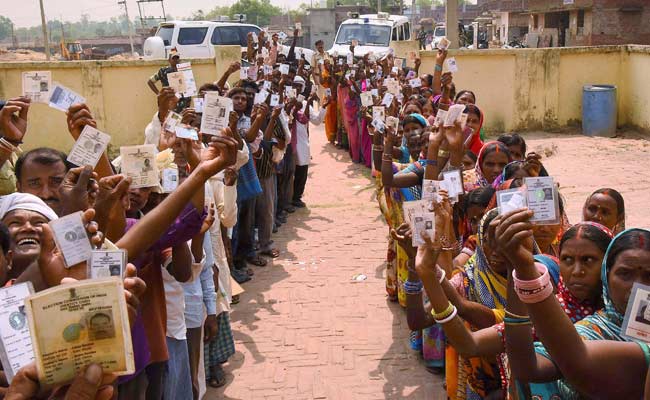
The people of Bihar will vote in two phases in the assembly election
New Delhi:
In Bihar's diverse political landscape, this year's assembly election represents a pivotal moment where multiple factors intersect, each competing for significance and impacting millions of lives.
Examining the complex dynamics reveals an interplay of unemployment, outmigration, caste identity, religious demographics, and gender politics. Each element of this multifaceted narrative shapes voter aspirations and defines potential strategies for the major political contenders.
Unemployment: The Persistent Challenge
Central to this electoral narrative is unemployment, a pressing reality in a state where over 50% of the population is under 40. Bihar's median age of 22 stands as India's lowest, compared to the national average of 28. Tejashwi Yadav, the 35-year-old RJD leader, presents himself as a symbol of hope, promising government employment for every household. This commitment resonates deeply with voters who have experienced economic stagnation and could gain significant traction. For Bihar's youth, the promise of stable employment represents not just a political pledge but essential hope amid uncertainty.
However, significant obstacles accompany this promise. Questions arise about how Tejashwi will fulfill his commitment of creating over 1.25 crore jobs within five years if elected. How will such an enormous expenditure be financed?
The Central NDA government would likely provide less support to a Mahagathbandhan state government than it has to Nitish Kumar's NDA administration. The bureaucratic challenges inherent in government job creation remain formidable. If Yadav successfully channels the youth's frustration, he could mobilize support transcending traditional political divisions. Conversely, failing to deliver could undermine trust and provide ammunition to opponents, particularly Nitish Kumar, who has cultivated an image as a pragmatic leader.
Outmigration: Seeking Better Prospects
Outmigration adds another dimension to this electoral equation. Millions of Bihari youth have traveled across India and internationally seeking better opportunities, primarily pursuing blue-collar employment. This exodus represents more than economic statistics; it signifies profound emotional, intellectual, and cultural losses for the state. Families are separated and communities diminished, all for basic survival.
This narrative could significantly influence voter sentiment. For Tejashwi Yadav and Prashant Kishor, addressing outmigrant concerns could establish a meaningful connection with voters, especially if they effectively communicate a vision for a Bihar rich with opportunities. Conversely, Nitish Kumar's governance may face scrutiny through the lens of this outmigration crisis, with voters questioning why young people feel compelled to leave their homeland for livelihood opportunities.
Caste: The Enduring Framework
Caste dynamics remain an integral element of Bihar's political structure. The 2023 caste survey conducted by Nitish Kumar's government provides new data for parties to formulate strategies. The precise mapping of caste populations and their economic positions could serve as a powerful tool for seat allocation and campaign planning. The Mahagathbandhan, comprising RJD and Congress, may benefit from a coalition of castes perceiving themselves as marginalized.
However, this approach carries risks. While some castes may support parties promising representation, others might feel alienated, leading to vote fragmentation. The potential for caste-based voting to favor certain parties while undermining others introduces unpredictability into the electoral equation.
The Muslim Vote: Diversifying Allegiances
With Muslims constituting approximately 18% of Bihar's population, their vote significantly impacts electoral outcomes. The Mahagathbandhan is positioned to secure most of this demographic, given its historical alignment with secular parties. However, emerging voices like Asaduddin Owaisi's AIMIM and Prashant Kishor's Jan Suraaj Party indicate diversifying interests within the Muslim community. JD(U)'s appeals to Pasmanda Muslim voters further complicates the landscape, creating varied allegiances that may not align neatly with traditional voting patterns. If Muslims remain unified with the Mahagathbandhan, it benefits Tejashwi Yadav. A divided Muslim vote would advantage the NDA.
Prohibition: A Gender Advantage
Nitish Kumar's prohibition policy has garnered substantial women's support, providing him a notable gender advantage over Tejashwi Yadav. This shift in voter sentiment, rooted in welfare initiatives accompanying prohibition, could become central to the chief minister's electoral strategy. Women, increasingly a powerful electoral force, may view Kumar as a champion of their interests, strengthening his support base.
However, this advantage isn't insurmountable for Yadav. If he articulates a compelling narrative that extends beyond prohibition—addressing broader issues of safety, employment, and empowerment—he might attract women voters feeling unrepresented or disillusioned with current leadership.
The Interplay of Factors
As election day approaches, the interaction of these factors—unemployment, outmigration, caste, religious demographics, and gender politics—will shape the electoral landscape in profound ways. Each party must navigate this complex web of aspirations and grievances, developing strategies that deeply resonate with voters.
Conclusion: Vision of Hope Will Triumph
In this critical moment of choice, the party that best articulates a vision of hope and opportunity while addressing Bihar's multifaceted challenges stands to emerge victorious. The stakes are high, the electorate young and eager for change, and Bihar's future hangs in the balance, poised at the threshold of possibility.
Source: https://www.ndtv.com/india-news/a-crucible-of-choice-navigating-the-bihar-assembly-election-9552938