
Delhi Cloud Seeding: Rs 25 Crore Winter Solution Could Reduce Air Pollution by 10%
- Date & Time:
- |
- Views: 67
- |
- From: India News Bull
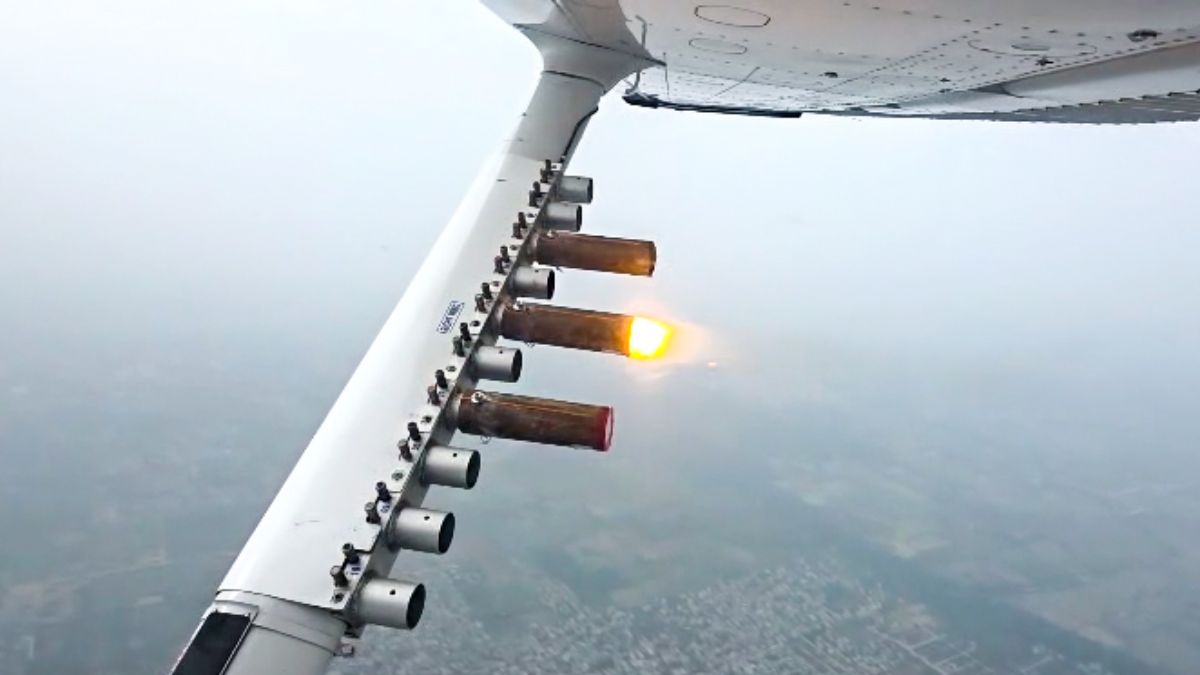
Two cloud seeding operations were conducted over Delhi yesterday, though no rainfall materialized.
New Delhi:
According to IIT Kanpur director Manindra Agrawal, implementing cloud seeding across Delhi for an entire winter would cost approximately Rs 25 crore, representing only a small fraction of the capital's air pollution control budget.
His comments came following two cloud seeding attempts over Delhi led by an expert team from IIT Kanpur, which failed to produce precipitation.
Agrawal explained that yesterday's cloud seeding didn't generate rain because the clouds over Delhi contained insufficient moisture - approximately 15 percent, whereas successful cloud seeding requires around 50 percent moisture content.
Despite the lack of rainfall, the operation yielded valuable data. Measurement equipment installed by the IIT team at 15 locations across the city recorded a 6 to 10 percent reduction in PM 2.5 and PM 10 pollutants.
Cloud seeding is a weather modification technique primarily employed to induce rainfall in drought-affected regions. The process involves dispersing minute particles such as silver iodide or chloride into clouds using aircraft or drones. These particles function as nuclei for water droplets or ice crystals, triggering precipitation. However, outcomes depend on various factors including cloud type, temperature, moisture levels, and wind conditions.
Agrawal detailed that cloud seeding utilizes a finely ground mixture containing common salt, rock salt, and silver iodide. "We inject this mixture into clouds, allowing each small particle to attract water condensation around it. When excessive condensation occurs, water droplets form and fall. Substantial droplet formation results in rainfall," the scientist explained.
Addressing cost considerations, the IIT Kanpur director noted that yesterday's operation was particularly expensive because the flight originated from Kanpur. "Regular seeding operations would be conducted from an airport near Delhi, significantly reducing flight costs," he stated.
The operation covered approximately 300 square kilometers at a cost of around Rs 60 lakh per sortie. "This translates to roughly Rs 20,000 per square kilometer. Expanding coverage to 1,000 square kilometers would cost about Rs 2 crore," Agrawal calculated.
He further estimated that performing cloud seeding 12 times during the four winter months - once every 10 days - would total approximately Rs 25 crore. "Considering Delhi's overall pollution control budget, this represents a very small portion. Cost shouldn't be a significant barrier."
In May, the Delhi cabinet approved Rs 3.2 crore for five cloud-seeding trials, averaging Rs 64 lakh per trial. Delhi Chief Minister Rekha Gupta's March budget allocated Rs 300 crore for pollution control and emergency measures to "effectively implement environmental reforms."
Agrawal emphasized that cloud seeding should not be viewed as a permanent solution to Delhi's air pollution but rather as an interim measure.
"This isn't a permanent or ideal solution. The ideal approach involves controlling pollution sources at their origins. When pollution is eliminated, cloud seeding becomes unnecessary. However, achieving this requires time," he explained.
"Until pollution sources are effectively controlled, pollution will persist. When pollution levels rise to harmful levels, cloud seeding provides a temporary intervention," Agrawal added.
Delhi's air quality has deteriorated over recent weeks, triggering restrictions under the first and second stages of the Graded Response Action Plan (GRAP).
Source: https://www.ndtv.com/india-news/delhi-cloud-seeding-iit-kanpur-each-cloud-seeding-sortie-costs-60-lakh-expert-explains-how-it-will-reduce-9537835