
Delhi's Toxic Air Crisis: How Residents Are Coping With Dangerous Pollution Levels
- Date & Time:
- |
- Views: 48
- |
- From: India News Bull
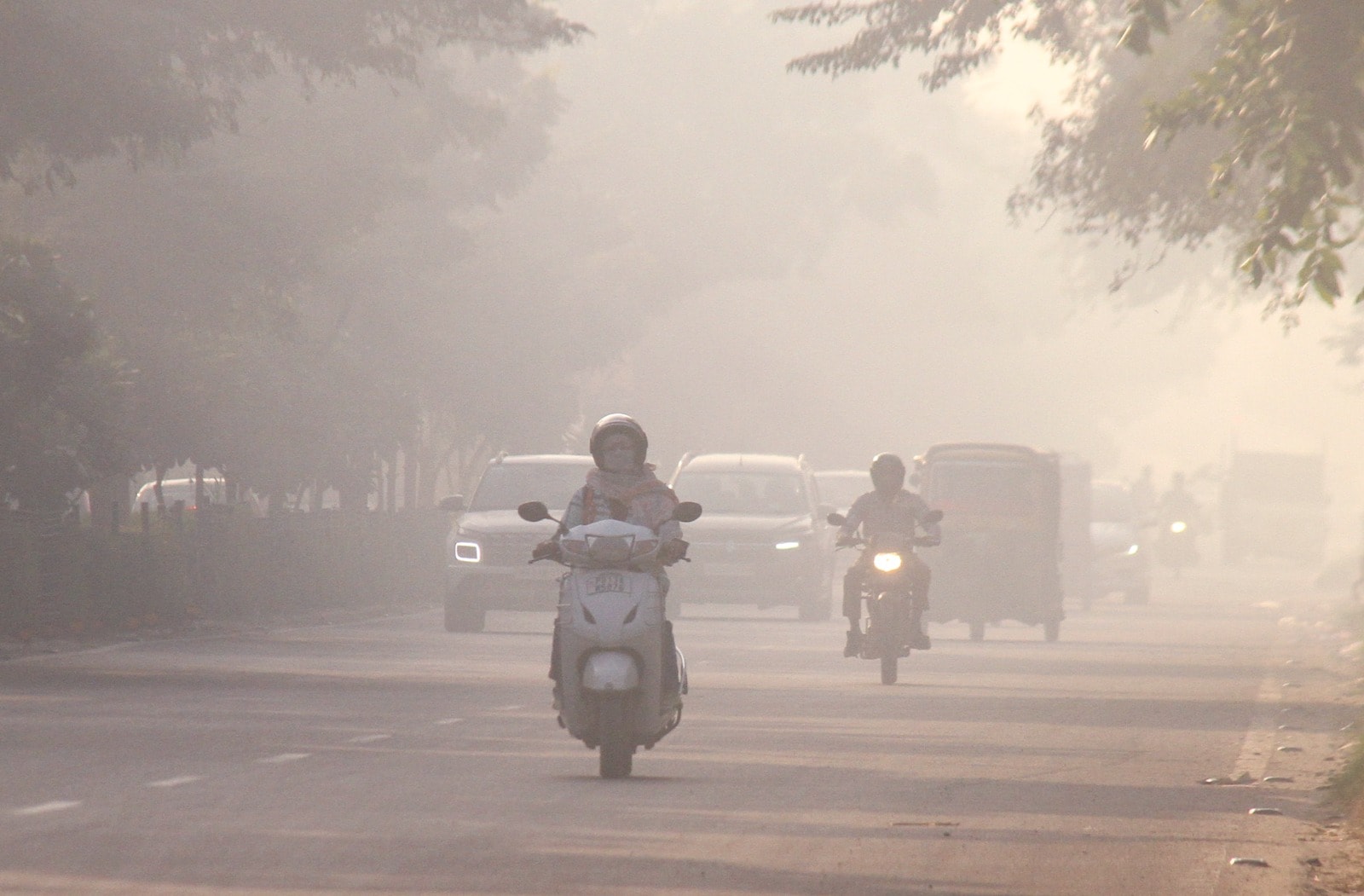
Pollution levels reached their highest point during Diwali night on October 20 and the following morning. (File)
Thirty-five-year-old Rekha Sharma, residing in Nehru Place, begins her daily commute to Noida each morning equipped with a mask and an inhaler. As someone suffering from asthma and sinusitis, she finds herself particularly vulnerable during the winter pollution season.
"I've been experiencing a persistent cough and constant sinus congestion for days. My doctor confirmed that pollution has worsened my sinusitis. I rely heavily on inhalers and nasal sprays, along with wearing an N95 mask whenever I go outside. Unfortunately, this pollution scenario repeats every year," Rekha explained.
Air pollution reached critical levels on Diwali night, October 20, continuing into the next morning. CPCB data analysis showed that post-Diwali PM2.5 concentrations surged to 488 micrograms per cubic meter—the highest in five years and more than triple the pre-festival level of 156.6 micrograms per cubic meter.
A recent survey by LocalCircles, involving over 44,000 Delhi-NCR residents, revealed that three out of four households are already experiencing the effects of toxic air in their daily lives.
Among 14,854 respondents who answered questions about health issues, 42 percent reported that at least one family member is suffering from sore throat and/or cough.
Additionally, 25 percent indicated symptoms including burning eyes, headaches, and sleep difficulties, while 17 percent reported nasal congestion, asthma symptoms, and climate anxiety.
Rajesh, who works as a food delivery personnel, describes his daily struggles with pollution as someone who spends most of his day outdoors.
"Spending all day on the road making deliveries leaves me wheezing, and my eyes burn terribly by the end of each shift. I try to wear a mask whenever possible," said Rajesh.
"We don't have the luxury of staying indoors or purchasing air purifiers for our homes. I must work outdoors as my family depends on my income," he added.
When survey participants were asked about medical actions taken, eight percent reported that at least one family member had already visited a doctor. Nearly one-third had either consulted or planned to consult healthcare professionals for pollution-related ailments.
Dr. Pulin Gupta, Director of Medicine at Dr. RML Hospital, stated, "Many patients are presenting with respiratory issues such as persistent cough and sinusitis, with a 20-25% increase in such cases. Pollution is also triggering various skin conditions, including dermatitis. We're seeing numerous two-wheeler riders and outdoor workers complaining of red, burning, watery eyes, irritation, and even hair loss."
He advised limiting outdoor exposure when possible. "When going outside, wear masks and protective eyewear. Vulnerable groups—including elderly individuals, children, pregnant women, and patients undergoing cancer or HIV treatment—should be especially careful and preferably remain indoors. Indoor precautions are equally important: use air purifiers, wash hands frequently, stay well-hydrated, and consume plenty of fruits," he recommended.
Noida resident Meera Prakash mentioned that beyond keeping an air purifier at home, she has begun using doctor-prescribed antihistamines. Meera, mother to a four-year-old daughter, worries constantly about her child's health.
"I'm perpetually anxious about my daughter going outside. She should be able to play outdoors every evening, but I have to restrict that now as air quality worsens. We always ensure she wears a mask when going out, but this isn't the life she deserves—living with climate anxiety," she expressed.
The survey also analyzed behavioral adaptations to worsening air quality. LocalCircles reported that 44 percent of households were attempting to minimize outdoor exposure while increasing consumption of immunity-boosting foods and beverages. Among those surveyed, 23 percent planned to travel away from the region during the current and following week.
Despite a 77.5 percent reduction in stubble burning incidents in Punjab and Haryana due to floods and delayed harvests, Delhi's air quality has remained poor. The Air Quality Index (AQI) has exceeded 400 in several areas—approximately 24 times higher than the World Health Organization's recommended level for PM2.5 exposure.
The findings demonstrate that for most Delhi-NCR households, air pollution represents an immediate and tangible burden rather than a distant concern. Many residents are already experiencing health symptoms and modifying behaviors by staying indoors, using purifiers and masks, while others are seeking or planning to seek medical advice.
The survey emphasizes the necessity for enforcement agencies in neighboring states to eliminate stubble burning completely, and for local authorities in Delhi and other NCR cities to ensure strict compliance with Graded Response Action Plan (GRAP) restrictions. It also recommends deploying anti-smog guns, shifting manual dust sweeping to nighttime hours, and implementing intensified dust control measures.
According to Central Pollution Control Board (CPCB) data, Delhi's overall AQI in the past 24 hours falls within the 'very poor' category at 315, three points lower than the previous day's 318.
Ashok Vihar recorded the highest AQI at 416, placing it in the 'severe' category, closely followed by Goutampuri at 415. Throughout the city, 29 monitoring stations continued reporting 'very poor' air quality with AQI readings above 300. PM2.5 levels reached 198 μg/m³, while PM10 stood at 249 μg/m³.
Source: https://www.ndtv.com/india-news/from-inhaler-to-purifier-how-residents-are-surviving-delhi-ncrs-toxic-air-9524787