
Bengaluru's Infrastructure Crisis: How Interstate Collaboration Could Save India's Silicon Valley
- Date & Time:
- |
- Views: 61
- |
- From: India News Bull
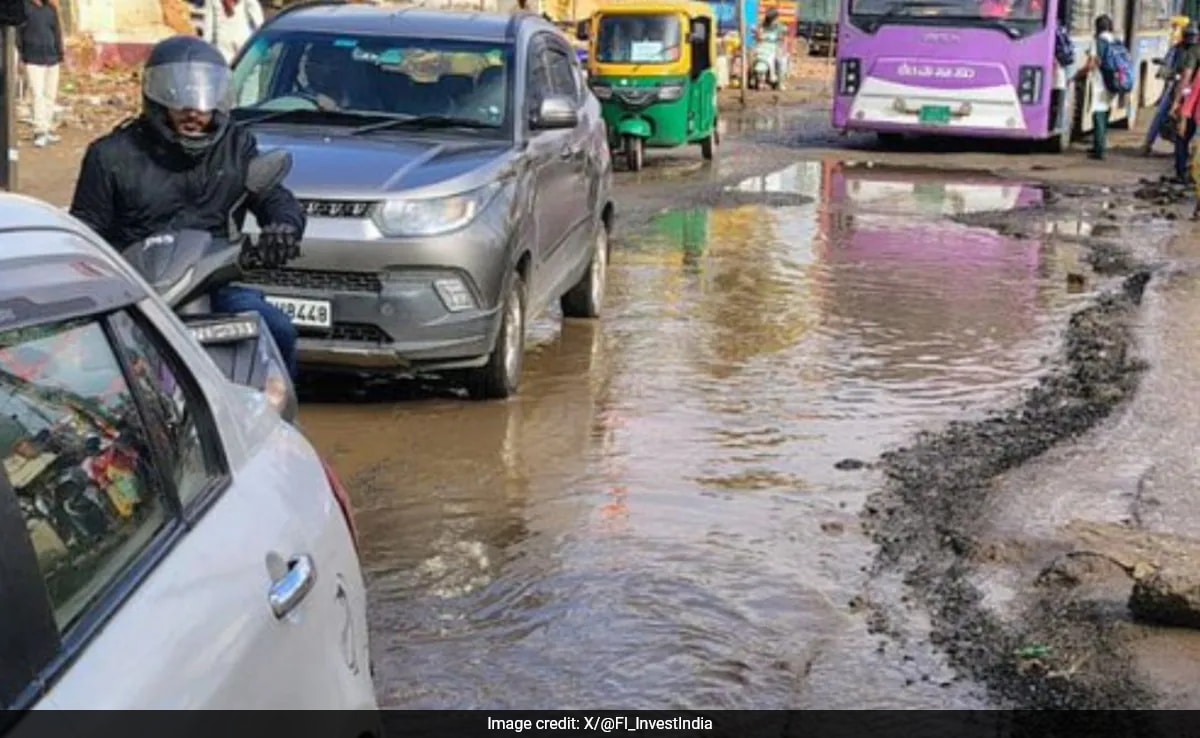
Traffic jams have replaced Bengaluru's once-famous pleasant weather as the city's primary conversation starter, leading to discussions about whether the technology hub itself is being 'Bangalored'. This term gained popularity about two decades ago when global corporations flocked to the city to recruit technical talent. Internationally, being 'Bangalored' meant losing employment in an advanced economy due to job outsourcing to countries like India where operational costs were lower.
During my tenure as a correspondent for a major international news agency in Bangalore, I often contemplated the city's future trajectory, drawing comparisons with other industrial centers I had witnessed decline, such as Kolkata's jute industry and Kanpur's textile sector.
While Bengaluru remains far from such decline, it paradoxically faces numerous challenges stemming from its own success – essentially, a problem of abundance!
The recent social media exchanges between politicians like Karnataka's Deputy Chief Minister DK Shivakumar and business leaders such as Kiran Mazumdar Shaw regarding the city's deteriorating infrastructure and waste management issues have been further complicated by Google's announcement of a $15 million data center investment in Visakhapatnam, Andhra Pradesh. This news sparked speculation that Bengaluru itself was being 'Bangalored' as investors sought alternative locations.
This reminds me of Mark Twain's famous quote about rumors of his demise being greatly exaggerated. Both fact-checking and historical context are necessary to properly assess the situation, as Bengaluru and its technology ecosystem represent a complex landscape requiring nuanced analysis.
Kamaraj Road, which extends from the top of the fashionable Brigade Road, was formerly called Cavalry Road – symbolizing the transformation from horse-drawn transportation to luxury automobiles. In technology industry terminology, the traffic problems began with a bandwidth issue and were exacerbated by infrastructure development lagging behind growth rather than driving it, comparable to attempting to download broadband-era video content using a dial-up connection.
My initial reporting on Bangalore's technology boom in the mid-1990s highlighted the contrast between potholed Hosur Road leading to the expansive Infosys campus and the massive satellite dish antennas facilitating the software export industry. A few years later, the company's chairman NR Narayana Murthy participated in an unusual protest by corporate executives demanding better roads. Complaints about infrastructure have persisted ever since, yet investors and newcomers continue to be drawn to Bengaluru. This is because multinational company HR directors are typically more concerned with recruiting qualified technical talent than with traffic congestion or waste management. Bengaluru remains the premier destination for technology recruitment.
The city has evolved significantly since my time there, though political challenges periodically emerge. During my years in Bengaluru, I learned that Karnataka is India's second most arid state after Rajasthan, contrasting sharply with Bengaluru's reputation as India's Garden City. This disparity exists because the state capital is situated at the southern extremity of the state, while state politicians are predominantly focused on rural constituencies not directly connected to technology-driven urban development.
Now the industry faces dual threats from competing states and artificial intelligence that could potentially eliminate software jobs as coding and related activities become automated, alongside concerns that investors like Google are favoring alternative locations.
While there is ongoing debate about fiscal policies regarding subsidized land and incentives offered by Andhra Pradesh's Telugu Desam Party government, it's also true that AI data centers consume enormous amounts of water and electricity, making them environmentally viable for some states but not others. However, framing the discussion as Karnataka versus other states may be misguided. The inherent nature of bandwidth-driven technologies supporting the internet means that hardware, software, and resulting services can exist in three separate locations within a connected ecosystem. Simply put, Google's Vizag center may generate as many or more jobs in Bengaluru as in Vizag itself.
There's also the less-discussed aspect of AI development, as current conversations predominantly focus on large language models (LLMs) like GPT, Grok, Gemini, and Claude 3. While these technologies are certainly replacing certain jobs by generating software code or analytical content, a resurgence is simultaneously occurring in "agentic AI" and small language models.
Agentic AI involves autonomous technological systems that plan, act, and adapt, utilizing LLMs with additional tools and capabilities to enhance workflows, particularly in corporate environments seeking efficiency improvements. Small language models function like specialized boutiques performing natural language tasks efficiently with fewer resources than their larger counterparts.
As the industry evolves to develop, operate, and deploy these next-generation technologies, Indian companies are poised to regain prominence. Having witnessed the dotcom boom and bust around 2000, followed by mobile app-driven revival, as well as the BPO (business process outsourcing) expansion that evolved from basic call centers to global capability centers (GCCs), I anticipate renewed growth following the current AI-related disruption.
None of this excuses Bengaluru's congested roads or waste management problems, which demand immediate attention. However, this may be an opportune moment for Tamil Nadu, Karnataka, and Andhra Pradesh to collaborate rather than compete by positioning themselves within a global context that stands at the threshold of a new growth wave.
Tamil Nadu is advancing plans for a new airport near Hosur, located merely 30 km from Electronic City where the Infosys campus resides. The Andhra Pradesh border and Anantapur town lie only 200 km from Bengaluru – a distance that becomes increasingly insignificant in an era of eight-lane highways and high-speed rail.
Bengaluru's policymakers would benefit from envisioning a tri-state future, drawing inspiration from New York State's model that incorporates New Jersey and Connecticut. Transitioning from interstate rivalry to creative collaboration would add genuine geographical capacity to complement communication bandwidth. A potential Bengaluru Technology Region (BTR) offers more promising prospects than social media disputes over waste management and traffic congestion. The current limitation lies not in financial resources but in imaginative thinking.
(Madhavan Narayanan is a senior editor, writer and columnist with more than 30 years of experience, having worked for Reuters, The Economic Times, Business Standard, and Hindustan Times after starting out in the Times of India Group.)
Disclaimer: These are the personal opinions of the author
Source: https://www.ndtv.com/opinion/kiran-mazumdar-shaw-was-right-about-bengaluru-infra-but-the-solution-is-elsewhere-9509937