
Opinion | Waqf Act: When BJP Indulged In A Mockery Of Procedure
The passing of the Waqf (Amendment) Bill, 2025 in Parliament was marked by chicanery and evasive tactics. Even a casual observer of Parliament can outline how the BJP-led coalition is making a mockery of parliamentary procedure.
- Date & Time:
- |
- Views: 64
- |
- From: India News Bull
"The Modi government demonstrates utter disregard for parliamentary protocols".
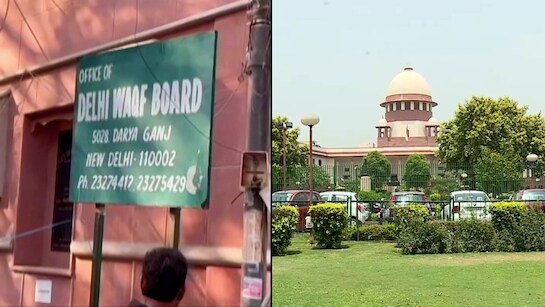
Seeking further evidence to support this claim frequently made by Opposition members? The week commenced with yet another disturbing development for the Union government. The Supreme Court delivered more than a mere admonishment to those engaging in legislative deception. In its interim ruling, India's highest judicial authority stayed two particularly controversial provisions of the Waqf Act, 2025. First, the requirement that an individual must be a practicing Muslim for five years before dedicating property as waqf. Second, the authority granted to designated officers to adjudicate personal citizens' rights. Both these significant provisions have been suspended.
The passage of the Waqf (Amendment) Bill, 2025 through Parliament was characterized by trickery and evasive strategies. Even casual Parliament observers can identify how the BJP-led coalition systematically undermines parliamentary procedures.
The proposal to refer the Bill to a Joint Committee of both Houses was, predictably, introduced on the session's final day.
When the Joint Parliamentary Committee (JPC) report was presented to Parliament, dissenting notes from Opposition members had been physically erased using correction fluid. (This is not fabrication—this actually occurred in Parliament this year.) Following vigorous protests from the Opposition, a corrigendum was added containing the previously censored notes.
"For the night is dark and full of terrors" - Game of Thrones. Parliament passed the Waqf Bill during late-night hours—around midnight in Rajya Sabha and before 1:00 AM in Lok Sabha. Notably, discussions regarding Manipur took place at 3:00 AM.
Constitutional Presumption PrincipleA major argument presented in this case involved the principle of constitutional presumption. This doctrine holds that when a law's constitutionality faces challenge, courts should generally presume its validity unless clearly proven otherwise. This principle emerged to maintain judicial restraint, preserve separation of powers, and respect the legislature as a representative body enacting laws within constitutional frameworks. It assumes legislatures operate in good faith within their authority, with law invalidation being exceptional rather than standard. India's Supreme Court, like constitutional courts worldwide, has consistently affirmed this presumption, stating courts should only overturn legislation when "manifestly unconstitutional" or when fundamental rights violations are beyond reasonable doubt.
However, given recent trends where laws appear selectively applied to impose disproportionate restrictions, regulate minority rights restrictively, or enable state overreach in constitutionally protected areas like religious freedom and equality, this presumption of constitutionality warrants reconsideration.
Legislation Targeting Specific GroupsGovernance under BJP leadership reveals a concerning pattern: the emergence of customized laws designed to affect specific communities while exempting others. Legal pluralism across religions was originally adopted to respect diverse customs. Increasingly, however, this approach facilitates legal exceptionalism where groups are treated not as citizens under uniform law but as subjects of specialized, more restrictive legal frameworks. The effect is profoundly symbolic: legislation becomes political messaging rather than regulatory governance. Citizens increasingly perceive laws as instruments designed "for them"—not for protection or societal administration but for surveillance, constraint, and hierarchical signaling.
Government as Identity ArbiterExamples include religion-specific Citizenship Law creating faith-based exclusions, and anti-conversion legislation in states targeting interfaith marriages and religious conversion (implemented across 12 states including Madhya Pradesh, Chhattisgarh, Gujarat, Uttar Pradesh, Karnataka, and Rajasthan). Beyond targeting specific groups, these laws position the state as the arbiter of identity. Including the five-year requirement in the Waqf Act, such legislation empowers the State to determine who qualifies as a minority. When government assumes authority to decide legitimate community membership, it establishes a precedent that identity becomes conditional; citizenship, faith, and rights reduce to state-certified categories. When the State determines who counts, democratic principles face fundamental risk.
Does the Waqf Act violate equality before law (Article 14)? Does it infringe upon religious freedom (Articles 25 and 26)? Does it contravene prohibitions against religious discrimination (Article 15)? These critical questions await the Supreme Court's consideration.
Research credit: Chahat Mangtani
(Derek O'Brien, MP, leads the Trinamool Congress in the Rajya Sabha)
Disclaimer: These are the personal opinions of the author