
From Servility to Statesmanship: How India's Diplomatic Approach Evolved Between Two Sharm El-Sheikh Summits
- Date & Time:
- |
- Views: 82
- |
- From: India News Bull
A tale of two summits at Sharm El-Sheikh, Egypt, separated by 16 years, reveals stark contrasts in India's diplomatic approach under different leadership. In July 2009, then-Prime Minister Manmohan Singh found himself outmaneuvered by Pakistan's Yusuf Raza Gilani during their bilateral meeting at this Egyptian resort.
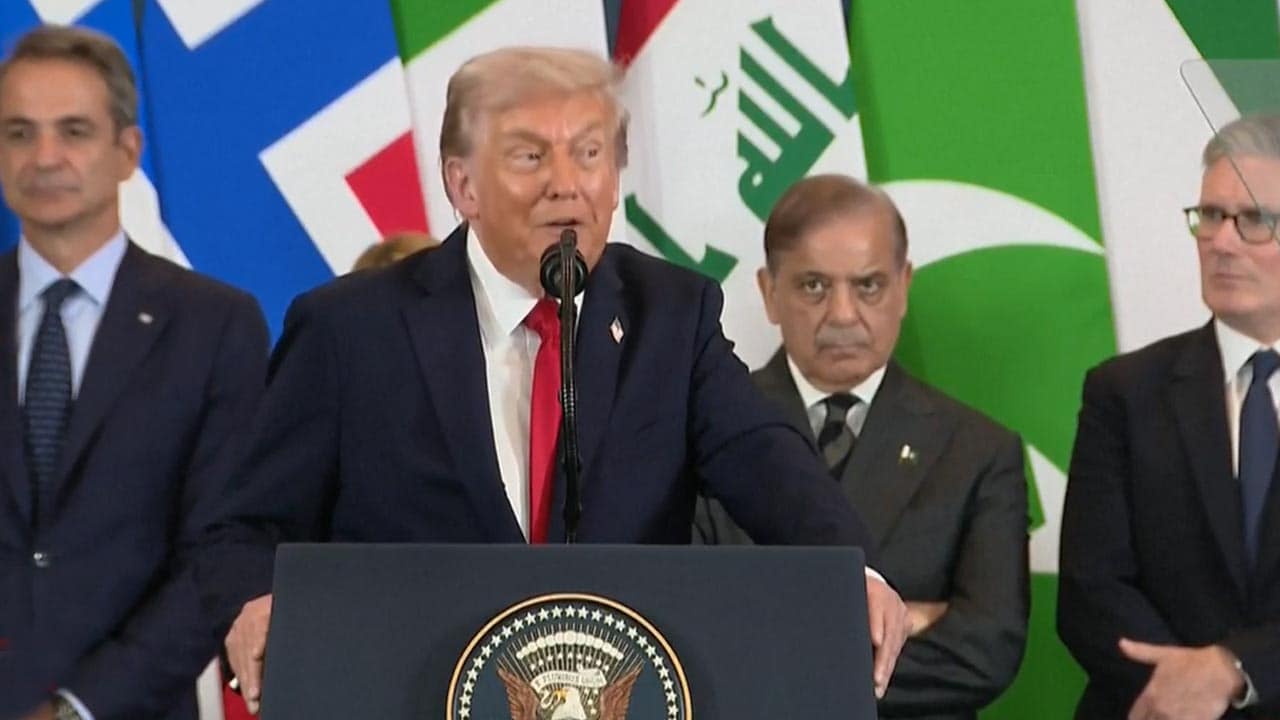
This week, the same venue hosted a peace negotiation between Israel and Hamas, orchestrated by US President Donald Trump. Around 25 heads of government and international organizations attended this high-profile event designed to showcase Trump's diplomatic influence.
Prime Minister Narendra Modi declined the invitation that came with less than 48 hours' notice, citing previous commitments. Instead, he sent Minister of State for External Affairs, Kirti Vardhan Singh, as his representative. A photograph of the Indian junior minister with Trump, who gave a thumbs-up gesture, documented India's presence at the event.
The spotlight, however, was captured by Pakistan's Prime Minister Shahbaz Sharif and Italy's Prime Minister Giorgia Meloni. Her facial expressions in response to Sharif's excessive flattery toward Trump and Trump's somewhat inappropriate comments about her appearance became viral moments from the summit.
Unlike his predecessor Gilani, Sharif's moment in the spotlight brought embarrassment rather than advantage. After Trump referred to Pakistan's Army Chief Asif Munir as his "favourite Field Marshall," he invited Sharif to speak. What followed was extraordinary sycophancy, with Sharif publicly nominating Trump for the Nobel Peace Prize and praising his "exemplary leadership." Meloni's wide-eyed reaction, covering her mouth in disbelief, spoke volumes while other dignitaries maintained composure.
Pakistan has been advocating for Trump's Nobel nomination for months, though the 2025 award has already been decided. Nevertheless, Sharif's public endorsement appears to position Trump for consideration in 2026.
Modi's decision to avoid the Sharm el-Sheikh gathering demonstrates diplomatic astuteness, especially with ongoing US-India trade negotiations. Both Commerce Minister Piyush Goyal and Finance Minister Nirmala Sitharaman have similarly avoided US visits for IMF meetings, despite the organization's favorable projection for India's GDP. The presence of MoS Singh enabled India to support Trump's Gaza peace initiative without compromising its diplomatic dignity.
This stands in sharp contrast to Pakistan's approach, which appeared disconnected from domestic sentiment as Pakistan experienced significant protests against the Gaza peace plan.
The 2009 Sharm el-Sheikh summit occurred in the aftermath of the 26/11 Mumbai terror attacks. Former Home Minister P. Chidambaram recently acknowledged that unlike Modi's government, which responds forcefully to Pakistani aggression, the Manmohan Singh administration merely contemplated options before yielding to Washington's pressure against retaliation.
At that 2009 meeting, Singh and Gilani signed a joint statement that separated dialogue from Pakistan's counterterrorism responsibilities. The document controversially mentioned Balochistan, implicitly lending credence to Pakistan's false allegations about Indian interference in the region. This represented a significant diplomatic concession, especially given that Balochistan had been forcibly annexed by Pakistan despite the Shah of Kalat's reported preference for joining India.
External Affairs Minister S. Jaishankar referenced this diplomatic misstep in Parliament this year. Back in 2009, opposition leader Sushma Swaraj (later Modi's External Affairs Minister) declared that "even the waters of the seven oceans cannot wipe out the shame" of the Sharm el-Sheikh declaration.
Though absent from this week's summit, Modi received acknowledgment from Trump, who called India "a great country" led by "a great friend" who has "done a fantastic job." Trump added that he believed "India and Pakistan are going to live very nicely together," prompting a deferential nod from Sharif.
Meanwhile, New Delhi demonstrated pragmatic diplomacy by hosting Afghanistan's Taliban Foreign Minister Amir Khan Muttaqi, balancing humanitarian concerns with security interests despite fundamental disagreements with the regime. This engagement reflects strategic thinking in light of China's growing influence in Afghanistan and tensions between the Afghan government and Pakistan.
This diplomatic approach clearly distinguishes Modi's India in 2025 from Manmohan Singh's India in 2009.
The author is a retired editor and public affairs commentator. These opinions are personal.
Source: https://www.ndtv.com/opinion/the-sharm-el-shaikh-meet-where-pak-played-court-jester-and-india-made-its-point-9472894