
From Bullets to Ballots: Senior Maoist Leader Abandons Armed Struggle for Constitutional Path in Historic Bastar Surrender
- Date & Time:
- |
- Views: 47
- |
- From: India News Bull
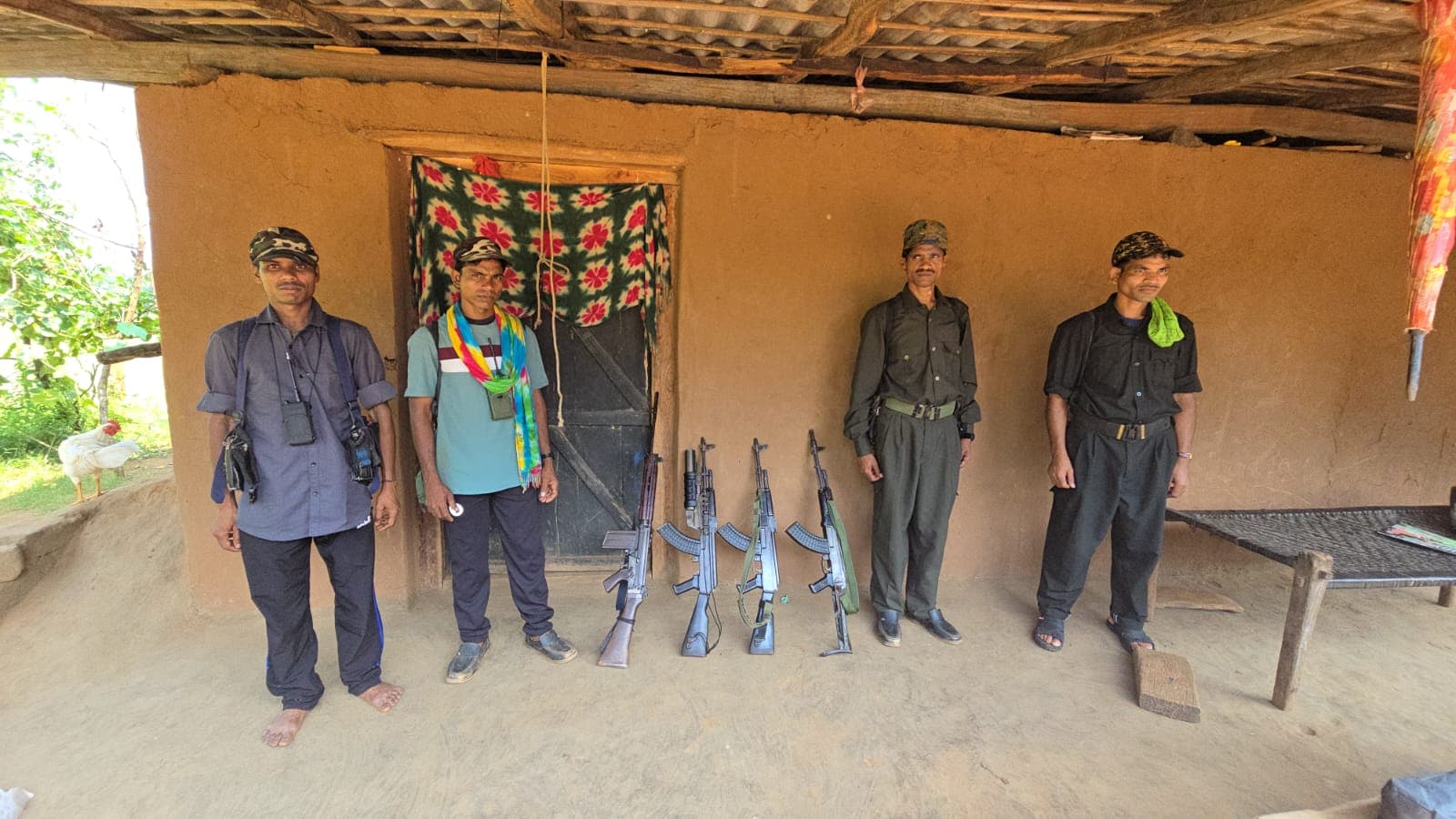
Experts describe this as a defining turning point in India's multi-decade confrontation with Maoist extremism.
Bastar:
On October 16 and 17, the Bastar region, historically a stronghold of Maoist insurgency, experienced a historic transformation. In what security analysts are calling the most significant mass surrender in India's internal security history, more than 150 Maoists, headed by Central Committee member Rupesh, also known as Satish Kofa, relinquished their weapons and entered mainstream society.
However, Rupesh, who has spent over four decades within the outlawed CPI (Maoist) organization, emphasizes this was not a surrender. In an exclusive interview with NDTV in Tadokot village, where the group rested after traversing the Indravati River at Uspari Ghat, Rupesh stated, "We are giving up our weapons, but we are not surrendering. We are changing the way of struggle for the people."
Rupesh, formerly responsible for numerous critical military operations throughout the Bastar division, revealed growing disenchantment within Maoist ranks had been developing for years. "Many senior leaders realized that it was no longer possible to fight the people's war with weapons," he explained.
He disclosed that former general secretary Nambala Keshav Rao, known as Basavaraju, had proposed that the party must "lay down arms and decide future policies through democratic means." Unfortunately, internal opposition and conflict fractured the organization. "Basavaraju himself died in an encounter in Abujhmad. That marked the beginning of the end," Rupesh noted.
Signaling a fundamental ideological shift, Rupesh clarified that those now joining mainstream society will not participate in any government security operations. "We will not take up arms again, not even for the government. The fight for people's rights will now be constitutional. We will go among the people, listen to their problems, and work for them through lawful and peaceful means," he affirmed.
Rupesh directly appealed to his comrades still operating in the forests of Abujhmad, Bijapur, and Sukma to follow their example. "Under the present circumstances, it is impossible to fight for people's rights through violence. The time has come to give up arms and adopt the constitutional path," he urged.
Witnesses described the scene as surreal—a lengthy procession of Maoists, some still in uniform, slowly crossing the Indravati River carrying rifles they would soon surrender. Many appeared exhausted but determined. For the first time in decades, Bastar witnessed the fading echo of gunfire replaced by the sound of transformation.
Experts consider this a pivotal moment in India's prolonged struggle against Maoist extremism. With a Central Committee member abandoning armed conflict, the message to remaining cadres is evident—the ideology that once fueled the movement is now eroding from within.
As dusk fell over the Indravati, the rifles that once symbolized rebellion lay silent, perhaps permanently, and a new chapter in Bastar's history commenced, not in bloodshed, but in optimism.
(With inputs from Vikash Tiwari)
Source: https://www.ndtv.com/india-news/changing-the-way-of-struggle-top-maoist-to-ndtv-after-laying-down-arms-9471695