
Major Breakthrough in India's Anti-Maoist Campaign: Commander Bhupati and 60 Cadres Surrender in Gadchiroli
- Date & Time:
- |
- Views: 45
- |
- From: India News Bull
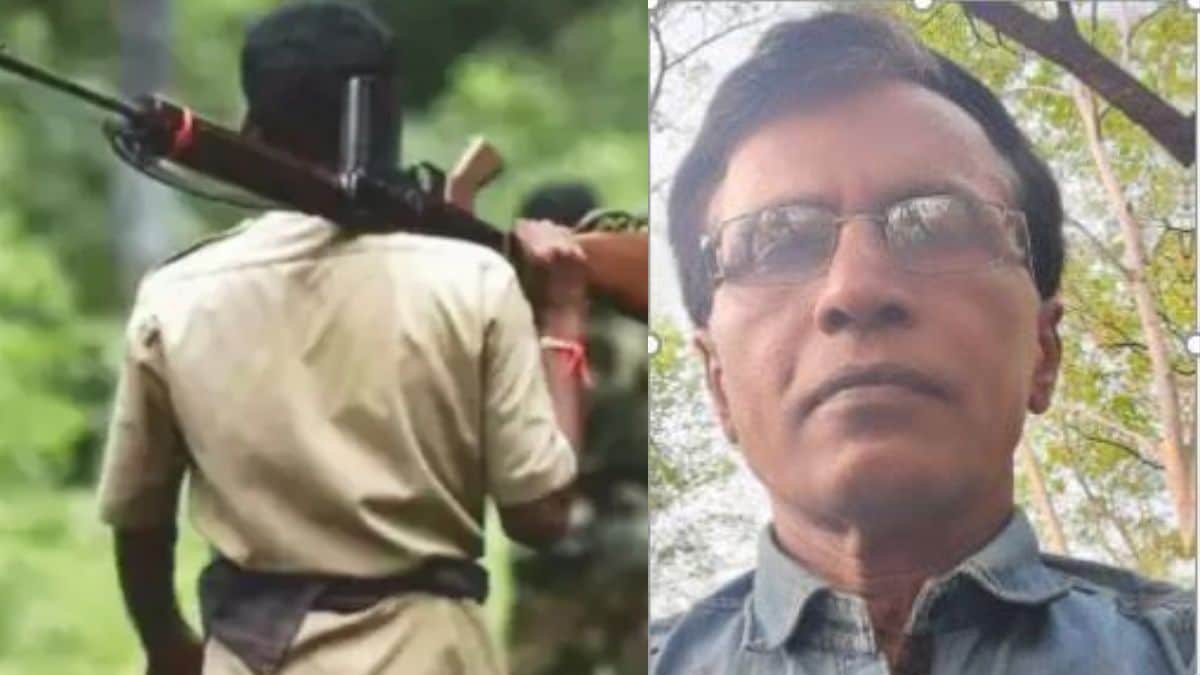
The recent surrender of high-profile Maoist commander Mallojula Venugopal Rao, commonly known as Bhupati, along with over 60 of his associates, represents a significant milestone in anti-Maoist operations in Maharashtra's Gadchiroli region. As a prominent member of the banned Communist Party of India (Maoist)'s Central Committee, Bhupati was known by numerous aliases including Sonu, Sonu Dada, Venugopal, Abhay, Master, Vivek, and Venu. His notoriety had earned him bounties ranging from Rs 1 crore to Rs 10 crore across multiple states including Odisha, Maharashtra, Chhattisgarh, Telangana, and Andhra Pradesh.
This surrender effectively marks the near collapse of Maoist activities in the Gadchiroli region.
Bhupati, aged 69, held a position of considerable influence within the Maoist hierarchy as a senior strategist. His four-decade involvement with the banned organization saw him orchestrating operations throughout the "Red Corridor" spanning Chhattisgarh, Maharashtra, and Telangana. Beyond his operational role, he served as a spokesperson for CPI (Maoist), the primary underground Maoist organization in India that was officially banned by the government in 2009.
Despite his BCom education, Bhupati chose the path of armed resistance, becoming instrumental in planning and executing numerous major attacks across the 'Red Corridor' during his nearly 40-year tenure. His membership in the CPI (Maoist)'s Central Military Commission—the highest Maoist body responsible for approving attacks against security forces and civilians—underscores his strategic importance within the organization.
Authorities have implicated him in all significant attacks and conspiracies throughout the Gadchiroli region over the years. His alleged involvement extends to masterminding numerous attacks across Chhattisgarh, Telangana, Odisha, and Andhra Pradesh, with connections to assaults on security forces in Maharashtra that resulted in dozens of casualties among CRPF, STF, and DRG personnel.
Additionally, Bhupati commanded operations along the Maharashtra-Chhattisgarh border, where his platoons conducted large-scale attacks intended to instill fear in the local population.
Notably, Bhupati is the brother of another infamous Maoist leader, Mallojula Koteshwar Rao, known as Kishenji, who was killed during a 2011 encounter in West Bengal's West Midnapore district. Both brothers had established themselves as key figures in the Maoist movement.
As a CPI (Maoist) Politburo member and military leader, Kishenji had directed operations in Bengal's Lalgarh since 2008. He was instrumental in establishing the People's War Group (PWG) in 1980 and later oversaw its merger with the Maoist Communist Centre of India to form the CPI(Maoist).
Bhupati began his Maoist activities with the PWG.
Bhupati's decision to surrender appears to follow an appeal from Union Home Minister Amit Shah, who in April urged all underground Maoists to abandon violence and join mainstream society. Shah had established a deadline to eliminate Maoist terrorism in India, stating: "I appeal to the hiding Naxalites to lay down their arms as soon as possible and join the mainstream by adopting the surrender policy of the Modi government. We are determined to free the country from the scourge of Naxalism before 31 March 2026."
Earlier this week, Bhupati surrendered alongside 10 divisional commanders and dozens of additional cadres. The group also relinquished over 50 weapons, including sophisticated firearms like AK-47s and INSAS rifles.
According to sources, his surrender stemmed from both internal and external factors.
Intensified security operations had left Bhupati living in constant fear of encounters. He and his comrades found themselves increasingly cornered by specialized anti-Maoist forces, including Maharashtra's C-60 commandos and multi-state forces operating in Maoist strongholds like Gadchiroli and Abujhmad.
Sources indicate that Bhupati had recently communicated to his supporters that surrender remained their only viable option. He had advocated within the CPI (Maoist) and through public statements for abandoning violence in favor of peaceful dialogue with the government, which would necessarily involve surrender and disarmament.
This proposal met with rejection and created significant divisions within the Maoist organization, even prompting a warning against him from the Central Committee.
The steadily diminishing public support for Maoist activities over recent years, combined with government rehabilitation programs for surrendered Maoists and increased focus on industrialization and development, have effectively eroded support for the banned movement. Bhupati's wife, Vimala Chandra Sidam, also known as Taraka, who herself carried a Rs 1 crore bounty, had surrendered approximately one year earlier.
These surrenders clearly indicate that Maoist ideology finds increasingly few adherents today in regions like Gadchiroli that were once epicenters of Maoist militancy.
Source: https://www.ndtv.com/india-news/who-is-bhupati-and-2-reasons-behind-dreaded-maoist-commanders-surrender-9457145