
Ladakh's Critical Role in India's National Security: A Veteran Air Force Officer's Perspective
- Date & Time:
- |
- Views: 53
- |
- From: India News Bull
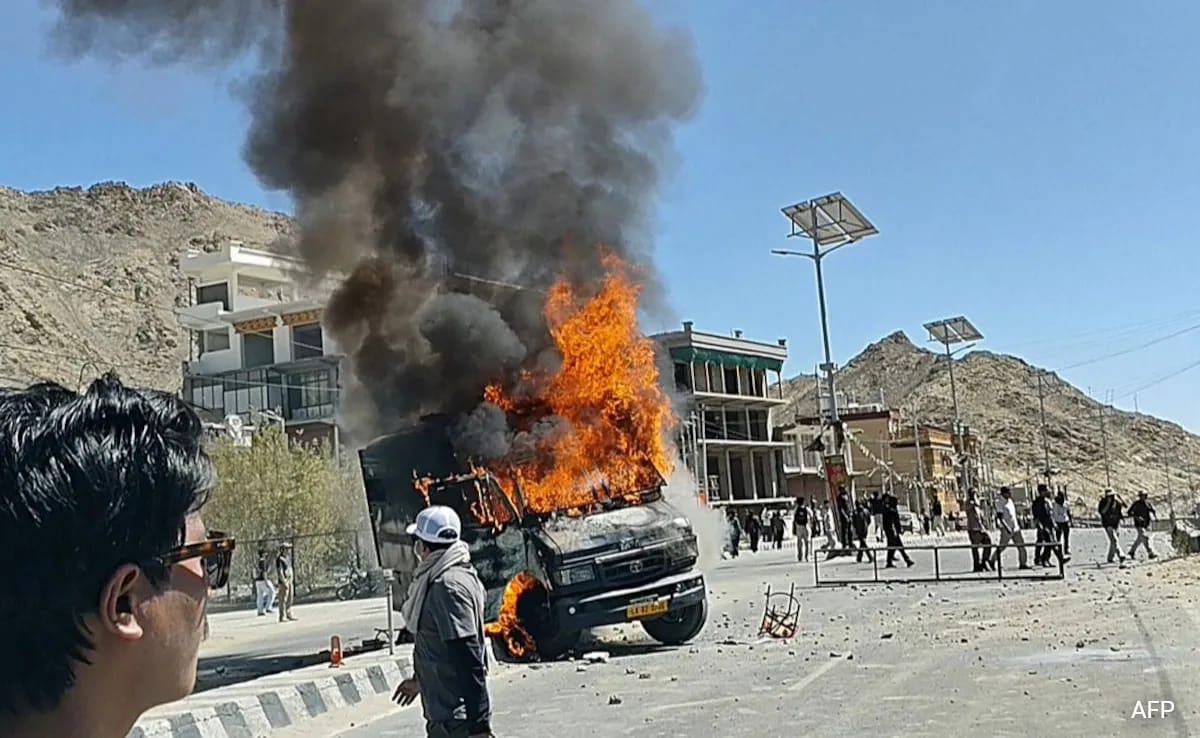
Last month, a deeply unfortunate incident unfolded in the northernmost region of India. This piece serves as an earnest appeal to all who care about India to resolve the conflict that has disrupted the lives of one of the nation's most peaceful yet resilient communities, situated in one of India's most tranquil territories - Leh, where passersby are invariably greeted by strangers with the melodious salutation "Juley."
My relationship with Ladakh began in August 1978, when as a young Flying Officer, I hitched a ride on an An-12 aircraft from Chandigarh to Leh for a month-long helicopter deployment. This initiated a deep connection with this remote frontier through numerous flying missions over four years, followed by a two-and-a-half-year stint as a Commanding Officer in the mid-1990s, and many brief visits over the subsequent two decades.
Leh captured my heart, as it has for countless Indian Army and Air Force personnel privileged to serve in the Ladakh sector. I believe I speak for many, if not most, of the thousands of service members stationed there. This is evident from the outpouring of confusion, sorrow, and distress expressed by veterans on social media following the violent events of September 24, when a protest escalated and resulted in the tragic deaths of four Ladakhis in police firing.
Ladakhis are unpretentious people who labor intensively during the brief summer months to accumulate resources, food, and livestock for the severe winters when temperatures plummet below minus 30 degrees. The unforgiving environment has shaped them into hardy individuals capable of enduring hardships that others can scarcely comprehend. They are, quite literally, the backbone of security forces in those elevated terrains.
Consider the historic photograph from May 24, 1948, when Air Commodore 'Baba' Mehar Singh landed his Dakota on the improvised dirt runway, enabling Army access to repel Pakistani raiders. The image shows local villagers who constructed that runway gathering around the aircraft. Or examine pictures of airfield construction at Chushul, Fukche, and Thoise, depicting locals toiling on their knees to level ground using their hands, shovels, and manual rollers.
In the 1970s and 1980s, we would fly low in our helicopters upon spotting Army patrols advancing on foot along the Shyok river valley toward Daulat Beg Oldie (DBO) and Track Junction border posts. When we waved to the Ladakhis managing these mule convoys—sometimes yak caravans—they would respond cheerfully. While it took us merely 90 minutes to fly from Leh to DBO, these individuals endured approximately two weeks of marching.
Throughout India's conflicts since independence, Ladakhis have consistently sacrificed their lives for the nation. Consider Colonel Chewang Rinchen (twice awarded the Maha Vir Chakra) and Colonel Sonam Wangchuk, a Maha Vir Chakra recipient from the Kargil conflict. Operation Meghdoot commenced on April 13, 1984, when Indian forces advanced up the Siachen Glacier. Since then, the logistical support provided by Ladakhis on the Glacier has been invaluable. The martial spirit of Ladakh is embodied in the Ladakh Scouts—an Army formation comprising local youth that represents courage and physical endurance born from harsh conditions, whose blood has merged with Ladakhi soil during India's wars.
Now, this disruptive public strife has emerged.
As education, technology, and internet access have permeated society, Ladakhis no longer rely solely on traditional farming; tourism has become a significant employment source. Global connectivity has elevated the aspirations of young people—a positive development that nevertheless brings with it the frustrations of youth seeking alternative employment opportunities.
The relationship with the armed forces continues to function as a vital sinew in Ladakh's body politic, constituting what military personnel refer to as the "rear"—an intangible element providing a secure foundation as forces confront adversaries. Any weakening of this bond in the strategically critical Ladakh sector would undermine the security posture, a circumstance that cannot be accepted. On social media platforms, one can already observe adversaries attempting to exploit these tensions.
Local authorities face the immediate challenge of restoring peace. However, the long-term objective must be to rebuild the mutual confidence and trust that previously existed. What's needed now is a healing approach from enlightened leadership across all sectors—free from political motivations.
Juley, everyone.
(The author is a retired Air Vice Marshal of the Indian Air Force)
Disclaimer: These are the personal opinions of the author
Source: https://www.ndtv.com/opinion/ladakh-needs-a-healing-hand-not-politics-9418276