
7 Critical Factors Shaping Bihar Assembly Election 2025: From Unemployment Crisis to Voter Demographics
- Date & Time:
- |
- Views: 61
- |
- From: India News Bull
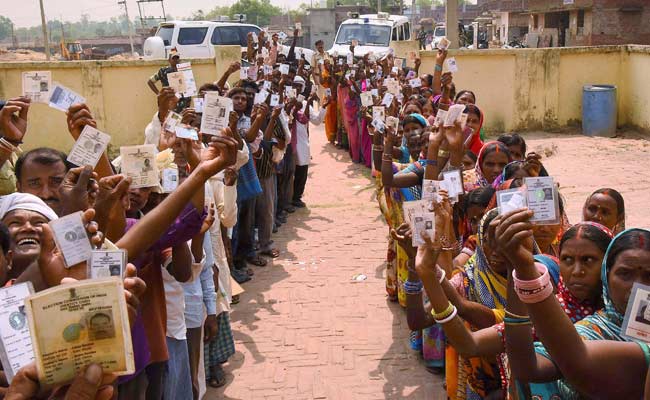
Bihar will vote on November 6 and 11, with vote counting scheduled for November 14.
Patna/New Delhi:
Bihar is once again facing a distinctive assembly election. This marks the first election after the Election Commission's special intensive revision (SIR) exercise to update electoral rolls. The SIR process generated controversy when Opposition parties claimed it would exclude legitimate voters, prompting them to appeal to the Supreme Court.
The previous assembly election in late 2020 was notable due to the Covid pandemic, which affected nations worldwide including India. The tragic sight of thousands of Bihar's migrant workers walking home during the Covid lockdown became a defining electoral issue then.
While the SIR controversy remains significant this time, it has evolved into routine political exchanges, with leaders like Congress MP Rahul Gandhi alleging "vote chori (theft)".
In Bihar's dynamic political landscape, this year's assembly election represents a pivotal moment, not just for the state but for Indian democracy as a whole.
Chief Minister Nitish Kumar's two-decade leadership has created unique challenges and opportunities, forming a volatile mix of factors that will determine the region's electoral outcome.
With just a month remaining for campaigning, which direction is Bihar's political wind blowing? What key factors will determine the November 14 outcome?
The seven critical factors outlined here capture Bihar's essence - a state where historical echoes, youth aspirations, and women's voices converge to create a complex electoral narrative.
Unemployment: The Dominant Issue
Unemployment stands as Bihar's foremost electoral issue. The ruling National Democratic Alliance (NDA), comprising BJP and Janata Dal (United) led by Chief Minister Nitish Kumar, faces mounting pressure from young and first-time voters demanding job opportunities.
Rashtriya Janata Dal (RJD) leader Tejashwi Yadav has recognized this concern, making youth employment his campaign's central focus. Jan Suraaj, the organization established by former election strategist Prashant Kishor, has similarly prioritized job creation for Bihar's youth.
Opposition parties highlight widespread discontentment among young voters against the ruling alliance, potentially resulting in strong anti-incumbency sentiment.
Unemployment clearly drives the electoral dynamics. The NDA, after 20 years in power, confronts unprecedented anti-incumbency fueled by limited job opportunities. While Bihar's official unemployment rate was 3.9% in 2022-23 according to NITI Aayog (versus India's 3.2% average), underemployment remains extremely high given Bihar's predominantly agrarian, rural character (only 11% urban per the 2011 Census).
Young people, once hopeful architects of a new Bihar, now face disillusionment with their aspirations stifled. This pervasive discontent underlies the electoral narrative, compelling voters to question the foundation of Nitish Kumar's extended tenure.
Unemployed youth, feeling largely marginalized, form the core support base for the anti-incumbency movement led by Congress's Rahul Gandhi, Tejashwi Yadav, and Prashant Kishor.
Out-Migration
While Bihar's migrant workers are present nationwide, the state experiences an alarming increase in workers leaving due to limited local opportunities. Bihar's economy is often characterized as remittance-dependent because of this substantial out-migration.
The exodus of Bihar's youth poignantly demonstrates the state's struggles. As young dreamers depart for better prospects in education or employment, their departure reflects poorly on local systems.
This migration not only depletes Bihar's potential but creates disconnection between voters and politicians, as many who once envisioned a prosperous Bihar now build futures elsewhere.
The Election Commission scheduled Bihar's voting in two phases on November 6 and 11, after the important Chhath Puja festival when many migrant workers return home for family celebrations. This timing demonstrates the EC's effort to maximize voter participation. Results will be announced on November 14.
Corruption
Corruption haunts Bihar's power corridors. Allegations concerning liquor and sand mafias have emerged amid accusations against NDA politicians and bureaucrats.
While not a novel election issue, Prashant Kishor's Jan Suraaj has provided young voters a fresh perspective, suggesting they reject long-serving corrupt leaders.
Kishor has specifically targeted ruling leaders like state minister Ashok Choudhary, alleging he accumulated illegal assets worth Rs 200 crore and received substantial government contract commissions. The minister responded with a Rs 100 crore defamation notice against the Jan Suraaj founder.
This exchange effectively positioned Kishor as someone distinctive - crucial for gaining young voter support.
Nitish Kumar previously enjoyed substantial female voter support for implementing prohibition in 2016. However, widespread allegations of liquor mafias operating statewide have since emerged, becoming Opposition campaign ammunition.
In today's transparency-focused era, corruption's shadow looms large, further undermining the ruling coalition's credibility.
Special Intensive Revision (SIR)
India's first SIR exercise faced widespread Opposition criticism, most vocally from Congress MP Rahul Gandhi, who alleged the EC colluded with the BJP to manipulate voter lists through additions and deletions.
The EC dismissed these allegations as malicious. However, Gandhi persisted, even using terms like "vote chori (theft)." After the EC published the final voter roll following the SIR, the BJP launched a forceful counterattack against Congress.
"This so-called 'vote chori' narrative is nothing but a sham - a pretext to mask impending electoral defeats and undermine India's faith in the democratic process. A page straight out of George Soros's playbook, which Rahul Gandhi foolishly believes can resurrect his beleaguered party," stated BJP leader Amit Malviya.
In this revision conducted after 22 years, 65 lakh voters were removed from draft rolls, including deceased individuals, those who permanently relocated from Bihar, or had multiple registration locations. The final rolls showed an 18 lakh voter increase compared to the draft list.
The Opposition's "vote chori" campaign resonates somewhat among citizens, as trust in electoral processes becomes crucial when democracy itself faces scrutiny.
Women Voters
Nitish Kumar's prohibition policy made him popular among women, particularly in families affected by alcoholism. Additionally, Kumar's advantage of maturity - having over 30 years more experience than his closest rival Tejashwi Yadav - has partially offset anti-incumbency pressure from young voters.
Women voters emerge as a decisive force in this complex scenario. Kumar's policies - from alcohol prohibition to direct women's financial transfers - have generated significant female constituent support.
Their backing counterbalances youth-driven anti-incumbency sentiment. The recently announced Rs 10,000 for 75 lakh women by Prime Minister Narendra Modi and Nitish Kumar is viewed as potentially transformative in Bihar politics, similar to the Ladli Behena scheme in Madhya Pradesh and Ladki Bahin in Maharashtra, both introduced before elections.
This interplay between gender and politics reveals a nuanced dynamic where women's votes may determine electoral outcomes, transcending generational divisions.
Education Quality
Like unemployment, the declining quality of education across Bihar's schools and colleges alarms experts. Frequent question paper leaks compound this problem, with the NEET 2024 paper theft from an NTA trunk in Hazaribagh being particularly notorious.
The Central Bureau of Investigation and Bihar's Economic Offences Unit arrested multiple suspects, including alleged masterminds. Higher education students, primarily young voters, view such incidents as betrayals of trust in a system meant to ensure fair competition.
While educational infrastructure has expanded, quality remains concerning. The proliferation of schools and colleges hasn't improved educational outcomes; Bihar stands where quantity exceeds quality.
Regular examination paper leaks and open copying scandals have created significant controversies. Youth discontent, worsened by failing educational systems, creates fertile ground for political mobilization as candidates struggle to restore faith in education.
Prashant Kishor's agenda focuses on education and establishing schools similar to Netarhat (Jharkhand's residential school) in every Bihar district. This approach resonates well with young people and educated urban voters, among whom Kishor's popularity grows.
Illegal Immigrants
The BJP has highlighted concerns about illegal immigrants in the Seemanchal region. Prime Minister Modi explicitly stated the demographic dangers this poses.
This strategy, though risky, represents a calculated attempt to unite diverse caste groups under a unified Hindu identity. By framing immigration debates through a religious lens, the BJP seeks Hindu voter consolidation.
Illegal immigration, particularly from Bangladesh, represents a significant political issue and national security concern. Recent months have seen regional crackdowns to identify Bangladeshis living illegally in India.
Opposition parties including Congress allege that claims about illegal immigrants in Seemanchal are designed to polarize voters.
In the final electoral roll, the minority-dominated Seemanchal region recorded the highest voter deletion rate (7.7%) among Bihar's regions. This area comprises four districts - Kishanganj, Purnea, Katihar, and Araria - with an average Muslim population of 48%.
Conclusion
Declining hospital standards, extreme poverty in northern Mithilanchal and Seemanchal regions, increasing inequality among castes and classes, and disparities between urban areas and vast countryside create additional public grievances.
These issues may intensify anti-incumbency sentiment if the NDA doesn't address them during the month-long campaign.
Overall, Bihar's 2025 assembly election promises to be a compelling spectacle - reflecting the state's aspirations, grievances, and evolving social dynamics. As voters navigate these seven critical factors, the outcome will shape not only Bihar's future but also serve as a microcosm of broader national narratives.
In this land where past and present intertwine, ballot box choices will resonate beyond state politics, echoing into Indian democracy's heart.
Source: https://www.ndtv.com/india-news/the-7-x-factors-in-bihar-assembly-election-2025-9405860