
Nitish Kumar's Leadership in Bihar: A SWOT Analysis of NDA's Electoral Prospects
- Date & Time:
- |
- Views: 47
- |
- From: India News Bull
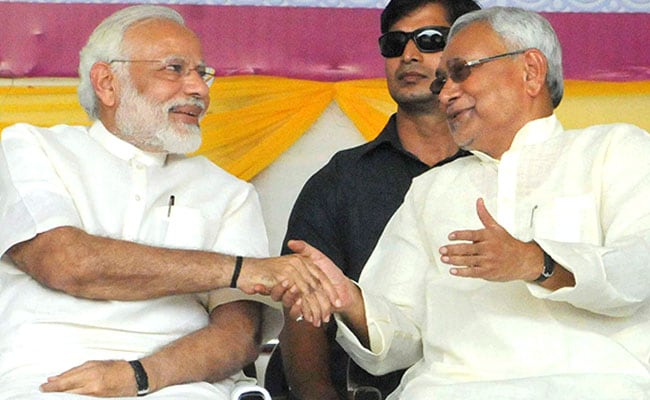
Nitish Kumar holds the distinction of being Bihar's longest-serving Chief Minister.
In Patna, the National Democratic Alliance (NDA), under JD(U) leader and Chief Minister Nitish Kumar's leadership, is pursuing another term in power, while the INDIA bloc—consisting of the Rashtriya Janata Dal (RJD), Congress, and other opposition parties—seeks to dislodge the governing coalition in Bihar's upcoming assembly elections.
The Election Commission has announced a two-phase electoral process for the state, with voting scheduled for November 6 and 11, followed by vote counting on November 14.
Political analysts suggest that the NDA, with Mr. Kumar effectively positioned as its chief ministerial candidate, enjoys several advantages.
As Bihar's longest-serving Chief Minister, Mr. Kumar ranks among the state's most influential political figures, having maintained his position of authority for nearly two decades. This longevity can be attributed largely to numerous welfare initiatives such as providing 125 units of free electricity to households, ensuring potable water access in rural areas, and promising one crore jobs and employment opportunities over the next five years.
As Bihar approaches its elections, here is a comprehensive SWOT (Strengths, Weaknesses, Opportunities, Threats) analysis of the NDA under Nitish Kumar's leadership.
STRENGTHS
The leadership of Nitish Kumar, an engineer-turned-politician who has become Bihar's longest-serving chief minister, widely recognized for his commitment to "sushasan" (good governance).
Popular welfare programs including enhanced social security pensions, financial assistance of Rs 10,000 each to 75 lakh women, and various infrastructure development initiatives.
A well-organized cadre base comprising BJP and JD(U) members, along with support from RSS affiliates such as the Akhil Bharatiya Vidyarthi Parishad.
Recent introduction of development and infrastructure projects in Bihar by Prime Minister Narendra Modi.
WEAKNESSES
Twenty years in power have diminished the novelty of Nitish's early administration (2005-2010).
Anti-incumbency sentiment may emerge as a significant factor in the forthcoming election.
Despite efforts to broaden its social appeal, the BJP is still predominantly viewed as representing upper castes or "forwards"—a term used in Bihar to describe upper castes who, according to recent caste surveys, constitute just over 10 percent of the population.
OPPORTUNITIES
With Nitish Kumar beyond his political prime and his JD(U) lacking noteworthy second-tier leadership, the BJP has an opportunity to fill this leadership vacuum.
THREATS
The incorporation of political defectors is perceived as a "corrupting influence" by some within the BJP. The "high command culture," once characteristic of the Congress party, now appears within the BJP as well, which seems to have grown accustomed to power and its associated privileges.
Adherence to "Hindutva" ideology brings inherent challenges. It alienates Muslim voters, including the Pasmandas, whom Nitish Kumar successfully attracted despite his alliance with the BJP.
Source: https://www.ndtv.com/india-news/will-susashan-tag-help-nitish-kumar-in-bihar-this-time-a-swot-analysis-9405452