
Contaminated Cough Syrup Crisis: Tamil Nadu's Swift Action Contrasts Madhya Pradesh's Delayed Response in Child Deaths Investigation
- Date & Time:
- |
- Views: 46
- |
- From: India News Bull
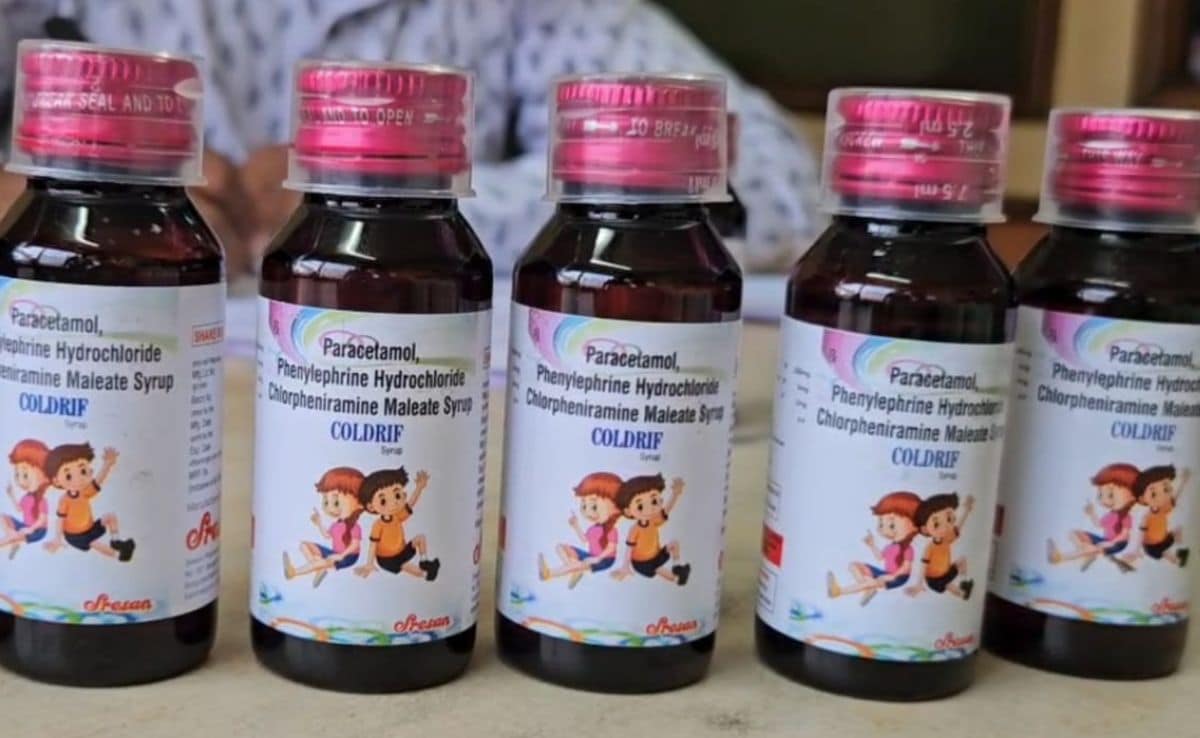
The Tamil Nadu government demonstrated remarkable efficiency in their response to a potentially lethal situation.
In Madhya Pradesh, nine children have died with their families attributing the fatalities to cough syrups 'Coldrif' and 'Nextros DS' prescribed for fever and cough. Each child initially developed a fever and received treatment at a local clinic. Shortly after consuming these syrups, they exhibited alarming symptoms: vomiting, diarrhea, and eventually cessation of urination – classic indicators of Diethylene Glycol (DEG) poisoning, reminiscent of the tragedy that claimed children's lives in Gambia in 2022.
While Tamil Nadu's authorities tested, confirmed, and banned the suspicious batch within 24 hours, Madhya Pradesh continues to claim they are "awaiting reports."
On October 1, Tamil Nadu's Drugs Control Department received notification from Madhya Pradesh regarding Coldrif Syrup, batch SR-13, produced by Sresan Pharmaceuticals in Kanchipuram district. Despite a government holiday, inspectors visited the facility that very evening, conducted a thorough inspection, and identified 39 critical and 325 major violations of drug manufacturing and laboratory practice regulations. They collected samples of Coldrif and four additional syrups, secured all remaining inventory at the plant, and dispatched the samples to Chennai's government laboratory with specific instructions for DEG and ethylene glycol testing.
Within just 24 hours, the government analyst issued Form-13, declaring Coldrif Syrup Batch SR-13 substandard and adulterated with 48.6 percent Diethylene Glycol, an industrial solvent used in paints known to cause acute kidney failure. The report additionally confirmed the syrup failed ethylene glycol testing, while the other four syrups met quality standards.
The Tamil Nadu government immediately implemented comprehensive measures. They issued a statewide alert to prevent sales and distribution of the contaminated syrup. The distribution list was shared with drug inspectors across the state, with strict directives to secure all available stock at wholesale and retail levels. Communications were extended to Odisha and Puducherry based on interstate distribution records from the manufacturer. By October 3, the state ordered production halted at the company in the public interest, issued a show-cause notice for license cancellation, and urged the public to report any remaining syrup stocks to local authorities.
S Gurubharathi, Tamil Nadu's Deputy Director of Drugs Control, noted this was the first instance in India where inspection, sampling, testing, and a production stoppage were completed within two days of receiving information, even during government holidays.
In contrast, Madhya Pradesh's approach appears strikingly different and contradictory. State Health Minister Rajendra Shukla maintains that tests have revealed nothing concerning. "The samples sent did not show any substance suggesting these medications caused the deaths. Reports on the remaining medications are pending. It is true that the children died, but we're working to obtain reports from government labs," he stated.
Shubham Yadav, Sub-Divisional Magistrate of Parasia, claimed, "The biopsy confirmed a kidney infection. Common causes include dirty water, rats, and mosquitoes. We are in preventive mode. Sales of the drug have been halted, and samples sent for testing. Action will only follow if responsibility is proven."
However, senior health officials privately acknowledge the reality. Dr. Prabhakar Tiwari, Senior Joint Director of the National Health Mission, admitted that renal biopsies indicate kidney failure resulting from a toxic substance – likely the cough syrup contaminated with industrial solvent.
The deaths of nine children in Madhya Pradesh – Shivam, Vidhi, Adnan, Usaid, Rishika, Hetansh, Vikas, Chanchalesh, and Sandhya – cast a dark shadow over this bureaucratic delay. Families remain perplexed: if Tamil Nadu could test, confirm, and ban the syrup within 24 hours during holidays, why is Madhya Pradesh still waiting? Why does denial seem to prevail over action when children's lives hang in the balance?
The unavoidable question for Madhya Pradesh remains: If one state can act overnight to protect public interest, why must another drag its feet while grieving families bury their children?
In Rajasthan, where three children have died, State Health Minister Gajendra Singh Khimsar went further by placing blame on the families: "The medicine in question wasn't prescribed by any government doctor. Parents purchased it themselves. The health department bears no responsibility. The drug is correct; testing has shown no defects," he claimed.
Source: https://www.ndtv.com/india-news/cough-syrup-row-two-states-different-action-after-childrens-deaths-9394003