
A Century of Nation-Building: Personal Insights into the RSS Journey from Colonial Resistance to Modern India
- Date & Time:
- |
- Views: 48
- |
- From: India News Bull
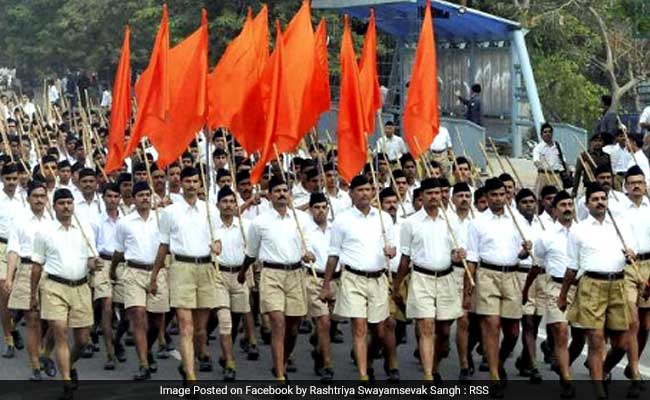
This Vijayadashami, the Rashtriya Swayamsevak Sangh celebrates its centennial, marking one hundred years dedicated to nation-building through the character development of individual citizens. Founded by visionary Dr. Keshav Baliram Hedgewar on this day in 1925, the RSS emerged during one of India's darkest periods of colonial subjugation. The colonial powers and foreign Christian missionaries were systematically dismantling the enslaved nation's history, identity, and culture.
The British had cunningly fabricated narratives about India's past, deliberately shaming its history, language, faith, and cultural heritage. This distorted history was aggressively disseminated through educational institutions and public discourse. Citizens were continuously persuaded that adopting British language, faith, and customs was the only path to a brighter future and spiritual salvation. The nation's sense of selfhood was severely weakened. Mahatma Gandhi aptly described this devastation in his 1931 Round Table address, comparing Bharat to a beautiful tree that perished because the British had destroyed its roots.
Against this disheartening backdrop, Dr. Hedgewar recognized that mere political independence would be insufficient to repair the comprehensive damage inflicted on Bharat during centuries of colonization. Such independence would lack the intellectual confidence and spiritual energy necessary for restoring the nation's selfhood and self-confidence required to progress with dignity among other nations and eventually guide the world toward a just, equitable, and sustainable future. The revolution needed for genuine independence had to be comprehensive.
Inspired by Swami Vivekananda's vision and teachings, Dr. Hedgewar initiated this comprehensive revolution by establishing an enduring socio-cultural mass movement focused on transforming individual citizens, beginning in the villages where India's soul resided. Thus, the RSS was born.
My first encounter with RSS occurred in early 1981 while serving as a junior Superintendent of Police in Calicut, Kerala. A vicious cycle of political violence had erupted in the adjacent Tellicherry Sub-division of Kannur district between Communist Party Marxist cadres and local RSS sympathizers. The CPM, dominant in Kannur district, would not tolerate the emerging presence of RSS and seemed determined to eliminate it by any means necessary.
The RSS's growing influence was creating a dichotomy between the ruling political ideology and a new form of social engineering. Increasingly, locals welcomed the RSS because of its positive impact on their children, who became more disciplined, respectful to parents and elders, performed better academically, and developed greater appreciation for India's national heritage.
The CPM perceived this development as an existential threat. In their campaign to eliminate the RSS, CPM cadres killed several local residents who hosted RSS pracharaks or organized RSS shakhas. Their preferred weapons were locally manufactured improvised explosive devices (IEDs). Perceived police inaction in apprehending known culprits provoked deadly retaliations, typically involving daggers and knives. As casualties mounted and public outcry intensified, the state government replaced the local police leadership, appointing me as Special Officer to Tellicherry to curb the violence and restore normalcy.
Shortly after my arrival, I began receiving precise intelligence about IED manufacturing and storage locations. Our search operations yielded thousands of IEDs, primarily from premises of senior local CPM leaders who were so confident in their immunity that they barely concealed these weapons. We dealt equally firmly with the rival side, though the recovery of common household implements like daggers and knives attracted less media attention.
The discovery of thousands of bombs from ruling party leaders provoked such anger and embarrassment that Chief Minister E.K. Nayanar, himself from Kannur, rushed to Tellicherry and publicly accused me of being an RSS member. I was surprised that the state's highest executive would direct such disproportionate attention toward a junior officer performing his duty. Before I could face suspension, Prime Minister Indira Gandhi dismissed Nayanar's government, imposing President's Rule. Normalcy was soon restored, and I returned to Calicut.
A decade later, as an Intelligence Bureau officer in the Ministry of Home Affairs, I was posted to Northeast India. The region was experiencing widespread violence from armed ethnic militia groups demanding independence. Almost the entire Northeast was under Army control, which struggled to maintain even symbolic government authority.
Having never visited the region before, I received standard briefings reflecting the colonial administrative perspective—depicting the Northeast as populated by savage communities perpetually at war, understanding only force. However, upon personal engagement with locals, often without security protection, I discovered a stark contrast between government narratives and ground realities. Despite their distress from ongoing violence, the people were friendly and hospitable.
During my social outreach, I was surprised to find numerous RSS pracharaks living in villages for years as adopted family members. These volunteers, from various parts of India, had learned local languages, adopted local customs and dress, and respectfully embraced indigenous faiths. They had become indistinguishable from locals except occasionally in physical appearance. They participated in village activities, educated children, provided basic medical care, and helped resolve disputes. RSS pracharaks had reached areas beyond government access and won the hearts of people the administration dismissed as violent savages.
Despite earning local trust and affection, RSS pracharaks operated in an extremely hostile environment. Ethnic militia groups fighting Indian forces resented the presence of friendly "Indians" influencing their recruitment base. Christian missionaries intensely disliked RSS pracharaks for hindering their evangelization efforts. While missionaries conducted healing crusades and told villagers they were "heathens" destined for hell unless they converted, RSS pracharaks encouraged pride in indigenous faiths and cultural heritage.
This hostility sometimes resulted in fatal attacks on RSS workers. I painfully recall how four dedicated RSS pracharaks serving people in Tripura were abducted and brutally killed in July 1999 by the National Liberation Front of Tripura, a militia group sympathetic to missionary activities.
Throughout my extensive association with the Northeast, I witnessed numerous violent conflicts between ethnic communities causing large-scale displacement. RSS volunteers were consistently among the first responders providing food, shelter, and medicine to victims. Similarly, during natural disasters like floods and landslides, RSS volunteers participated in rescue and relief efforts, sometimes risking their lives. During the COVID-19 pandemic, while I served as Governor of Nagaland, RSS volunteers from other states mobilized essential resources, including medicines, and established oxygen-generating plants in remote areas, saving countless lives.
Though appearing traditionally conservative, the RSS is fundamentally an entrepreneurial organization with unique dynamism beneath its seemingly unchanging exterior—like a mighty river, calm on the surface yet powerfully churning underneath. It has periodically introduced significant conceptual and operational innovations.
One such innovation that helped bridge the emotional gap between Northeast India and the rest of the country was initiated in 1965. This social engineering experiment, later called "Students Experience in Interstate Living" (SEIL), annually arranged for hundreds of young Northeasterners to live for weeks with families across India, sharing living spaces, meals, and festivals, creating lasting organic bonds.
Over decades, thousands of Northeast youth whose parents had never seen motor vehicles or railways traveled throughout India, experiencing its beauty and diversity. Many formed extended families in different cultural settings. I witnessed several SEIL participants rise to prominent administrative positions, including in the IAS, IPS, and military. I was deeply moved seeing one participant caring for elderly foster parents whose biological children had settled abroad. Many SEIL-experienced youth and their families hosted me during critical undercover intelligence assignments. Despite roads outside often being mined or ambushed, I never felt more secure than in their homes. My accomplishments owe much to their love, trust, and invaluable assistance.
My decades of experience with the RSS have profoundly shaped and enriched my life. Over a century, the organization has expanded throughout India, working at the grassroots to awaken national consciousness and pride. This transformation is releasing enormous positive energy for nation-building.
As the RSS completes 100 years of its tumultuous, eventful, and purposeful journey, I offer my heartfelt homage to founding Sar Sangh Chalak Dr. Keshav Baliram Hedgewar, his worthy successors, and countless unsung pracharaks who sacrificed everything to realize the vision of Ek Bharat-Shrestha Bharat. I extend my greetings and best wishes to the RSS in its continuing nation-building mission.
(The author is the Governor of Tamil Nadu)
Source: https://www.ndtv.com/opinion/a-centenary-of-nation-building-my-experience-of-rss-9384441