
Opinion | Israel Faces The Consequences Of Striking America's Friends
But, will anything change on the ground? If one were to read the Middle Eastern coffee cup right now, it might reveal that soon enough, things would go back to as they were before the strikes on Qatar happened.
- Date & Time:
- |
- Views: 86
- |
- From: India News Bull
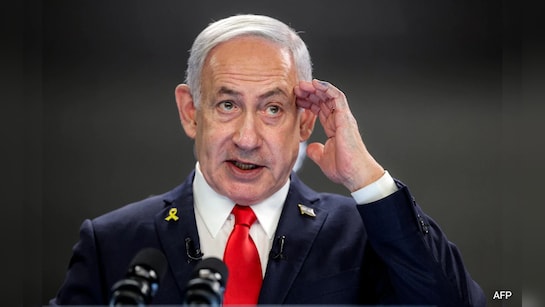
In an unprecedented move on September 9, Israel conducted an airstrike on a gated compound in Doha's Leqtaifiya district that housed Hamas' political bureau. This attack on Qatari soil—a close US ally with long-standing unofficial ties to Israel—marked a dramatic escalation in regional tensions. What made the timing particularly significant was that senior Hamas officials were at that moment considering a US-backed ceasefire and hostage proposal.
The strike, involving 15 Israeli fighter jets dropping 10 bombs, resulted in six fatalities: a Qatari security officer, senior Hamas figure Khalil al-Hayya, his office director, and three bodyguards. According to Israeli media reports, the operation failed to eliminate its primary targets, including prominent Hamas leaders Khaled Mashaal and Zaher Jabarin alongside al-Hayya.
Qatar's Response And The Regional FalloutQatar's Prime Minister Sheikh Mohammed bin Abdulrahman Al Thani condemned the attack as "cowardly" and a violation of Qatar's sovereignty. In response, Doha suspended all contact with Israeli negotiators and has prepared to host an Arab-Islamic summit this weekend. Qatar also formally protested to UN Secretary-General Antonio Guterres, denouncing the Israeli aggression in the strongest possible terms.
The United States swiftly rebuked Israel for the strikes against one of America's closest regional allies—Qatar hosts the US Centcom at Al Udeid airbase. President Trump attributed the decision directly to Prime Minister Netanyahu, stating that "Unilaterally bombing inside Qatar, a Sovereign Nation and close Ally of the United States, that is working very hard and bravely taking risks with us to broker Peace, does not advance Israel or America's goals." The White House claimed it had no prior coordination with Israel and only realized what was happening once missiles were already airborne. President Trump dispatched envoy Steve Witkoff to warn the Qataris, but the bombs had already struck by the time contact was made—a version of events disputed by Qatar.
International CondemnationIn a rare united front, the UN Security Council issued a joint statement condemning the strike, though without explicitly naming Israel. Even more remarkably, all Gulf countries closed ranks behind Qatar in condemning Israel and expressing unwavering support for Qatar's sovereignty. UAE ruler Sheikh Mohammed bin Zayed Al Nahyan personally traveled to Doha to meet with the Qatari Emir. Kuwait, Bahrain, and Saudi Arabia also strongly condemned Israel's actions—the very nations that had severed ties with Qatar in 2017 over allegations of supporting terrorism and the Muslim Brotherhood.
Netanyahu's JustificationPrime Minister Benjamin Netanyahu, already facing international scrutiny over the humanitarian crisis in Gaza, framed the bombing as part of the fight against terrorism. In a video message posted on X, he drew parallels to 9/11: "Tomorrow is September 11. We remember September 11th. On that day, Islamist terrorists committed the worst savagery on American soil since the founding of the United States. We also have a September 11th. We remember October 7th. On that day, Islamist terrorists committed the worst savagery against the Jewish people since the Holocaust."
Israel's Defense Of Its ActionsRetired General Yossi Kuperwasser, head of the Jerusalem Institute for Strategy and Security, defended the attack, stating that "Qatar chose to host a terror group on its soil, and that has consequences." He argued that Doha cannot "hide behind" sovereignty claims, adding, "They were warned again and again that hosting Hamas was a mistake, and they ignored it."
Critics have long characterized Qatar as playing both "arsonist" and "firefighter"—supporting Hamas and enabling its activities, including the October 7, 2023 attacks, while simultaneously presenting itself as a mediator and peacemaker.
Qatar's Complex RelationshipsQatar's support extends beyond Hamas. The emirate has also backed the Taliban, hosting them when they were designated a terrorist organization by the UN and fighting against Afghanistan's internationally recognized government. Qatar later facilitated talks between the Taliban and the US during the first Trump administration in 2020.
This dual approach stems from Qatar's constitutional foreign policy priorities. Article 7 of Qatar's Constitution identifies mediation as a key objective "based on the principle of encouraging peaceful resolution of international disputes." In 2023, Qatar's Ministry of Foreign Affairs created new ministerial roles focused on mediation, reinforcing its diplomatic infrastructure for conflict resolution.
Qatar's Mediation PhilosophyAccording to Qatar's Ministry of Foreign Affairs, the country's mediation aims "to promote and achieve conflict management, and the peaceful resolution of conflicts and disputes" at both inter-state level and between states and non-state actors. Qatar supports both Track I and Track 2 peace initiatives, promoting "inclusive dialogue processes that give space to some non-state actors or otherwise marginalised groups such as women, refugees, IDPs, and other minorities."
This approach has led Qatar to host various controversial groups including the Taliban, Hamas, and Syrian opposition factions during the Syrian civil war. Qatar has also supported radical groups including Al Nusra Front. Its media outlet Al Jazeera has faced accusations of interfering in other countries' internal affairs while maintaining strict censorship regarding Qatar itself. The Indian government has repeatedly objected to Al Jazeera's coverage of Indian issues, particularly regarding Kashmir.
The Strike's Puzzling TimingThe attack on Qatar remains perplexing for several reasons. Prior to October 2023, Qatar had supported Hamas in Gaza with Israel's knowledge. Following the October attacks, when many Israelis criticized Qatar, the Netanyahu government allegedly organized a Qatar-funded PR campaign to improve Qatar's image in Israel—a controversy known as the "Qatar-gate scandal."
The immediate catalyst for the strike may have been a Hamas terror attack in Jerusalem on Monday that killed six people and injured twelve. Netanyahu had demanded that Qatar expel Hamas leadership, warning that Israel would act if Qatar refused. Some argue the strikes should have come earlier, with 48 Israeli hostages still held in Gaza. Others see it as consistent with Israel's pattern of conducting assassinations during negotiations, which have historically disrupted peace talks.
Inside Israel, public anger continues to mount over the government's failure to secure the release of all hostages despite the devastating two-year war in Gaza. Internationally, Israel faces unprecedented criticism—the International Criminal Court has issued an arrest warrant for Netanyahu, Norway's sovereign wealth fund has divested from several Israeli companies, Germany has suspended arms exports for use in Gaza, and Spain has announced an arms embargo and recalled its ambassador.
Looking AheadDespite the current tensions, Middle East observers anticipate a return to the status quo. Both Doha and Hamas have indicated they won't allow Israeli actions to derail negotiations. Qatar has explicitly refuted claims that it's reconsidering its security partnership with the United States, with its International Media Office stating that "the Qatar-US security and defence partnership is stronger than ever and continues to grow." The scheduled Arab-Islamic summit for the coming weekend suggests that responses may be limited to strong condemnations of Israel and expressions of solidarity with Qatar, rather than substantive policy changes.
(The author is a journalist and political analyst)
Disclaimer: These are the personal opinions of the author