
Opinion | How The Bill To Sack Jailed Ministers Turns Justice Into Performance Art
In effect, the Bill creates a special class of litigants, of our elected Ministers, whose detention, if more than 39 days, will automatically trigger disqualification - inevitably guaranteeing that such cases will be treated as urgent matters.
- Date & Time:
- |
- Views: 59
- |
- From: India News Bull
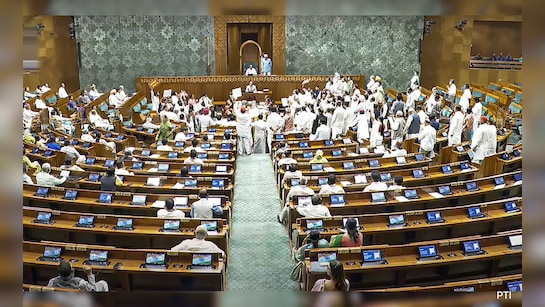
While some legislation delivers justice efficiently and quietly, others operate with a theatrical flourish where spectacle seems equally important as outcome. The Constitution (130th Amendment) Bill, 2025 - which proposes modifications to Articles 75, 164, and 239AA - firmly belongs to the latter category. This controversial legislation seeks to automatically disqualify elected leaders from office, including Prime Ministers and Chief Ministers, if they are detained for over 30 days on allegations of serious criminal charges (offenses carrying imprisonment of five years or more).
The Bill's recent introduction sparked intense parliamentary debate. Opposition parties strongly rejected it, and even ruling party allies expressed significant reservations. Though the BJP maintains the Bill upholds constitutional morality by preventing detained leaders from holding office, critics contend it undermines voter mandate. These concerns are heightened by widespread perceptions that institutions like the Enforcement Directorate are being misused for partisan purposes, with their accountability issues and judicially noted excesses raising serious questions about their impartiality.
The Bill fundamentally distorts jurisprudential principles by conflating procedure with punishment. Detention has traditionally been understood as a precautionary measure - sometimes necessary but never equivalent to adjudication. The presumption of innocence serves as a foundational protection ensuring liberty isn't sacrificed for expediency. Yet this legislation inverts this principle: longer detention increasingly equates to disqualification, regardless of whether charges are proven, trials conducted, or evidence examined - effectively placing pre-trial guilt determination in inappropriate hands. While the Bill's proponents assure that disqualified Ministers may be reappointed, the damage would already be done.
Under current law, detention doesn't remove legislators from office; only conviction can. The proposed amendment, however, imposes stricter standards on Ministers: while one might remain an MP or MLA during criminal proceedings, accepting executive office means those same proceedings could strip them of their position. The arbitrary thirty-day detention threshold bears no logical connection to investigation timelines, bail processes, or judicial review, as if time alone established guilt. This threshold fails the Supreme Court's twin test for arbitrariness established in E.P. Royappa v. State of Tamil Nadu (1974), lacking rational connection to constitutional morality while selectively burdening Ministers. It would also further strain our overburdened legal institutions.
Effectively, the Bill creates a special category of litigants - elected Ministers whose detention exceeding thirty days triggers automatic disqualification. This guarantees such cases will receive extraordinary urgency, forcing courts to prioritize these proceedings over ordinary citizens' matters - institutionalizing a citizenship hierarchy and monopolizing judicial attention merely to perform morality.
Even before enactment, history provides cautionary examples of leaders facing allegedly politically motivated arrests and suffering reputational damage long before guilt determination. The 130th Amendment would codify this problematic approach. When wielded by the Enforcement Directorate, whose methods have faced Supreme Court criticism, the Bill risks becoming a weapon rather than protection.
The Supreme Court has repeatedly rebuked the Enforcement Directorate for conduct stretching legal boundaries. The Chief Justice criticized the agency for "crossing all limits" during Tamil Nadu State Marketing Corporation raids, while Justice Surya Kant condemned them for acting "like crooks" during review petition hearings. Over the past decade, the Enforcement Directorate has filed 193 cases against politicians with only two convictions - a mere 1% success rate, as acknowledged in the Rajya Sabha. More concerning, almost all cases targeted Opposition figures. This troubling pattern stems from the Prevention of Money Laundering Act's reversal of the burden of proof - a problematic approach mirrored in the proposed amendment.
While upholding constitutional morality is commendable, the Bill's lack of safeguards makes it dangerously simplistic. The basic structure doctrine established in Kesavananda Bharati v. State of Kerala (1973) protects principles including judicial review, power separation, federalism, democracy, and rule of law that cannot be eliminated even by constitutional amendment.
The proposal to disqualify elected leaders based solely on detention without conviction or accountability mechanisms undermines these core principles. Traditional arrest procedures, followed by reasonable bail opportunities, balance preventing potential wrongdoing without prematurely destroying political careers. The Bill eliminates this nuance and vital safeguards. Parliamentary democracy depends on impeachment processes and legislative accountability, with Chief Ministers removable only through no-confidence votes, not procedural mechanisms. By replacing constitutional protections with automated disqualification, the Bill weakens collective responsibility and damages the legislature's deliberative nature. Public representative retention decisions belong to legislatures representing popular will, not courts alone. Allowing appointed Governors to dismiss elected Chief Ministers signals gubernatorial authority superseding legislative bodies - an undemocratic arrangement.
The Supreme Court's judicial review principles, including landmark Indira Gandhi v. Raj Narain rulings, consistently affirm that House views cannot be overridden by executive decree. Parliament's deliberative independence protects against transient passions, political vendettas, and mass hysteria.
Furthermore, not every offense impacts governance capacity. Some alleged actions, however morally questionable, may have no bearing on one's ability to serve as Minister or Chief Minister. Equating personal conduct with public competence dangerously punishes individuals for private matters rather than public trust violations.
Civil servants facing criminal charges receive procedural protections through avenues like Central Administrative Tribunal appeals, where termination decisions consider merit, cause, and consequence rather than assumptions. Elected representatives carrying voter trust deserve similar procedural safeguards before summary removal.
If we assume the Bill genuinely aims to instill constitutional morality, factual evidence suggests otherwise. According to the Association for Democratic Reforms, Lok Sabha members facing serious criminal charges have more than doubled under BJP rule, from 14% in 2009 to 31% in 2024. BJP MPs constitute the largest proportion, with 63 MPs (26% of their total) facing serious allegations.
The contradiction deepens considering Prime Minister Modi's third Cabinet includes 28 Ministers (of 71) facing criminal charges, with 19 accused of grave offenses from attempted murder to crimes against women. Ministers like Shantanu Thakur and Sukanta Majumdar face allegations potentially carrying decade-to-lifetime sentences. The previous term was similarly problematic, with Union Minister Nisith Pramanik appointed despite 14 pending criminal cases including murder and robbery allegations. This dissonance raises uncomfortable questions about the ruling party's commitment to constitutional morality while presiding over one of Parliament's most criminalized chambers.
While the principle deserves support, a simplistic constitutional amendment isn't the appropriate solution. As Mr. Salve notes in interviews, it's shameful such an amendment seems necessary. Historically, Ministers voluntarily stepped aside when arrested - P. Chidambaram resigned following his INX Media case arrest, A. Raja stepped down during the 2G spectrum controversy, and Lalu Prasad Yadav resigned amid the fodder scam. Earlier, LK Advani resigned during the Jain Hawala diaries controversy, demonstrating willingness to yield office facing serious allegations. While exceptions exist, and ministerial duties shouldn't be discharged from prison cells, turning governance into penal performance fundamentally misses the point if probity is the goal.
(Swabhi Tyagi is a practising lawyer at Madras High Court and Salem Dharanidharan is a DMK Spokesman and Deputy Secretary of the DMK's IT Wing.)
Disclaimer: These are the personal opinions of the author