
"A Lot Of 'BS'": Hardeep Puri On Claims Of Biofuels Damaging Engines
Oil Minister Hardeep Singh Puri on Tuesday dismissed claims of biofuels damaging automobile engines as rubbish and said petrol blended with 20 per cent ethanol is environmentally safe to use.
- Date & Time:
- |
- Views: 73
- |
- From: India News Bull
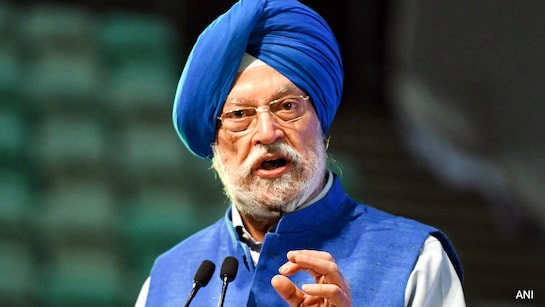
Oil Minister Refutes Claims About Biofuels Harming Vehicle Engines
New Delhi:
On Tuesday, Oil Minister Hardeep Singh Puri strongly rejected assertions that biofuels damage automobile engines, describing such claims as nonsense. He affirmed that petrol containing 20 percent ethanol is environmentally safe for vehicle use.
"All these stories you're hearing about biofuels being harmful for engines, there's a lot of 'BS' - 'B' capital, 'S', capital. And I'm not sure what that means, but it's a specializer," he stated during KPMG's annual energy and resources conference, ENRich 2025, held in New Delhi.
While not explicitly stating it, he was implying a profanity equivalent to "rubbish."
He emphasized that petrol blended with 20 percent ethanol derived from sugarcane or food grains is completely safe for use.
With all 90,000-plus petrol stations across India now exclusively selling E20 petrol (80 percent petrol mixed with 20 percent ethanol), some vehicle owners have expressed concerns about effects on older vehicles. Car manufacturers initially contributed to confusion by suggesting E20 fuel hadn't been tested on older vehicles, though they later reversed this position, confirming it was safe to use.
Mr. Puri and his ministry have consistently dismissed concerns about E20 usage as unfounded, though they acknowledged that older vehicles might require replacement of certain rubber components and gaskets, describing this as a "simple process."
During Tuesday's event, Mr. Puri noted that ethanol content in petrol has risen from just 1.4 percent in 2014 to the current 20 percent. "And I want to put a full stop there. We will now evaluate where to go next. All these rumors suggesting we're planning another major increase - we haven't reached that conclusion," he clarified.
Addressing criticism about E20 implementation, he mentioned that critics often cite interviews with automobile engineers whose recently purchased vehicles allegedly performed well until E20 was introduced.
However, he stressed the importance of knowing which specific vehicle the engineer was using and their location. "If this person lives in Gurugram or Delhi and commutes to Gurugram daily, I can provide 21 reasons why the car's efficiency might decrease." For a country that relies on imports for 88 percent of its oil requirements, biofuels and cleaner energy alternatives are essential necessities, he emphasized.
According to International Energy Agency projections, India's energy demand will increase at three times the global rate over the next two decades. "25 percent of the worldwide increase in demand will originate from India." Mr. Puri added that India had 700 Global Capability Centers (GCCs) in 2010, which has grown to 1,800 currently and will reach 2,200 by 2030. These centers currently employ 1.9 million professionals and generate $65 billion in annual revenue. By 2030, this is expected to expand to 2.8 million jobs and over $100 billion in revenue.
Responding to social media discussions about 20 percent ethanol-blended petrol's impact on vehicles, Mr. Puri's ministry issued a statement last month indicating that concerns about significant reductions in fuel efficiency were unfounded, adding that the fuel actually offers improved acceleration.
The ministry described the addition of 20 percent ethanol (derived from sugarcane or maize) to petrol as a national initiative aimed at reducing emissions and increasing farmers' income, which some parties are attempting to "derail" by spreading fear and confusion.
On August 4, the ministry posted on X: "Ethanol, having lower energy density than petrol, causes a slight decrease in mileage, estimated at 1-2 percent for four-wheelers designed for E10 and calibrated for E20, and approximately 3-6 percent in others." Social media posts have highlighted that ethanol's calorific value is 29.7 compared to petrol's 46.4, meaning the energy produced per liter is 65 percent of regular petrol.
E10 refers to petrol mixed with 10 percent ethanol.
Some social media posts also reference a June 2021 Niti Aayog report stating that E20/E27 in vehicles designed for E10 can deteriorate rubber/plastic components, cause metal corrosion, damage fuel systems, reduce mileage, and potentially necessitate component upgrades.