
S Jaishankar Advocates for Global Workforce Model Amid H-1B Visa Tensions and Trade Challenges
- Date & Time:
- |
- Views: 68
- |
- From: India News Bull
External Affairs Minister S Jaishankar has emphasized that today's evolving global landscape necessitates an international workforce, highlighting that countries cannot ignore the reality that workforce demands cannot be fulfilled solely through national demographics in many nations.
His comments come amid ongoing trade tensions and tariff challenges, including President Donald Trump's stringent immigration policies, particularly the new USD 100,000 fee imposed on H-1B visas, which predominantly affects Indian professionals who constitute the majority of these temporary work visa recipients.
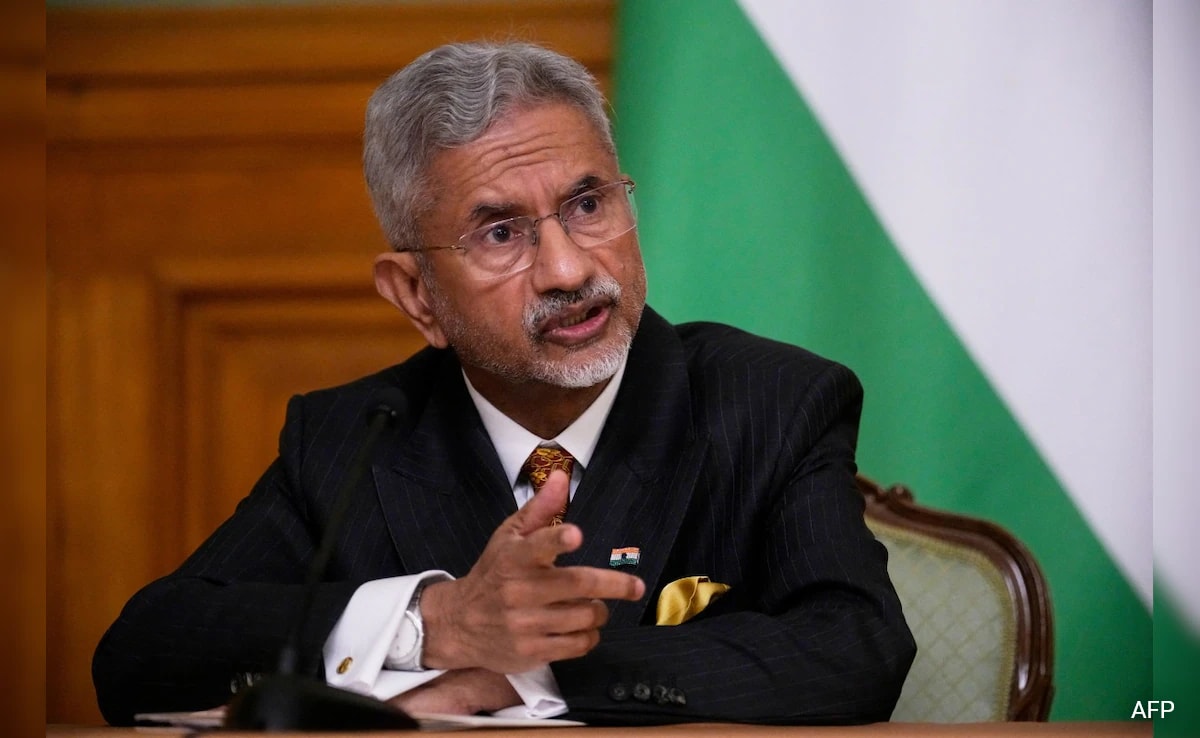
Speaking at the event 'At the Heart of Development: Aid, Trade, and Technology' organized by the Observer Research Foundation on the sidelines of the UN General Assembly session, Jaishankar advocated for developing a more acceptable, modern, and efficient model of a global workforce that can function within a distributed, global workplace.
"Where that global workforce is to be housed and located may be a matter of political debate. But there's no getting away. If you look at demand and demographics, demands cannot be met in many countries purely out of national demographics," he stated.
"This is a reality. You cannot run away from this reality. So how do we create a more acceptable, contemporary, efficient model of a global workforce, which is then located in a distributed, global workplace? I think this is a very big question today which the international economy has to address," he added.
Jaishankar predicted that as part of this re-engineered world, we will witness new and different trade arrangements between countries, with nations making decisions they might not have considered previously, seeking new partners and exploring new regions due to current circumstances.
Despite uncertainties, trade eventually finds its path, he noted, asserting that conducting trade today is "easier" thanks to physical and digital advancements, including improved roads, shipping, and smoother trade interfaces than ever before in human history.
"So for all the obstacles and complications that may arise, I also think they will be countered in some ways or mitigated in some ways by what will happen in the great domain," he remarked.
Jaishankar observed that in terms of technology, trade, connectivity, and workplace dynamics, "we are going to end up in a very different world in a very short term." In today's "very turbulent" environment, it's crucial, particularly for large nations, to develop self-reliance capacities, which he emphasized is "very much" India's focus.
He pointed out that multi-polarity isn't something that would simply occur but must be constructed by building national capabilities.
"When you build national capacities and have national experiences, some of it is transposable to other people who may relate to it," he explained, citing India's Digital Public Infrastructure as an example.
"There are many other societies who find the Indian model of DPI frankly far more absorbable, relevant, transposable than a European model or an American model of how to run a more digital life," he said.
Reflecting on recent global trends, Jaishankar noted that the world has been moving toward greater unpredictability, volatility, and uncertainty.
"When you predict something like that, people say, okay, so you predict what that means. Now, by the very definition of unpredictability, you don't know what you're heading towards. It's not an extrapolation of what has been there in the past. Clearly, it's disruptive," he explained.
He added that while people anticipated differences between presidential terms, referring implicitly to Trump's second term with its imposed tariffs on numerous countries, the reality is that "terms are different. Times are different. A few months make a difference. A few weeks make a difference."
Jaishankar observed that over recent years, global concerns have centered around supply chains and production sources. The decision to de-risk the world and hedge against uncertainties meant establishing more production centers and creating more resilient supply chains.
"But now we also have to protect ourselves against the uncertainty of market access. So you worry about over-dependence on markets just as you worry about over-dependence on supplies or over-dependence on connectivity," he stated.
"In a sense, almost the entire economic chain has become far more riskier or far more difficult to assume in many ways," he added.
In today's diplomatic landscape, the central challenge is "how do you de-risk, how do you hedge, how do you become more resilient, how do you safeguard yourself against unforeseen contingencies, which again I emphasise by definition are unforeseen, and really build policy and plans around that. That's a very big challenge for the entire world," he concluded.
Source: https://www.ndtv.com/india-news/s-jaishankar-amid-h-1b-visa-fee-row-world-requires-global-workforce-9344203