
Congress Leader Charged Over Ladakh Violence, BJP Claims He Was Part Of Mob
- Date & Time:
- |
- Views: 46
- |
- From: India News Bull
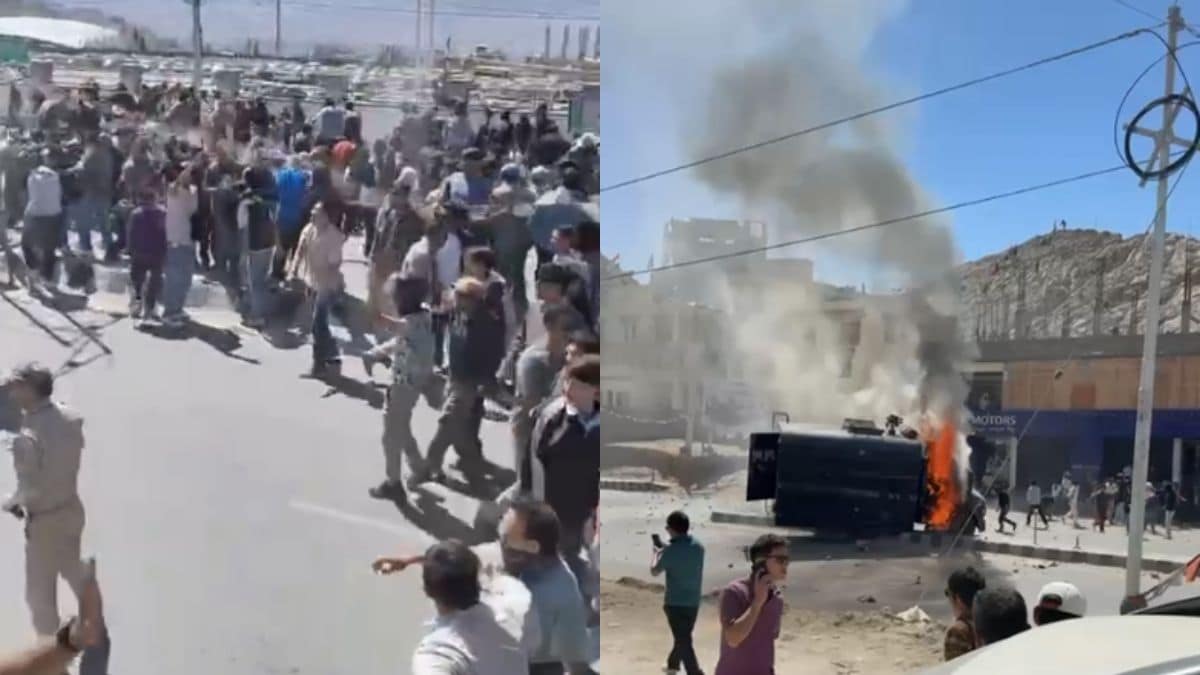
Following the violent unrest in Ladakh yesterday that claimed four lives and left 90 injured, authorities have filed charges against Congress Councilor Phuntsog Stanzin Tsepag. Government officials attribute the violence to climate activist Sonam Wangchuk's inflammatory rhetoric.
Authorities imposed curfew restrictions across Leh district in response to the disturbances. Security forces including the Indo-Tibetan Border Police, CRPF, and local police have been deployed to restore order. Similar restrictions have been implemented in Kargil following calls for shutdown demanding statehood and constitutional protections for Ladakh.
The violence saw protesters set fire to both the BJP headquarters in Ladakh and the Ladakh Hill Council Secretariat. BJP representatives subsequently accused the Congress party of instigating the unrest, sharing images showing Councilor Tsepag participating in the violent demonstrations.
Mr. Wangchuk dismissed these allegations, contending that Congress lacks sufficient influence in the region to mobilize 5,000 young protesters onto the streets.
Ladakh's Lieutenant Governor Kavinder Gupta characterized the clashes as a coordinated conspiracy and promised legal action against all participants. Law enforcement quickly registered a formal complaint naming the Congress Councilor for his alleged participation in violence and property destruction.
The Home Ministry has explicitly accused Sonam Wangchuk of "instigating the mob through his provocative speech." Prior to the outbreak of violence, Wangchuk had been conducting a hunger strike for 15 days advocating for statehood and constitutional safeguards for Ladakh. He terminated his protest shortly after violence erupted in Leh.
According to government statements, during his hunger strike, Wangchuk referenced the recent Nepal Gen Z protests as a model for civil action.
"Despite appeals from various leaders urging Wangchuk to end his hunger strike, he persisted, misleading the public through provocative references to Arab Spring-style protests and mentions of Gen Z demonstrations in Nepal," stated the Ministry of Home Affairs.
The Ministry further claimed that protesters influenced by Wangchuk's rhetoric left the hunger strike location and attacked both a political party office and the government office of the CEC in Leh. "Evidence clearly indicates that the mob was directed by Sonam Wangchuk through his inflammatory statements," the MHA declared.
Over the last three years, Ladakh has experienced increasing discontent under direct central administration. Residents have consistently demanded statehood and constitutional protections to preserve their territorial rights, cultural heritage, and natural resources.
Ladakh was established as a distinct Union Territory in August 2019 following the revocation of Article 370 and the division of Jammu and Kashmir. Initially, many Leh residents including Wangchuk welcomed this development. However, within a year, concerns emerged about what locals described as a political vacuum under the Lieutenant Governor's administration.
This growing dissatisfaction sparked widespread demonstrations and hunger strikes. In an unprecedented development, political and religious organizations from Buddhist-majority Leh and Muslim-majority Kargil formed a coalition under the unified platform of the Apex Body of Leh and the Kargil Democratic Alliance.
The central government responded by establishing a high-level committee to address Ladakh's demands. However, multiple rounds of negotiations produced no significant progress. In March this year, Ladakhi representatives met with Union Home Minister Amit Shah in Delhi, but talks broke down shortly thereafter. Regional leaders reported that the Home Minister had rejected their fundamental demands.
"During our meeting, the Home Minister admitted he had erred in separating Ladakh as an independent Union Territory. He also dismissed our requests for statehood and implementation of the Sixth Schedule," revealed one leader who participated in the discussions with NDTV.