
Explained: Why Iran Refuses To Step Back From Uranium Enrichment
- Date & Time:
- |
- Views: 51
- |
- From: India News Bull
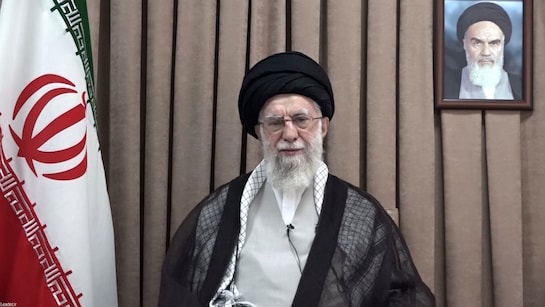
Iran's supreme leader, Ayatollah Ali Khamenei, this week firmly rejected any compromise regarding the country's nuclear program, steadfastly refusing to abandon uranium enrichment despite international pressure.
This contentious issue remains at the heart of ongoing disputes with Western nations, particularly the United States, which continues to accuse Tehran of pursuing nuclear weapons—an allegation Khamenei has repeatedly denied.
According to Behrouz Kamalvandi, spokesman for the Atomic Energy Organization of Iran, the country's nuclear sector provides employment for more than 17,000 individuals.
Kamalvandi maintains that nuclear energy serves multiple purposes, including electricity generation, healthcare, agriculture, and advanced technological applications.
Khamenei emphasized that enriched materials support various sectors, including Iran's strained electrical grid during intense summer heat waves.
Civilian nuclear facilities typically utilize uranium enriched to between three and five percent, while Iran's research reactor requires enrichment levels up to 20 percent, according to Iranian media sources.
Enrichment levels escalated to 60 percent following Donald Trump's 2018 decision to withdraw from the 2015 nuclear agreement and reimpose sanctions during his first presidential term.
Iran consistently maintains that its enrichment program has no military objectives, despite the fact that 60 percent enrichment approaches the 90 percent threshold required for weapons development.
The International Atomic Energy Agency (IAEA), the UN's nuclear watchdog, notes that Iran stands alone as the only non-nuclear weapon state enriching uranium to such high levels.
Tehran claims it has suffered significant consequences for its enrichment activities, including assassinations of nuclear scientists and sabotage of facilities in attacks largely attributed to Israel.
In June, Israel conducted strikes against Iran, later joined by the United States in operations targeting nuclear installations.
Washington currently demands that Tehran abandon enrichment completely—an American red line.
The 2015 agreement limited Iran's enrichment to 3.67 percent in exchange for sanctions relief over a ten-year period concluding this October.
Khamenei stated that Iran had "fulfilled all obligations we were supposed to do" but "none of the promises they made were fulfilled."
He argues that relinquishing enrichment would place the Islamic Republic in an even more vulnerable position than under the 2015 agreement, which already faced significant opposition from hardliners.
Tehran also considers civilian nuclear energy—including uranium enrichment—a fundamental right under the Nuclear Non-Proliferation Treaty (NPT), to which it is a signatory.
Iran's nuclear program originated in the 1950s under the US-backed shah, Mohammad Reza Pahlavi, who entered into a civilian nuclear cooperation agreement with Washington in 1957.
Tehran ratified the NPT in 1970, placing its nuclear materials under IAEA supervision.
In 1974, the shah initiated an ambitious plan to construct at least 20 power plants to address rising domestic energy requirements and compensate for finite oil reserves.
Construction began in Bushehr with German company Siemens but was suspended following the 1979 Islamic Revolution and the 1980-88 Iran-Iraq war.
In 2002, satellite imagery broadcast by US media revealed two previously undeclared sites near Arak and Natanz.
The following year, the United Nations discovered traces of enriched uranium at Natanz, one of Iran's primary facilities targeted in this year's joint US-Israeli strikes.
Western powers, led by the United States and supported by Israel, accuse Iran of pursuing nuclear weapons—an allegation Tehran denies—resulting in a prolonged international standoff.
Iran initiated enrichment at 3.5 percent in 2006, later increasing to 4.8 percent. The United Nations imposed its first sanctions that December.
By 2009, enrichment reached 20 percent. Tensions eased in 2015 with the landmark nuclear agreement between Iran and major powers.
However, with the United States' withdrawal, renewed sanctions, and Iran's decision to enrich uranium to 60 percent, the dispute has returned to the forefront of international attention, with potential additional sanctions looming.