
'Let Wife Remain MLA': Top Court On UP Leader's Plea To Stay Conviction
- Date & Time:
- |
- Views: 63
- |
- From: India News Bull
Supreme Court Urges Irfan Solanki to Allow Wife to Continue as MLA During Conviction Appeal
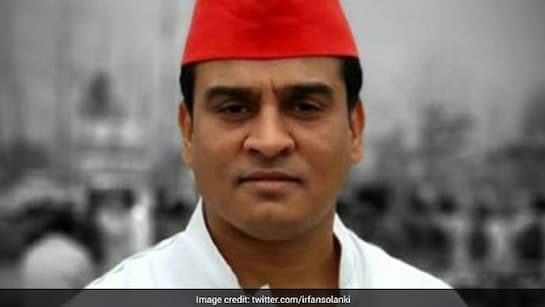
Irfan Solanki, convicted in 2023 for arson in Jajmau, UP, is seeking to stay his conviction that led to his disqualification as an MLA.
New Delhi:
During Tuesday's hearing, the Supreme Court verbally suggested that disqualified Samajwadi Party leader Irfan Solanki should permit his wife, Naseem Solanki, to continue serving as MLA after she won the by-election in November from Uttar Pradesh's Sishamau constituency.
This observation came as the apex court considered Irfan Solanki's petition requesting a stay on his conviction in an arson case that had resulted in his removal from legislative office.
The three-judge bench comprising Justices Surya Kant, Ujjal Bhuyan, and N. Kotiswar Singh questioned the rationale behind Solanki's petition, noting that his wife had already been elected following his disqualification and that no elections would occur for the next two years.
"Your wife is elected. Allow that poor lady to be an MLA. There's no election for the next two years," Justice Surya Kant remarked to Solanki's legal representative.
The Court expressed puzzlement over why Solanki would use his disqualification, which had enabled his wife's electoral victory, as grounds to seek a stay on his conviction.
During proceedings, the justices also recommended that Solanki's counsel pursue relief through the Allahabad High Court, suggesting, "We can direct the High Court to decide the case within six months."
Nevertheless, the Supreme Court ultimately agreed to hear Solanki's petition and adjourned the hearing at the request of his counsel.
In June last year, Irfan Solanki and four others were convicted by a Kanpur Nagar Sessions Court for setting fire to a woman's residence in Jajmau, Uttar Pradesh.
On appeal, while the Allahabad High Court granted him bail, it declined to stay his conviction. This prompted Solanki to approach the Supreme Court, seeking to overturn the ruling that had disqualified him from his position as an MLA.
In his petition, Solanki contends that both the Sessions Court and High Court failed to recognize that the prosecution's case was built on conjecture and unsubstantiated assumptions. He argues that the testimonies against him came from unreliable witnesses who were either "chance witnesses" or biased due to personal animosity.
"The evidence given was under administrative pressure and political rivalry, hence they could not have been relied upon," his petition states.
Additionally, Solanki claims his conviction has inflicted irreparable damage by preventing him from fulfilling his duties as an elected representative and jeopardizing his future electoral prospects.
His plea emphasizes that maintaining the conviction "would cause irrevocable harm and damage to an electorate of close to 2,70,000 citizens, which is a significant number in terms of Legislative Assembly elections."
The Court has scheduled the matter for a future hearing, with the exact date to be specified in the order yet to be uploaded on the Supreme Court website.
Senior Advocate Abhishek Manu Singhvi will represent Irfan Solanki, while Advocate (AOR) Ankit Goel appears for the respondent, the Uttar Pradesh government.