
Beijing's Success vs Delhi's Crisis: How China's Decade-Long Fight Against Air Pollution Offers Lessons for India
- Date & Time:
- |
- Views: 72
- |
- From: India News Bull
New Delhi:
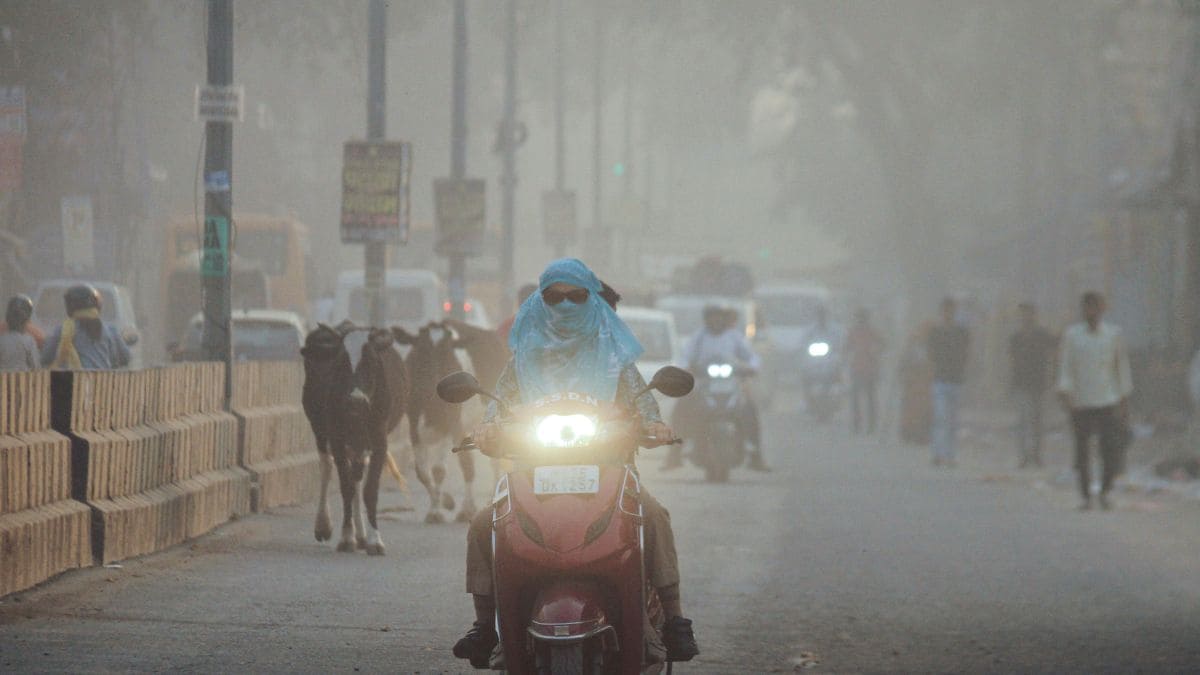
Delhi and vast areas of northern India are currently suffering under a dense layer of toxic smog, with the national capital recording an AQI of 437 at 4 pm Tuesday, dropping slightly to 370 by 8 am Wednesday. Amid this crisis, the Chinese embassy has highlighted Beijing's successful battle against similar air pollution challenges.
"Both China and India know the struggle with air pollution amid rapid urbanisation," embassy spokesperson Yu Jing stated Monday evening on X. The post included comparative AQI readings that revealed a striking contrast: Beijing showed a moderate 68 while Delhi NCR registered a hazardous 447.
Yu attributed this difference to "China's sustained efforts over the past decade" and offered to share insights on how China effectively tackled its air pollution problems through an upcoming series of posts.
This offer received positive responses from numerous X users, reflecting the desperate situation in Delhi where severe winter air quality has become an annual yet unresolved public health emergency.
One user suggested, "Thank you so much. Smog towers built by your country may be gifted to tackle air pollution in Delhi. It may strengthen relations in a way..." Yu responded with handshake emojis.
Another commented, "Please share your expertise... It will be highly appreciated for South Asia. I love China in terms of transformation of life. Thanks."
Some comments reflected frustration with Indian governance, with one user quipping, "Please ask China to take over the NCR region," while others criticized India's approach to accountability: "China punishes corrupted officials… India rewards with suspension, a slap on the wrist. Results are visible."
Not all responses were positive, however. One user posted evidence showing Beijing's AQI at 146 on Monday evening – still significantly lower than Delhi's reading of over 400.
How China is winning its AQI battle
Beijing's air quality has seen remarkable improvement over the past decade following China's declaration of a 'war on pollution' and the 2013 implementation of a national clean-air action plan. This comprehensive strategy established regional targets to reduce PM2.5 levels and held local officials accountable for meeting these goals.
A critical component was the expansion and improvement of AQI monitoring systems, with particular emphasis on ensuring data integrity at all levels.
The Chinese government identified coal usage, especially for residential heating, as a major pollution source and systematically transitioned to gas-powered electricity and heating facilities.
Simultaneously, China implemented strict vehicle emission controls through improved fuel and vehicle standards while enhancing public transportation to encourage reduced private car usage. They also limited new vehicle registrations by restricting license plate issuance.
On Wednesday, December 17, Delhi restricted vehicle entry to control air pollution (File).
While Delhi has attempted similar measures, such as the AAP government's 'odd-even' scheme and the Delhi Transport Corporation's transition to electric buses, enforcement has consistently been problematic, particularly in a culture where evading rules through influence is commonplace.
In contrast, China rigorously enforced its policies between 2013 and 2018, then enhanced them with revised strategies focused on sustainable improvements through industrial restructuring and regional coordination.
The results were dramatic: a 64 percent reduction in PM2.5 levels between 2013 and 2023.
India's AQI problem
Delhi and northern India face similar pollution sources: construction dust, vehicle emissions, industrial smoke, and coal burning, all contributing to the winter smog blanket over the capital.
India has begun shifting from reactive to proactive approaches, implementing policies to remove older polluting vehicles, regulate industrial emissions, and promote cleaner household fuels.
However, enforcement remains the primary obstacle, as illustrated by the reversal of the firecracker ban before Diwali this year. Despite a 77.5 percent reduction in farm fires, Delhi's air quality dropped to a five-year post-Diwali low in October.
Average PM2.5 levels reached alarming levels of 488 micrograms per cubic meter – nearly 100 times the WHO's recommended exposure limit – representing a catastrophic 212 percent increase from pre-Diwali readings.
Air pollution reached a three-year high despite the Supreme Court allowing limited use of 'green' firecrackers within specific timeframes – orders that experts argued were ill-advised and largely ignored.
NDTV is now available on WhatsApp channels. Click on the link to get all the latest updates from NDTV on your chat.
Source: https://www.ndtv.com/world-news/delhi-aqi-today-delhi-air-quality-crisis-what-is-delhi-aqi-china-air-quality-beijing-aqi-chinese-embassy-delhi-offers-help-9830680