
Opinion | The Logic Of Pakistan Bombing Its Own People And Getting Away With It
- Date & Time:
- |
- Views: 47
- |
- From: India News Bull
Opinion | The Logic Of Pakistan Bombing Its Own People And Getting Away With It
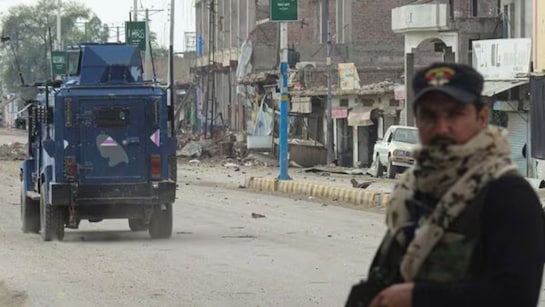
Pakistan has once again engaged in a troubling military campaign, deploying Chinese-manufactured aircraft to bomb its own citizens in tribal regions. These areas have historically suffered from being positioned along routes that Pakistan utilized for decades to conduct terrorist operations into Afghanistan. Now that the Tehrik-e-Taliban (TTP) is reportedly launching attacks from Afghanistan, Islamabad has responded by bombing these regions to eliminate a threat largely created by its own previous policies. This represents standard practice for Pakistan, which vocally condemns bombings in Gaza while showing no hesitation in attacking defenseless populations within its own borders.
The most recent instance of Pakistan's harsh military operations occurred in the Tirah valley, home to Orakzai and Afridi Pashtun communities, situated in extremely rugged mountainous territory extending toward the Afghan border. Pakistan employed Chinese aircraft to bomb a village using the LS-6, a precision-guided glide bomb developed in 2006 by the Luoyang Electro-Optics Technology Development Centre, a subsidiary of China Aerospace Science and Technology Corporation. The precision aspect appears questionable in this case.
The assault resulted in over thirty casualties, including women and children. The high death toll may have been due to the target being a Tehrik-e-Taliban bomb-manufacturing facility, which caused multiple secondary explosions. However, even basic military planning would anticipate that striking a bomb factory would cause widespread collateral damage. This consideration seems to hold little importance for Pakistani authorities, who have conducted such operations repeatedly since 2007, executing at least eight major military campaigns utilizing aircraft, artillery, and various other means against these vulnerable populations. Previously, journalists were taken on guided tours of these areas to witness overturned roofs in what the army termed efforts at "transparency." The situation has only deteriorated since then, with operations intensifying against what Pakistan labels as 'kharijites' or 'Fitna Al Khawarij' – derogatory terminology suggesting the campaign targets those who have deviated from the "true faith" in Islam.
This narrative is increasingly rejected, with even local law enforcement growing weary of this duplicitous approach.
This critical region, encompassing Kurram and areas like the Parachinar border, has experienced conflict for decades. It provides the most direct route to Kabul and predictably served as one of the launching points for Pakistan's state-sponsored terrorism into Afghanistan. These circumstances have exacerbated local divisions and issues, while hundreds of refugees have been settled on village lands. Last year, police in Lakki Marwat, approximately six hours from Tirah valley, protested against Pakistan army operations, arguing that if counter-terrorism was truly the objective, they could execute it more effectively themselves. Their argument was straightforward – alienating local communities through bombing and artillery strikes undermines intelligence gathering efforts necessary to apprehend specific targets.
Furthermore, many ongoing disputes causing inter-tribal tensions – including Shia-Sunni conflicts – have been instigated by the Pakistani state itself. A notable example was when Rawalpindi supported the Haqqanis, who subsequently besieged the (Shia) Turi tribe for four years from 2007 to 2011. The Haqqani network was effectively an ISI creation and dominated the region during this period. Later came the contrasting case of then-TTP leader Hakimullah Mehsud, who allocated disputed land in Marghai Cheena to the Chamkani tribe. Essentially, local populations have been manipulated by the Pakistan army's "strategic" objectives, only to be bombed afterward. It's worth noting that Hakimullah was eventually eliminated by a US drone strike as part of an arrangement where Pakistan provided intelligence on certain Al Qaeda operatives. Consequently, the United States, particularly under Trump's administration, is unlikely to condemn Pakistan for its widespread brutality, having been complicit in this dynamic for years.
Perhaps the most distressing reality is that Pashtun communities have been working to break this cruel cycle – a system that first exploited them against Afghanistan and now claims to "protect" them from Taliban aggression. The Pashtun Tahafuuz Movement (PTM), under the charismatic leadership of Manzoor Pashteen, has maintained entirely peaceful advocacy, calling for cessation of operations by both the army and the TTP. A massive 'jirga' last year – systematically obstructed by state authorities – resolved that communities would neither support nor finance either the TTP or the army, that they should enjoy freedom of movement across borders, and that a delegation would engage with Afghanistan to resolve issues, given that TTP members predominantly originate from these regions. These initiatives were thwarted, with PTM leaders imprisoned while military operations continued unabated. Following conventional military logic, Pashteen should have been embraced by authorities as a stabilizing influence. This never materialized.
The underlying reality is stark: Pashtuns are regarded as the 'other' by the deeply racist Pakistani military establishment. It maintains a Punjabi-centric approach at the expense of all others.
Taliban leadership has consistently advised Pakistani authorities to address their internal divisions rather than attribute blame externally for the TTP situation. While these groups may indeed operate from adjacent areas across the border, Kabul faces significant challenges in exercising control over the country's peripheral regions, given its own complex web of tribal and foreign allegiances. Afghanistan is simultaneously engaged in combating the Islamic State, which fiercely opposes Taliban rule, with at least one faction reportedly receiving Pakistani support.
This introduces another layer of complexity. Russian sources claim certain Islamic State elements received American financing. Currently, the US seeks control of Bagram airfield, with Trump threatening "bad consequences" should the Taliban refuse. This prospect has considerably alarmed China, as the airfield's proximity to major Chinese nuclear installations represents a strategic concern. Chinese Foreign Minister Wang Yi, who recently presided over a Pakistan-Afghanistan-China trilateral meeting, advocated for collaborative peace efforts across 'South Asia' – positioning Beijing as mediator amidst increasing US involvement.
The current situation represents a volatile convergence of superpower and regional interests, with Pashtun communities caught literally and figuratively in the crossfire. International condemnation of Pakistan's indiscriminate bombing campaigns remains unlikely. The US will primarily analyze the effectiveness of Chinese precision-guided weapons in Pakistani hands, while Beijing lacks leverage to criticize. Additionally, the trilateral framework outlines ambitious cross-border development initiatives, including extending the China-Pakistan Economic Corridor into Afghanistan, alongside proposed railway networks, all intended to preempt further American influence in the region.
While Islamabad currently benefits from competing superpower interests, it underestimates the Pashtun factor. The Afridi tribes have historically risen against colonial oppressors like the British. Today's conflict may evolve into an existential struggle – nothing commands greater moral authority than survival itself.
For India, this new cold war has arrived at its doorstep, though maintaining a degree of engagement might prove necessary.
(Tara Kartha was with the National Security Council Secretariat)
Disclaimer: These are the personal opinions of the author