
Delhi Records Second-Worst December Air Quality with AQI Reaching 461: Health Risks and Emergency Measures Implemented
- Date & Time:
- |
- Views: 38
- |
- From: India News Bull
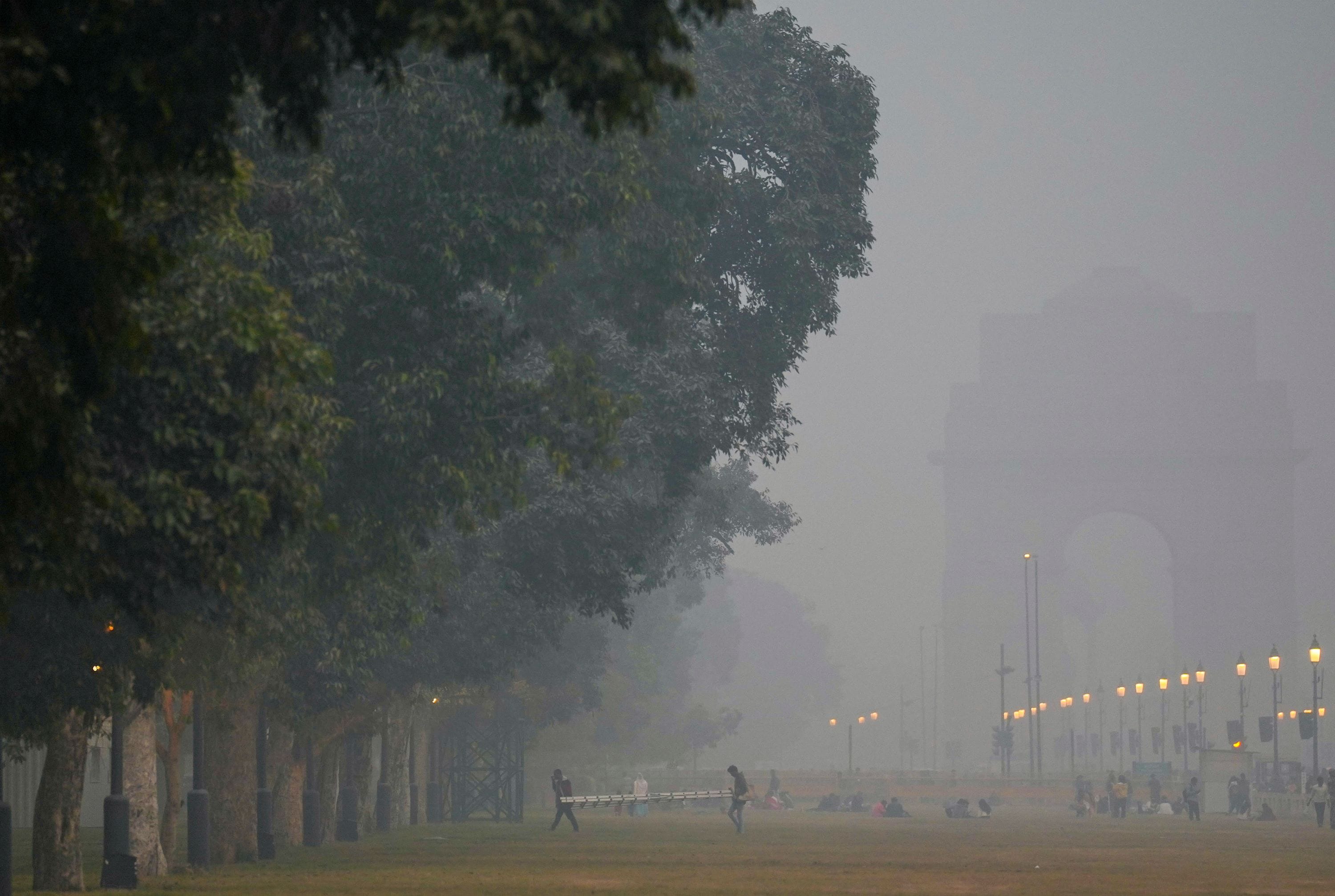
Delhi's air quality plummeted to an alarming AQI of 461 on Sunday, marking this winter's most polluted day and the second-worst December air quality day since records began. The severe pollution resulted from a combination of weak winds and low temperatures that trapped pollutants near ground level.
At the Wazirpur monitoring station, the AQI reached the maximum measurable value of 500, beyond which the Central Pollution Control Board (CPCB) cannot register data. By 4 pm, an overwhelming 38 out of Delhi's 39 active air quality monitoring stations reported 'severe' pollution levels according to the CPCB's Sameer app, with only Shadipur remaining in the 'very poor' category.
Rohini also hit the maximum 500 AQI, while Ashok Vihar, Jahangirpuri and Mundka recorded readings of 499. Thick smog blanketed the national capital as the AQI rose dramatically from 432 the previous day. Since the AQI monitoring system was implemented in April 2015, this represents an unprecedented level of winter pollution, with only December 21, 2017, recording a higher AQI of 469 during this month.
Meteorologists predict that wind speeds may increase after noon on Monday, though any improvement in air quality will likely be gradual. The CPCB classifies an AQI between 401 and 500 as 'severe', posing significant health risks.
Health expert Shila Yadav warned of serious public health concerns due to prolonged exposure to such hazardous air. She advised against outdoor activities, particularly morning exercise, recommending that physical activity be moved indoors. With AQI levels between 300-400 and exceeding 450, fine particulates like PM2.5 can penetrate deep into the lungs when exposed outdoors.
Yadav recommended limiting outdoor time to essential activities, preferably later in the day when sunlight improves pollutant dispersion. Masks are essential for those who must venture outdoors for work. She cautioned against strenuous activities requiring heavy breathing and emphasized maintaining a healthy diet with adequate hydration and seasonal fruits to help eliminate toxins from the body.
In response to the crisis, the Commission for Air Quality Management (CAQM) implemented Stage IV measures under the Graded Response Action Plan (GRAP) on Saturday, including a comprehensive ban on all construction and demolition activities throughout Delhi-NCR. This followed the earlier implementation of Stage III GRAP measures as pollution levels continued to rise amid unfavorable weather conditions.
Sunday's weather recorded a minimum temperature of 8.2 degrees Celsius, slightly below the seasonal average, with a maximum of 24 degrees Celsius. The India Meteorological Department reported relative humidity at 87 percent at 5:30 pm.
Environmentalist Bhavreen Khandari criticized the current approach as reactive, emphasizing that long-term improvement requires immediate systemic policy decisions. She highlighted extensive construction activities as a contributor and stressed the need to address resource and staffing shortages in government regulatory bodies.
The weather department forecasts moderate fog for Monday, with temperatures expected to range between 8 and 23 degrees Celsius.
Source: https://www.ndtv.com/india-news/delhi-records-highest-aqi-of-season-at-461-air-quality-remains-severe-9808701