
Top Court Seeks Reply From States On Pleas For Staying Anti-conversion Laws
The Supreme Court on Tuesday sought the stand of several states on pleas seeking a stay on their respective anti-conversion laws.
- Date & Time:
- |
- Views: 78
- |
- From: India News Bull
New Delhi:
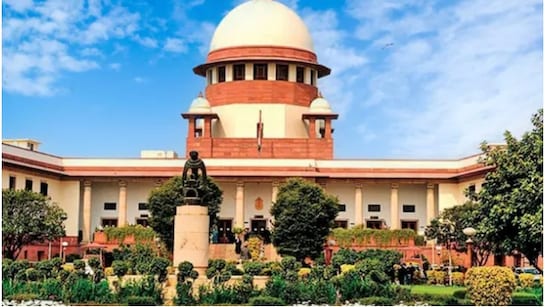
The Supreme Court on Tuesday requested responses from various states regarding petitions seeking to suspend their respective anti-conversion legislation.
A bench led by Chief Justice B R Gavai and Justice K Vinod Chandran issued notices to the states, clarifying that it would consider requests to stay these laws once the responses are received.
The court allowed states four weeks to submit their replies and granted petitioners two weeks afterward to file rejoinders. The case was scheduled for further hearing after six weeks.
Meanwhile, the bench permitted senior advocate C U Singh, who represents one of the petitioners challenging the anti-conversion laws, to modify the petition considering the "more draconian" amendments made by states such as Uttar Pradesh to existing legislation.
The court was addressing petitions that challenge the constitutional validity of anti-conversion laws enacted by multiple states, including Uttar Pradesh, Madhya Pradesh, Himachal Pradesh, Uttarakhand, Chhattisgarh, Gujarat, Haryana, Jharkhand, and Karnataka.
Arguments were presented by senior advocates and others concerning the controversial issue of religious conversions occurring through marriage or other means.
Singh emphasized the urgency of the matter, cautioning that "anybody who marries in an interfaith marriage, bail would become impossible".
He noted that numerous states had already enacted such legislation, with Rajasthan being the most recent to pass similar laws.
Singh highlighted that amendments in Uttar Pradesh allowed third parties to file complaints, resulting in "huge amounts of harassment" in interfaith marriages and church gatherings, where mobs frequently intervene.
He requested approval for the amendment applications submitted in the special leave petitions.
Senior advocate Indira Jaising requested continuation of an interim stay on the law passed by Madhya Pradesh.
Advocate Vrinda Grover informed the bench that intervention applications had been filed seeking stays on similar laws in Uttar Pradesh and Haryana.
Additional Solicitor General K M Natraj opposed the request for interim relief on behalf of some states, stating, "After three to four years, suddenly they file for stay. We will file our replies." The bench also ordered the separation of a distinct plea filed by lawyer Ashwini Upadhyay, who sought a ban on deceitful religious conversions.
"Who will find out whether it is a deceitful conversion?" the Chief Justice inquired.
The court appointed advocate Shrishti as the nodal counsel for petitioners and advocate Ruchira as the nodal counsel for the respondent states to facilitate communication in the case.
Previously, the Centre questioned the legal standing of activist Teesta Setalwad's NGO Citizens for Justice and Peace in challenging contentious state laws regulating religious conversions related to interfaith marriages.
The Union of India alleged that the NGO permits its name to be used "at the behest of some selected political interest" and has collected substantial funds by exploiting the suffering of riot-affected individuals.
"From a series of judicial proceedings, it is now established that the petitioner 1 allows its name to be used through its two office-bearers at the behest of some selected political interest and also earns out of such activity," the Ministry of Home Affairs had stated.
On January 6, 2021, the Supreme Court agreed to examine certain new and controversial laws from states like Uttar Pradesh and Uttarakhand that regulate religious conversions resulting from interfaith marriages.
The Uttar Pradesh legislation covers not only interfaith marriages but all religious conversions, establishing detailed procedures for anyone wishing to convert to another religion.
The Uttarakhand law imposes a two-year jail term for those found guilty of religious conversion through "force or allurement," with allurement potentially including cash, employment, or material benefits.
The NGO's petition alleged that these laws violate Articles 21 and 25 of the Constitution, as they empower the State to suppress individual personal liberty and freedom to practice one's chosen religion.