
Nobel Laureate Maria Corina Machado Confirms US Assistance in Her Escape from Venezuela
- Date & Time:
- |
- Views: 59
- |
- From: India News Bull
Norway:
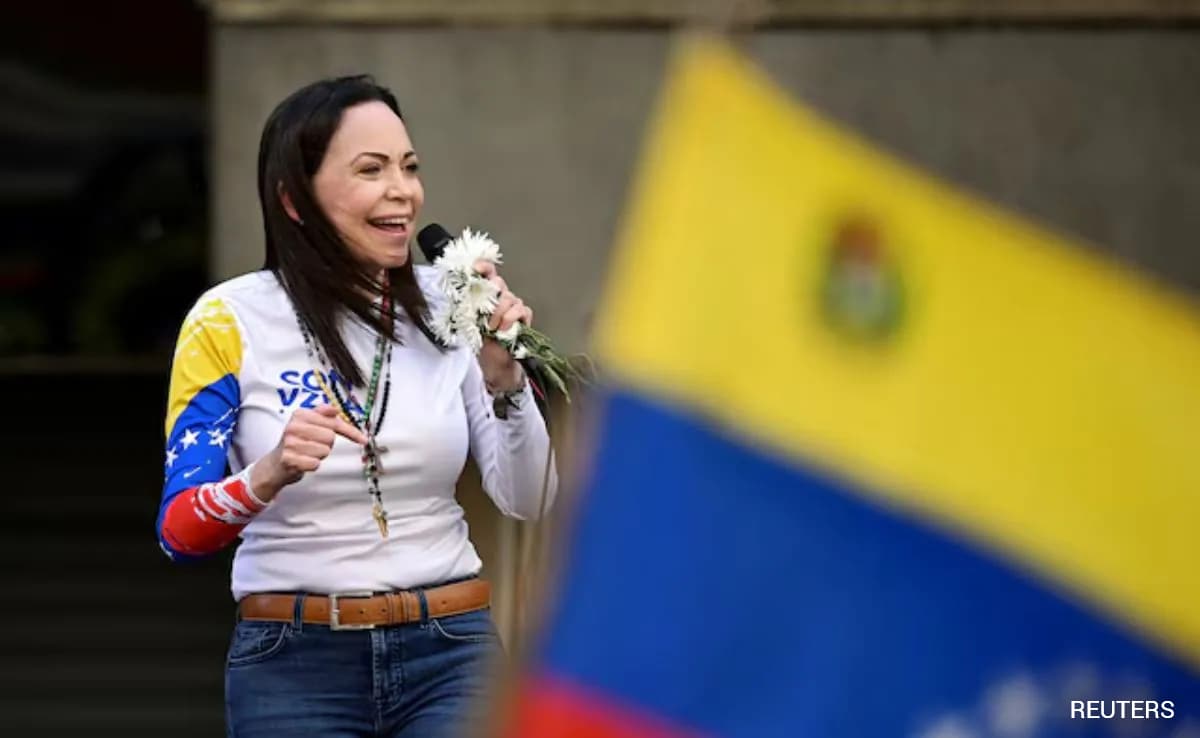
Nobel Peace laureate Maria Corina Machado revealed on Thursday that the United States government provided assistance for her escape from Venezuela to Norway, while expressing her support for US military actions against her home country and affirming her commitment to return.
Machado, who disappeared in January following her challenge to President Nicolas Maduro's rule, made a surprise appearance on an Oslo hotel balcony to the delight of cheering supporters early Thursday, ending days of speculation about her whereabouts.
"We did get support from the United States government to get here," Machado confirmed during a press conference when asked by AFP about Washington's involvement in her escape.
According to The Wall Street Journal, Machado's high-risk journey involved wearing a disguise and a wig as she left her hiding place in a Caracas suburb on Monday. She traveled to a coastal fishing village where she boarded a fishing skiff to cross the Caribbean Sea to Curacao.
The newspaper reported that the US military was informed about her journey to prevent the boat from becoming a target of airstrikes. Upon reaching Curacao, she took a private jet to Oslo, arriving early Wednesday.
Machado expressed gratitude to those who "risked their lives" to facilitate her journey to Norway. However, questions remain about how and when she will return to Venezuela, as authorities there have indicated they would consider her a fugitive if she left the country.
"Of course, the risk of going back, perhaps it's higher, but it's always worthwhile. And I'll be back in Venezuela, I have no doubt," she stated firmly.
While praised for her democratic advocacy, Machado has faced criticism for aligning herself with US President Donald Trump, to whom she dedicated her Nobel Prize, and for inviting foreign intervention in Venezuela.
The United States has recently increased its military presence in the Caribbean and conducted strikes against alleged drug-smuggling vessels.
"I believe every country has the right to defend themselves," Machado told reporters on Thursday.
"I believe that President Trump's actions have been decisive to reach the point where we are right now, in which the regime is weaker than ever, because the regime previously thought that they could do anything," she added.
On Wednesday night, Trump announced that the United States had seized a "very large" oil tanker near Venezuela, an action that Caracas condemned as "blatant theft".
Maduro maintains that these US operations aim to overthrow his government and take control of Venezuela's oil resources.
Machado first appeared on the balcony of the Grand Hotel during the night, waving and blowing kisses to supporters who chanted "libertad" ("freedom") below.
Later, she climbed over barriers to meet her supporters, many of whom embraced her and presented her with rosaries.
She shared that while in hiding, she had missed significant moments in her children's lives, including graduations and weddings.
Machado received the Peace Prize for "her struggle to achieve a just and peaceful transition from dictatorship to democracy".
She has consistently accused Maduro of stealing Venezuela's July 2024 election, from which she was barred from participating – a claim supported by much of the international community.
Her last public appearance before going into hiding was on January 9 in Caracas, where she protested Maduro's inauguration for his third presidential term.
Her decision to leave Venezuela and attend the Nobel ceremonies in Oslo carries significant personal and political risks.
"She risks being arrested if she returns even if the authorities have shown more restraint with her than with many others, because arresting her would have a very strong symbolic value," explained Benedicte Bull, a professor specializing in Latin American studies at the University of Oslo.
While Machado is currently the "undisputed" opposition leader, "if she were to stay away in exile for a long time, I think that would change and she would gradually lose political influence," Bull observed.
In her acceptance speech, delivered by one of her daughters on Wednesday, Machado denounced kidnappings and torture under Maduro's regime, describing them as "crimes against humanity" and "state terrorism, deployed to bury the will of the people".
Source: https://www.ndtv.com/india-news/nobel-laureate-machado-says-us-helped-her-leave-venezuela-9792893