
The Shifting Landscape of Muslim Politics in West Bengal: Humayun Kabir's Challenge to Trinamool Dominance
- Date & Time:
- |
- Views: 45
- |
- From: India News Bull
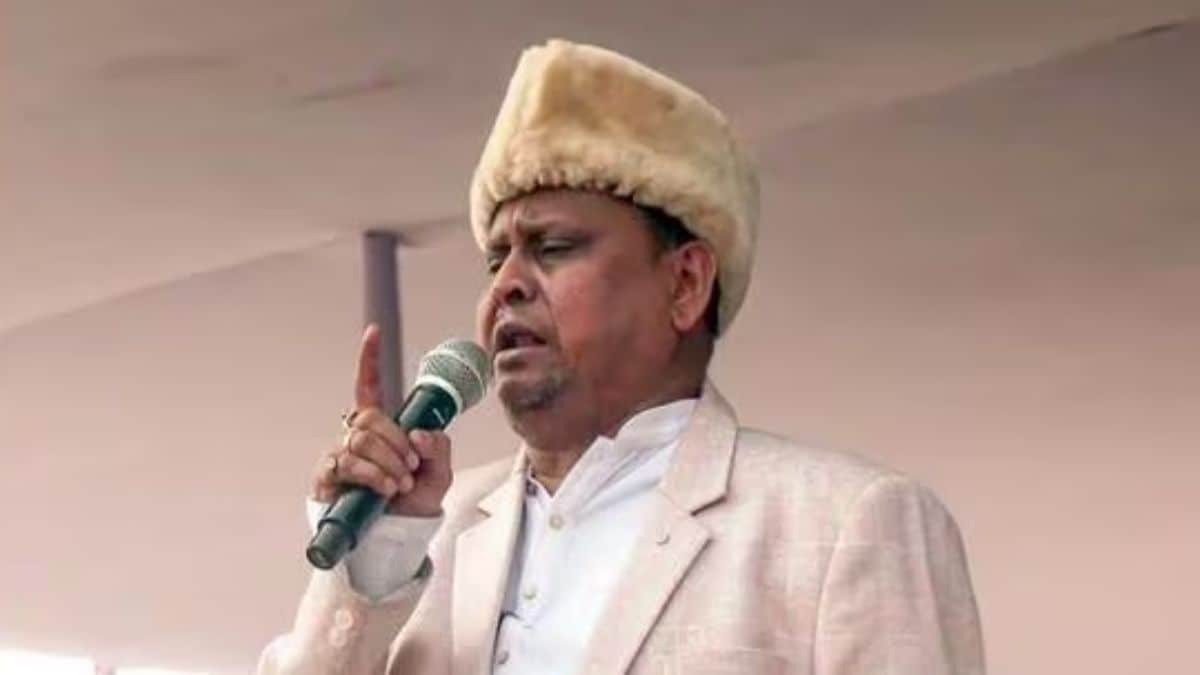
Suspended Trinamool leader Humayun Kabir
New Delhi:
Berhampore, the administrative headquarters of Murshidabad district in West Bengal, sits along the eastern bank of the Bhagirathi River. Founded and fortified by the British East India Company in 1757, the city has historically thrived as a center for silk weaving, oilseed milling, ivory carving, and precious metal industries.
On December 6—the anniversary of the Babri Masjid demolition—Berhampore captured national attention when a political spectacle unfolded. A 12-kilometer stretch of National Highway-12 from Rejinagar to Beldanga was blocked for three hours as thousands gathered, some carrying bricks and stone chips, for suspended Trinamool MLA Humayun Kabir's foundation stone-laying ceremony for a "Babri Masjid-styled" mosque.
The 62-year-old Kabir plans to construct this mosque in Beldanga, an area that experienced communal violence in April 2025. Despite his suspension from Trinamool, Kabir has announced his intention to form a new political party while retaining his MLA position to maintain his official privileges.
Kabir's political journey reflects remarkable versatility. In 2015, Trinamool expelled him for six years due to anti-party activities. He contested as an independent in the 2016 elections but lost. Subsequently, he joined BJP during the 2019 Lok Sabha elections, again facing defeat against Trinamool. Returning to Trinamool in 2021, he won the Bharatpur constituency with over 42,000 votes.
"I will form a new party focused on Muslims and field candidates in 135 seats. I will be a game-changer in Bengal's election. I'm in discussions with AIMIM and ISF and will contest alongside them. I've spoken with Asaduddin Owaisi," Kabir declared. However, AIMIM officially denied any association with him. Kabir later claimed to have contacted Congress and CPI-M as well, though CPI-M State Secretary Mohammed Salim and Congress have maintained silence on these assertions.
Kabir's suspension has created ripples within the Muslim electorate. His bold plan to rebuild the Babri Masjid and establish a new political front aims to capture discontent among Muslim voters, a demographic historically loyal to Trinamool under Mamata Banerjee's leadership. Though Trinamool remains the preferred party for Bengal's Muslims since Mamata Banerjee displaced the CPI-M, Kabir's threats have unsettled the party's rank and file, particularly with BJP's growing presence.
Kabir's strategy resembles AIMIM leader Asaduddin Owaisi's approach in Bihar's Seemanchal region, where the latter secured five seats in both 2020 and 2025. Like Owaisi's initiative, Kabir's entry signals a localized yet significant transformation that seeks to redefine the relationship between identity and political representation in West Bengal.
To understand this political landscape, we must examine the historical undercurrents shaping Muslim politics in these neighboring states. Bihar's Seemanchal, with its significant Muslim population, witnessed Owaisi's rise as an alternative to RJD's dominance—a quest not merely for power but for identity and autonomous representation in a landscape where political representation often overshadowed communal aspirations.
The Muslim communities from Bihar's Seemanchal to North and Central Bengal display intricate community patterns. In Bihar, three major groups—Surjapuri, Shershahbadi, and Kulhaiya—represent distinct cultural identities and reflect complex interplays of caste-like divisions, dialects, and political affiliations.
The majority Surjapuris speak a dialect heavily influenced by Urdu and predominate in Kishanganj. The Shershahbadis, mainly found in Katihar, speak a dialect closer to Bengali, while the Kulhaiyas, deeply rooted in their Maithili-speaking heritage, form a significant population maintaining local traditions.
These predominantly endogamous groups navigate their social worlds with careful adherence to cultural boundaries, with intermarriage being uncommon. The 2020 Bihar assembly elections marked a pivotal moment when Owaisi's AIMIM successfully united these communities, resulting in electoral victories in both 2020 and 2025—representing a historic realignment of minority votes.
The divisions among Muslim voters in Seemanchal reflect broader classifications within Indian Muslim society: Ashraf, Ajlaf, and Arzal. These distinctions influence both social interactions and electoral behavior. The upcoming 2026 elections in Bengal might witness fragmentation of Muslim votes—previously unified under Mamata's Trinamool in the 2021 assembly and 2024 Lok Sabha elections—potentially diluting their collective bargaining power.
Muslims constitute 27 percent of West Bengal's population according to the 2011 census, with significant concentrations in northern districts like Uttar Dinajpur (49.9%) and Malda (51.3%), central Bengal's Murshidabad (66.3%), and southern districts including Birbhum (37%), South 24-Parganas (35.6%), Nadia (26.8%), and North 24-Parganas (25.8%). Political observers suggest these census figures are now outdated, with actual minority populations likely higher.
Unlike Bihar, Bengal's context has distinct characteristics. Bengali-speaking Muslims (the Shershabadis) form the majority, while Urdu-speaking Muslims are a minority. The Muslim electorate isn't monolithic but represents various socioeconomic classes with different aspirations and grievances. Bengali-speaking Muslims, predominantly in rural areas, share some cultural commonalities with Bengali Hindus, whereas Urdu-speaking Muslims, largely in urban areas like Kolkata, have migrant identities from Bihar and Uttar Pradesh.
For instance, Urdu-speaking Muslims in Kolkata's Rajabazar area experience residential segregation based on religion, language, and economic conditions. Most residents work in informal economies such as embroidery, crafts, and transportation. The area contains six Urdu-medium schools primarily serving local students.
Trinamool's emphasis on minority upliftment has created a loyal constituency, though this loyalty is showing signs of strain. Historically, the party has mobilized Muslim votes, particularly in districts like Murshidabad and Malda.
The Shershabadis reside along both banks of the Ganges from Malda and Murshidabad to Uttar Dinajpur and Darjeeling.
With Kabir's plans to form a new party and field candidates across 135 constituencies, he aims to harness diverse voices within this constituency—a strategy reminiscent of Owaisi's but tailored to Bengal's unique context.
The critical question remains: Can Kabir effectively challenge Mamata's hold on Muslim votes?
Election analysts project a potential shift of approximately 10-15 percent of Muslim votes toward Kabir's prospective party, particularly in constituencies with evident disenchantment toward Trinamool.
Districts with significant Muslim populations, like Murshidabad and Malda, could become focal points for this transition. This includes constituencies like Raghunathganj (79.9% Muslim voters, though BJP won in 2021), Jangipur parliamentary constituency in Murshidabad, and the former Kaliachak constituency in Malda, now divided into Mothabari (67.3% Muslim voters) and Baisabnagar (48% Muslim voters).
These estimates remain speculative at present. Previous voter turnout in these Muslim-dominated constituencies ranged between 87-90%. Kabir might siphon several thousand votes in certain areas, potentially benefiting the BJP.
Kabir has boldly claimed he will emerge as a "king-maker in 2026, given neither the BJP nor Trinamool is likely to win a majority."
Beyond Kabir's rhetoric, a qualitative perspective examining grassroots sentiments is essential. The symbolic weight of rebuilding the Babri Masjid transcends physical construction to represent identity politics. For many, it signifies an assertion of belonging—affirming that their concerns, faith, and cultural narratives merit prominence. Malda sociologist Avijit Pathak notes new cultural markers that didn't exist during his youth: "Women wrapped in Burkhas, whereas earlier Bengali Muslim women would wear Saris like Hindu women."
Mamata has historically maintained her grip on Muslim votes by projecting secularism, development, and unity—what BJP terms "Minority appeasement." However, her tenure has faced accusations of political patronage and inadequate addressing of socioeconomic challenges affecting minorities. Kabir's threat is both numeric and ideological; if he convinces voters he articulates their concerns more credibly than Mamata, he could cultivate new allegiances.
Like Bengal's fertile fields where a single rain can determine a harvest's fate, the political landscape remains fluid and susceptible to change. Within this uncertain terrain, Kabir's challenge might either flourish remarkably or wither against established loyalties.
Research on Muslim voting patterns in India suggests two primary frameworks. Yale professor Harry W. Blair empirically argued that voting trends depend significantly on population numbers: where Muslims constitute a decisive bloc (as in Murshidabad and Malda), they vote on identity issues for Muslim candidates. Where Muslims are thinly dispersed, their preferences align with the majority population as local clientelism and personal connections outweigh communal identity. Where minorities form a critical block (20-30%), they typically support "secular" parties like Trinamool (previously CPI-M and Congress in Bengal).
Harvard-based Feyaad Allie highlights a complementary pattern: since 2019, Indian Muslims have increasingly voted against BJP nationally—a defensive response to perceived exclusion—even while internal divisions by caste, region, and sect remain significant.
The growing popularity of Owaisi and Kabir among minorities in Muslim-majority areas of Bihar and Bengal suggests Blair's numbers-based hypothesis will likely shape Bengal politics in 2026. When minorities vote for Muslim candidates based on identity, polarization intensifies, potentially benefiting the BJP-led NDA. Recent Bihar elections indicated this trend, which Bengal might follow in 2026.
Kabir's political endeavors extend beyond electoral strategies to broader questions about identity, representation, and communal politics in West Bengal. If he successfully taps into sentiments of disenfranchised voters still aggrieved about the Babri Masjid demolition, he could not only impact Mamata's vote bank but reshape Muslim political expression throughout the state.
However, Mamata remains formidable—unlike Tejashwi Yadav in Bihar, she has governed Bengal assertively for 15 years. The political machinery of Trinamool, led by Mamata and her nephew Abhishek Banerjee, rivals BJP's efficiency. Despite anti-incumbency sentiment, she maintains control across Bengal's districts. The BJP faces a greater challenge winning Bengal than it did sweeping Bihar with Nitish Kumar's support.
In this intricate democratic process, driven by millions' aspirations, Bengal's upcoming campaign will reveal whether new political beginnings can emerge from nostalgia and dissent. The community's future choices, shaped by both anger and aspirations, embody the essence of West Bengal's electoral politics.
Source: https://www.ndtv.com/india-news/the-ebb-and-flow-of-muslim-politics-in-west-bengal-the-humayun-kabir-gambit-9790677