
India's New Labour Codes: Universal Social Security and Stronger Worker Protections Implemented Nationwide
- Date & Time:
- |
- Views: 40
- |
- From: India News Bull
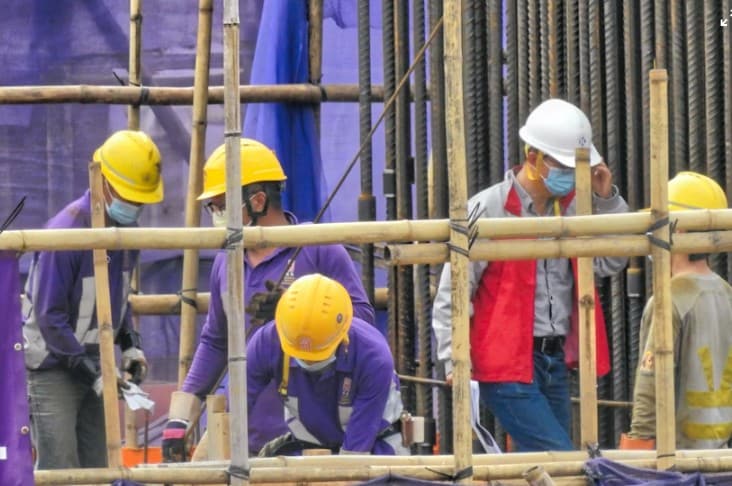
The Codes have established first-time definitions for 'Gig work', 'Platform work', and 'Aggregators'.
New Delhi:
The government enacted a significant transformation of labor legislation on Friday by implementing all four Labour Codes, introducing comprehensive reforms that include universal social security for gig workers, mandatory employment letters, statutory minimum wages, and timely payment across all sectors.
Effective Friday, the four Labour Codes—Code of Wages (2019), Industrial Relations Code (2020), Code on Social Security (2020), and Occupational Safety, Health and Working Conditions Code (2020)—replace 29 fragmented laws with a unified modern framework.
These reforms enhance protections for women workers, including allowing night shifts, provide free annual health examinations for workers over 40, extend pan-India ESIC coverage including hazardous work units, and introduce a streamlined single registration, license, and return system.
Prime Minister Narendra Modi stated on social media platform X that these Codes "will serve as a strong foundation for universal social security, minimum and timely payment of wages, safe workplaces and remunerative opportunities for our people, especially Nari Shakti and Yuva Shakti..."
Modi further explained that the reforms "will build a future-ready ecosystem that protects the rights of workers and strengthens India's economic growth. These reforms will boost job creation, drive productivity and accelerate our journey towards a Viksit Bharat." He added that "It is one of the most comprehensive and progressive labour-oriented reforms since Independence. It greatly empowers our workers. It also significantly simplifies compliance and promotes 'Ease of Doing Business'."
Labour Minister Mansukh Mandaviya highlighted that the labour Codes will formalize employment, strengthen worker protections, and create a simpler, safer labor ecosystem aligned with global standards.
Additional reforms include a national floor wage, gender-neutral work policies, an Inspector-cum-Facilitator model for supportive compliance, faster dispute resolution through two-member tribunals, and a National Occupational Safety, Health (OSH) Board to harmonize safety standards.
The government will now begin consultations to develop detailed rules and schemes. During the transition period, provisions from existing labor laws will remain applicable where necessary.
Social security coverage has expanded from 19 percent in 2015 to over 64 percent in 2025. The implementation of these Labour Codes represents the next transformative step—extending worker protections, simplifying business operations, and promoting a pro-worker labor ecosystem.
According to a labor ministry statement, the Codes establish the foundation for Aatmanirbhar Bharat (Self-Reliant India).
India's previous labor laws were created during the pre-Independence and early post-Independence era (1930s-1950s), when the economy and working environments were fundamentally different.
Labour Minister Mandaviya posted on X, "Modi Government's Guarantee: Dignity for Every Worker! From today, the new labour codes have been made effective in the country." He explained that the codes guarantee minimum wages for all workers, appointment letters for youth, equal pay and respect for women, social security for 40 crore workers, gratuity for fixed-term employees after one year, free annual health check-ups for workers above 40, double wages for overtime, complete health security for hazardous sector workers, and social justice aligning with international standards.
"These reforms are not just ordinary changes, but a major step taken by Prime Minister Shri Narendra Modi for the welfare of the workforce. These new labour reforms are an important step towards a self-reliant India and will give new momentum to the goal of a developed India by 2047," the minister added on X.
Under the Code on Social Security, 2020, all workers, including gig and platform workers, will receive social security coverage. Workers will be entitled to PF, ESIC, insurance, and other social security benefits.
The Code on Wages, 2019, ensures all workers receive statutory minimum wage payments, providing financial security through minimum wages and timely payment.
ESIC coverage and benefits are now extended nationwide—voluntary for establishments with fewer than 10 employees, and mandatory for establishments with even one employee engaged in hazardous processes.
Fixed-Term Employees (FTE) will now receive all benefits equal to those of permanent workers, including leave, medical care, and social security provisions.
The Codes have formally defined 'Gig work', 'Platform work', and 'Aggregators' for the first time.
Aadhaar-linked Universal Account Numbers will make welfare benefits easily accessible, fully portable, and available across states regardless of migration.
Plantation workers will now be covered under the OSHWC Code and the Social Security Code.
Digital and audiovisual workers, including journalists in electronic media, dubbing artists, and stunt performers, will now be entitled to complete benefits.
Source: https://www.ndtv.com/india-news/4-labour-codes-come-into-effect-social-security-extended-to-all-workers-9781519