
Putin's Visit to India: Strengthening Strategic Partnership Amid Global Tensions
- Date & Time:
- |
- Views: 58
- |
- From: India News Bull
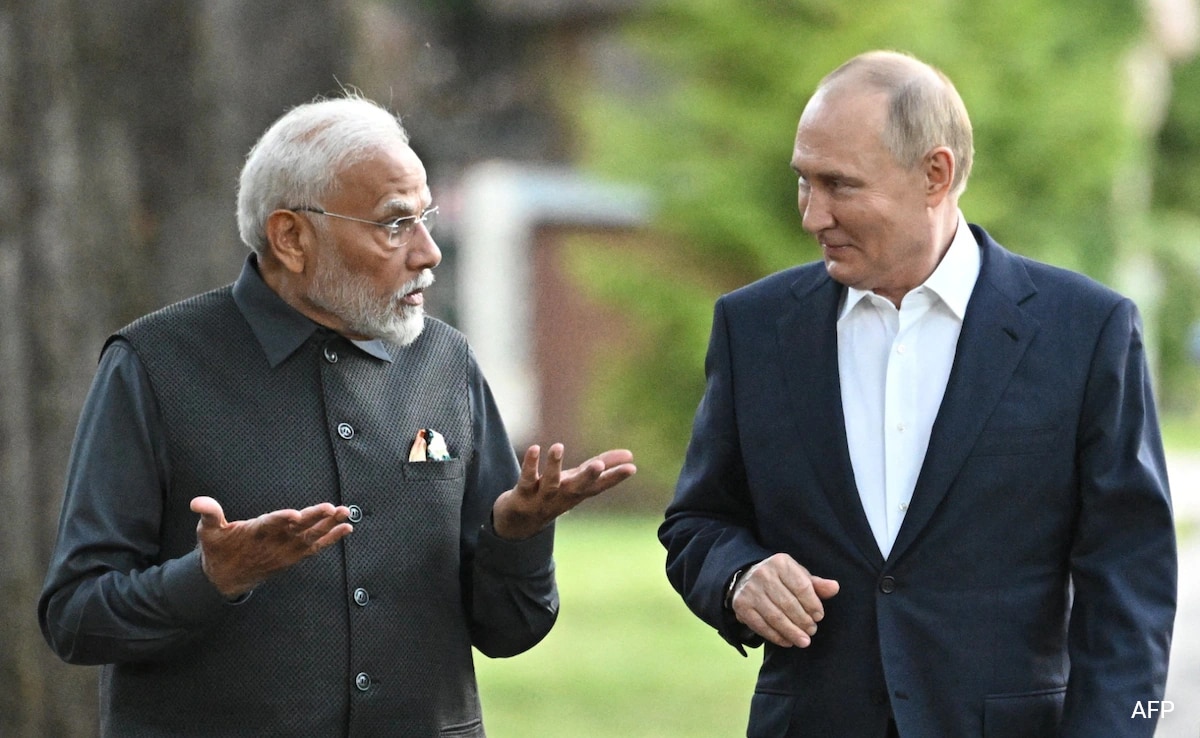
The most significant diplomatic event of the year has concluded. Russian President Vladimir Putin is certainly no ordinary head of state. Few global leaders face an arrest warrant from the International Criminal Court, and fewer still have maintained their position against Western powers during an escalating conflict. For India, however, Putin primarily represents a nation that has consistently supported India for decades. This visit demonstrated that the relationship extends beyond bilateral ties—it's political theater performed with the international community as its audience. Let's examine what this visit meant for all parties involved.
The extensive 70-paragraph joint statement largely celebrated existing cooperation across various sectors. Despite anticipation surrounding potential major defense agreements, including the possible acquisition of Su-57 fighters, the section on military collaboration was surprisingly brief. However, a separate readout from the meeting between Defense Ministers Rajnath Singh and Andrei Belousov appears more productive.
The statement endorsed joint manufacturing of spare parts in India through technology transfer and joint ventures to supply the Indian armed forces and potentially export to mutually friendly nations. While these aren't the dramatic announcements many expected, implementing this arrangement would address a persistent challenge for Indian forces, particularly the army. Though Russia has consistently provided emergency supplies, domestic production of spare parts has been a longstanding need. This requires private investment, especially as the restructured Ordnance Factories are still finding their footing.
It's worth noting that an agreement for S-400 systems is already in place, with two additional batteries expected. Purchasing more would likely involve extending the existing contract. Interest in Su-57 fighters has historically been uncertain, as the Indian Air Force previously rejected them due to their radar signature issues compared to India's indigenous developments. Furthermore, with a trade agreement with the United States—India's largest trading partner—remaining crucial, a major defense deal with Russia always seemed somewhat improbable.
The most extensive section appropriately focuses on trade. A relationship where a partner accounts for only 2% of trade volume requires strengthening. This section includes a significant commitment to "continue consultations on enabling the interoperability of the national payment systems, financial messaging systems, as well as central bank digital currency platforms"—an important development since neither country wants to accumulate the other's currency. This need to strengthen trade directly drives discussions with the Eurasian Economic Union regarding a Free Trade Agreement.
However, Russia's bilateral trade with Armenia, Belarus, Kazakhstan, and Kyrgyzstan remains in the low millions. Indian companies would generally prefer targeting European markets if considering manufacturing there. Meanwhile, ventures in consumer goods could benefit from Russia's impressive 92% internet penetration rate and the departure of prominent international brands.
The Russian enterprise software sector is experiencing rapid growth, with domestic solutions inadequate to meet demand. This creates opportunities for vendors from friendly nations, particularly India, to fill this promising market segment—with the advantage that it doesn't require physical trade routes.
Nevertheless, given the $59 billion trade deficit between India and Russia, efficient transportation routes remain essential. Reports highlight growth in imports through the International North-South Transport Corridor (INSTC), though this apparent increase hasn't yet reflected in overall figures. Progress will significantly depend on whether Washington lifts sanctions on Iran (currently, only a temporary waiver exists for Chahbahar, limiting trade to Afghanistan).
There's also the Chennai-Vladivostok Maritime Corridor, which reduces shipping time between India's East Coast and Russia's Far East from 40 to 24 days. So far, this hasn't substantially increased Indian business engagement with the Far North, given its sparse population. However, the region offers considerable potential for mineral resources, including rare earth elements, especially as Moscow has opened the market to all. India needs to act quickly to establish a presence before the Ukraine conflict ends and Western companies enter.
The Northern Sea Route connects to a 2024 agreement to develop ice-breaker vessels at Mumbai's Mazagaon Docks and other shipyards, though little progress has been made. There is, however, an agreement for training specialists for ships operating in polar waters—challenging but strategic areas.
The recently ratified Reciprocal Exchange of Logistics Support (RELOS) agreement could prove more significant, granting Indian naval and commercial vessels access to all Russian ports, particularly in the Arctic, for refueling, repairs, and Russian icebreaker escorts through frozen passages. Russian officials have suggested the pact may eventually provide India access to over 40 Russian naval and air bases from Arctic waters to the Pacific—a future possibility with substantial strategic implications.
The anticipated energy package is concise but purposeful, defiantly noting "current and potential" cooperation across oil and oil products, including refining. Despite a 30% decrease in oil imports from Russia—largely due to reduced profit margins partially resulting from "ghost ships" in transport—both nations appear focused on future opportunities.
Encouragingly, Russia plans to expand nuclear energy cooperation with India. Russia currently holds perhaps the largest share of nuclear reactor projects in India. Under its 'Viksit Bharat' vision, India aims to generate 100 GW from nuclear sources—a tenfold increase from its current 8.8GW capacity—with Russian collaboration on the Kudankulam nuclear reactor representing just the beginning. This sector promises significant growth, particularly with India's pursuit of Small Modular Reactors (SMRs), for which ₹20,000 crore has been allocated in this year's Union Budget. France, Japan, South Korea, and the United States are all competing in this space.
In summary, Putin's visit might be characterized as an ordinary—though not unsuccessful—bilateral summit, deriving significance from Western discomfort and from Delhi's emphasis that it is not 'neutral' on the Ukraine conflict and desires peace—phrasing clearly intended for international consumption. While Washington remained relatively restrained, controversy emerged from an unexpected quarter when German, French, and British ambassadors to India published a joint article criticizing the Russian President, accusing him of disregarding human life. India's Ministry of External Affairs justifiably found this diplomatic approach unacceptable. Though these countries maintain strong relations with India, their ineffectiveness in resolving the Ukraine conflict has never been more evident. A December 3 NATO foreign ministers meeting reaffirmed continued support for Ukraine through U.S. defense equipment and a 5% increase in defense spending. U.S. Secretary of State Marco Rubio's absence from this meeting while maintaining dialogue with both Ukraine and Russia reflects typical European political dynamics.
The fundamental reality is that peace between Russia and Ukraine is essential to stimulate India's trade with Russia, including defense supplies. Delays are now common, and the need for additional S-400 systems is pressing. The original 2023 deadline for the deal has been extended. The S-500, while formidable, reportedly has just one operational unit currently.
Those disappointed with the visit's outcomes should review the 2018 joint statement, which is remarkably similar except for a line welcoming the S-400 deal. Russian-Indian official documents have traditionally been textually extensive but quietly substantive regarding actual cooperation. The underlying trust between the nations remains the decisive factor—an advantage neither wishes to sacrifice. However, in today's precarious geopolitical environment, neither India nor Russia can rely solely on sentiment. For both nations, concrete results must also be considered.
(Dr Tara Kartha is a former Director, National Security Council Secretariat)
Disclaimer: These are the personal opinions of the author
Source: https://www.ndtv.com/opinion/putins-visit-wasnt-all-fireworks-but-it-still-mattered-9778625