
The Collapse of Central India's Maoist Stronghold: 33 Surrenders Reduce MMC Zone to Just 6 Insurgents
- Date & Time:
- |
- Views: 42
- |
- From: India News Bull
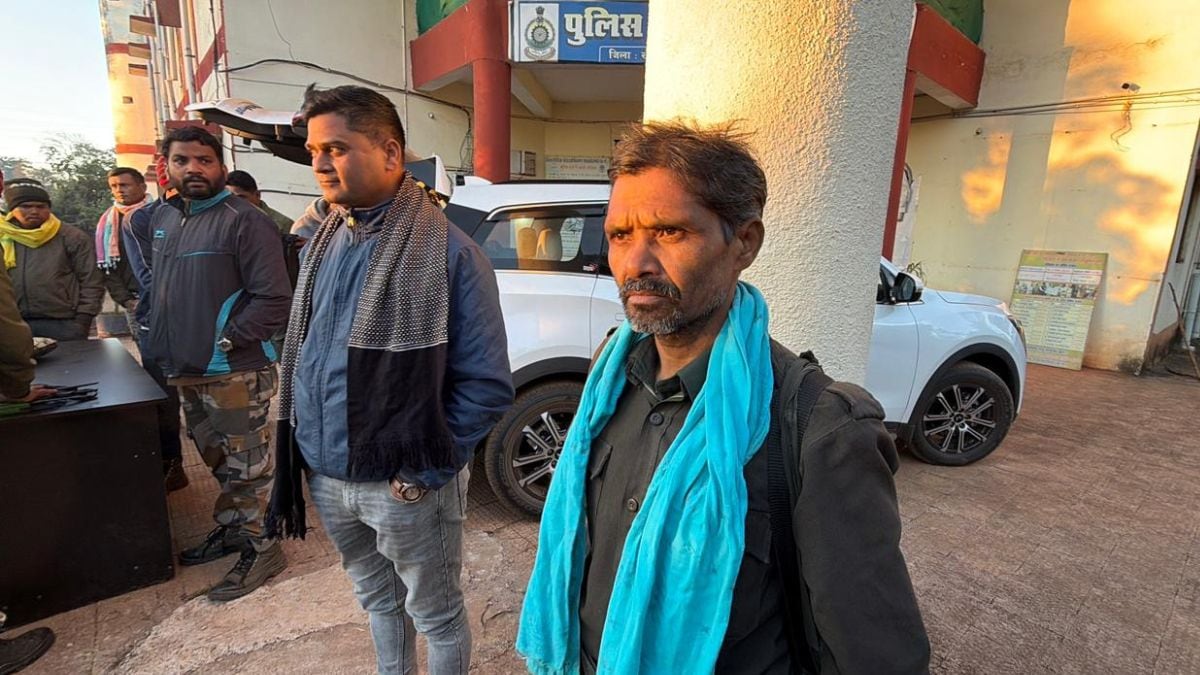
What was once a fortified Red Bastion is today reduced to only six Maoists running for cover
Bhopal:
In a remarkable turn of events, just ten days and 33 surrenders have reduced the once formidable Maharashtra-Madhya Pradesh-Chhattisgarh (MMC) special zone to merely six remaining Maoists. This transformation marks the first time in over three decades that this previously impenetrable Maoist stronghold in central India has diminished to single digits.
The former Red Bastion that extended from Gondia to Balaghat and from Khairagarh to Kabirdham now witnesses only a handful of insurgents desperately seeking shelter.
Historically, the Maoists operated across two distinct regions. The Northern MMC Zone and Kanha-Bhoramdev Division (KB) included the Khatiya Mocha Dalam, Bhoramdev Dalam, and Borla Dalam units, controlling forests across Balaghat, Mandla (Madhya Pradesh), and Kabirdham (Chhattisgarh).
The Southern MMC Zone encompassed the Gondia-Rajnandgaon-Balaghat Division with its Malajkhand Dalam and Darre Khasa Dalam. This faction, considered more dangerous, possessed sophisticated weaponry including AKs, INSAS rifles, underbarrel grenade launchers, and IED specialists. Now, only six armed Maoists remain from this once-feared group.
The dramatic collapse began on November 28, when 11 members of the Darre Khasa Dalam surrendered in Maharashtra's Gondia district. Their leader, Vikas Nagpure alias Anant—who had led an ambush resulting in the death of Hawk Force inspector Ashish Sharma just nine days earlier—surrendered with folded hands, signaling the beginning of the zone's disintegration.
This initial surrender triggered a cascade effect, bringing down the entire northern MMC Zone within a week. Ten Maoists from the Kanha-Bhoramdev Division surrendered before Madhya Pradesh Chief Minister Mohan Yadav in Balaghat. Two Special Zonal Committee Members, including the notorious Surendra alias Kabir Sodi, turned themselves in with their arsenal of INSAS rifles, AKs, and various country-made weapons. This ceremony effectively dismantled the northern MMC structure, ending Maoist presence across the vast non-tourist areas of Kanha National Park and Mandla's deep forests.
The most decisive blow came just a day later with the surrender of Ramdher Majji, the MMC's final backbone. This Central Committee Member of CPI (Maoist) was the unquestioned commander of southern MMC's 14-member elite assault squad, controller of the Rajnandgaon, Khairagarh, and Balaghat corridor, and mastermind behind numerous attacks. He surrendered alongside 11 other Maoists in Chhattisgarh.
Merely months ago, Ramdher's name evoked fear throughout the tri-junction forests. Police across three states hunted him relentlessly. Following the death of Deepak Teltumbde and arrests of previous commanders, the organization had entrusted the deteriorating MMC structure to this 50-year-old strategist from Mallemadi, Bijapur district.
A tall, wiry man fluent in Telugu, Gondi, and Hindi, Ramdher could traverse 30-40 km of dense jungle without rest, earning him the reputation as the "field-level brain" of the CPI (Maoist).
When he arrived with his wife Lalita (alias Anita) and 12-14 Maoists in early 2025, the MMC zone was barely functioning. Within months, the couple reconstructed its military structure by integrating veteran combatants from Bastar, Bijapur, Kondagaon, and Balaghat. Nearly 50 fighters became active again under his leadership. His personal guard included seven heavily armed Maoists: Sukash alias Ranga with an AK, Munna with an SLR, Ram Singh with a generic rifle, and Ronnie, Laxmi, and Sagar with INSAS rifles—a unit internally designated as the "Deadly Group." He never moved without their protection.
Intelligence documents revealed that many Maoists were exhausted, demoralized, and eager to abandon the movement. Supply chains had collapsed, communication with Maoist leadership in Dandakaranya had been severed, and even his closest associates were seeking ways to exit. The organization was disintegrating faster than Ramdher could rebuild it.
When finally in custody, Ramdher's confession to NDTV revealed an empire collapsing under its own weight.
"We saw Sonu Dada and Satish Dada surrendering," he stated calmly. "We kept waiting for guidance from the Central Committee, but communication kept breaking. After August, we could not even meet. When Anant surrendered and issued his statement, we understood the struggle was over. We also decided to leave. Now we will do social service within the framework of the Constitution."
With 33 surrenders in just 10 days, only six Maoists remain in the MMC Zone—two from Ramdher's disbanded Malajkhand Dalam and four remnants from Anant's Darre Khasa unit.
Law enforcement believes these remaining insurgents cannot survive much longer. Cut off from leadership, operating with depleted supplies, and under constant surveillance by joint forces from three states, they face Madhya Pradesh Chief Minister Mohan Yadav's clear ultimatum: "Surrender or be eliminated."
From the 1990s through the 2020s, the MMC Zone was considered one of the most dangerous Maoist regions outside Dandakaranya, witnessing dozens of ambushes, IED attacks, and killings.
Officials caution that while the armed structure has collapsed, the ideological threat hasn't completely vanished. Some surrendered Maoists might attempt to promote their ideology through democratic or clandestine means. Security forces must maintain vigilance in the region, build trust among local communities, prevent regrouping, and accelerate development initiatives in remote forest villages that were once Maoist strongholds.
Source: https://www.ndtv.com/india-news/end-of-mmc-zone-from-red-bastion-to-only-6-maoists-running-for-cover-9774527