
Vande Mataram: How BJP is Reimagining Bankim Chandra's Legacy for Modern Indian Politics
- Date & Time:
- |
- Views: 38
- |
- From: India News Bull
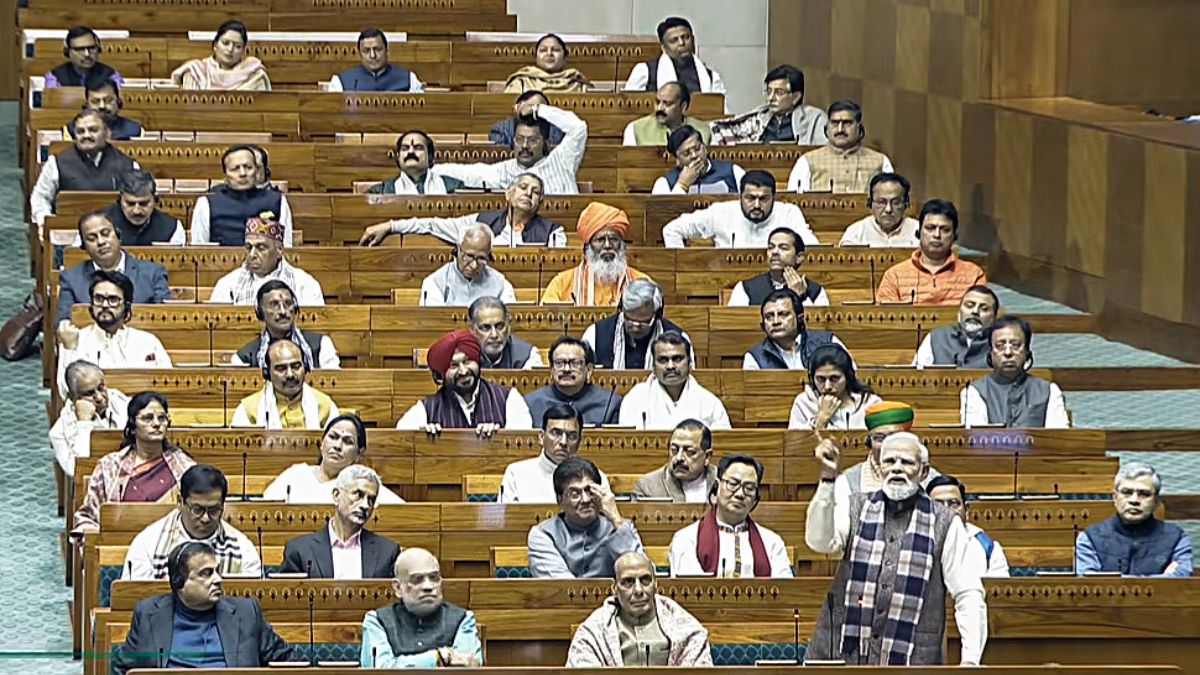
PM Narendra Modi speaks in Lok Sabha on Monday
New Delhi:
In India's rich cultural and political landscape, few figures stand as prominently as Bankim Chandra Chattopadhyaya. His masterpiece, Anand Math, gifted us not only the iconic "Vande Mataram" but also wove a complex narrative blending Mother and Motherland, nationalism, patriotism, spirituality, and identity.
"Vande Mataram," a Sanskrit phrase meaning "I bow to you, Mother," refers to the Motherland, Bharat—perhaps the most powerful metaphor in modern global literature. Bankim, a wordsmith of exceptional talent, crafted a poem and song that translates beautifully into melodious music.
Before exploring the history of Vande Mataram and its revolutionary impact during the struggle against British colonialism, let's examine the recent parliamentary debate surrounding it.
On December 8, Parliament vibrated with energy as Prime Minister Narendra Modi invoked "Vande Mataram," citing Mahatma Gandhi's 1905 statement in 'Indian Opinion' that it should be "the national anthem of Bharat." This historical reference connected Modi's NDA government to the freedom struggle ideals championed by Gandhi, positioning his administration as continuing a significant nationalist legacy.
Modi criticized Congress for fragmenting the national song, allegedly weakening its original spirit—a charge Congress has consistently denied. The party maintains that the 1937 decision to use only the first two stanzas was based on recommendations from the Congress working committee, which included Gandhi, Nehru, Patel, Bose, Prasad, Naidu, and Azad.
Vande Mataram became integral to Congress's political identity. Rabindranath Tagore sang it at the 1896 Calcutta Congress session. In 1905, the Congress formally adopted the song for national occasions. Two years later, Bhikaji Cama unfurled the first national flag abroad in Germany's Black Forest, emblazoned with "Vande Mataram."
As Modi addressed Parliament in his characteristic dramatic style, "Vande Mataram" transcended its historical significance, gaining renewed relevance amid the political landscape preceding Bengal's 2026 assembly elections.
The intertwining of this iconic verse with election strategy was evident nationwide. Modi's invocation represented a purposeful fusion of culture and politics, nationalism and patriotism, Mother and Motherland, deeply rooted in India's identity.
Anand Math depicts militant sannyasis (Sanatans) rebelling against British and Muslim forces during the 1770 Great Bengal famine. Bankim's masterpiece balances dramatic scenes with themes of renunciation for justice. Its narrative of recovering the Motherland's lost glory and resisting invaders carries clear political messages of nationalism and anti-colonialism, resonating powerfully with late 19th-century audiences.
Interestingly, Vande Mataram began as a 'page-filler' for Bangadarshan magazine in 1875, appearing six years before Anand Math's serialization and seven years before its publication as a book. The poem's war cry electrified readers, gaining strength independently from the novel and reconceptualizing nationalism through the powerful metaphor of Motherhood.
Vande Mataram gained significant momentum during the 1905 Partition of Bengal protests, when it first emerged as a political slogan. Julius Lipner noted that the chanting during the August 1905 Calcutta protest transcended religious boundaries. A violent police assault against protesters chanting Vande Mataram in Barisal in April 1906 strengthened the anti-British, Hindu-Muslim anti-Partition movement.
The 'Hinduisation' of the anti-Partition movement accelerated with the launch of Aurobindo Ghose's revolutionary English newspaper, Bande Mataram, in August 1906. Aurobindo transformed Bankim's nationalistic poem into a dominant Hindu credo. By 1921, after the Bengal Partition's reversal and amid growing Bengali Muslim resentment, Hindu rioters were using Vande Mataram as an anti-Muslim slogan.
This symbolism becomes particularly significant as Bengal debates its Bangla identity amid challenges posed by 15 years of Trinamool Congress rule under Chief Minister Mamata Banerjee. With upcoming state elections, Modi's evocation of "Vande Mataram" could serve as a powerful rallying cry for the BJP, reviving pride and belonging that divisive politics may have overshadowed.
By weaving spirituality with nationalism, Modi elevated political discourse to an almost sacred commitment. "Vande Mataram" has evolved beyond a poem into a symbol of dedication—reminding that true patriotism stems from love for one's cultural heritage.
The poem's evocative imagery of the motherland provides a framework for exploring Indian nationalism. In diverse India, where identities often fragment along caste, creed, and regional lines, the poem emerges as a unifying force. By reaffirming it in Parliament, Modi sought to rekindle collective identity, positioning the BJP as stewards of cultural renaissance—galvanizing support under a single banner.
However, while Modi elevated discourse through Vande Mataram, other BJP members have undermined this narrative. In November, during an event marking Birsa Munda's 150th birth anniversary, Madhya Pradesh minister Inder Singh Parmar called Raja Ram Mohan Roy a "British agent," accusing him of promoting religious conversion through English education. The remarks sparked controversy, particularly in West Bengal, with Trinamool and other parties condemning the statements as "anti-Bengali." Though Parmar later apologized, significant damage was done.
The BJP's appropriation of Vande Mataram has involved denigrating other intellectual giants like Ram Mohan Roy and Rabindranath Tagore. Roy, considered modern India's father, advocated rationality, social reform, and gender equality. Tagore emphasized universality and humanism. In contrast, Bankim's nationalism, often interpreted through exclusivity, aligns more closely with the BJP's Hindu-centric vision of India.
This selective historical interpretation raises questions about the BJP's brand of nationalism. Progressive thinkers now stand overshadowed by an oversimplified narrative positioning Bankim as the singular voice of Indian identity. The BJP's foregrounding of Bankim consolidates power while forging an identity compatible with Hindutva frameworks—a historical rewriting creating a monolithic sense of belonging aligned with party agenda.
Ironically, Bankim envisioned a unified India with composite culture transcending singular identity narratives. His verses called for collective awakening across diverse populations. The BJP's effort to reduce this vision to purely Hindu identity risks undermining his ideals.
In promoting Bankim, the BJP employs symbols and rhetoric echoing sentiments from bygone eras, tapping into emotional reservoirs of national consciousness. "Vande Mataram" in contemporary politics evokes nostalgia resonating with cultural awareness, binding citizens into a singular nationalist narrative that Bankim himself might have found limiting.
The BJP must avoid denigrating other Bengali nationalist icons. The Bengali intelligentsia and common people remain deeply connected to their nationalist heroes and would likely reject artificial divisions between heroes and villains. Such narrow strategy could backfire in culturally rich Bengal during next year's assembly elections.
As the parliamentary debate unfolded, "Vande Mataram's" historical significance merged with modern India's currents. Modi's articulation wasn't merely nostalgic reminiscence but an attempt to project unity and strength. By connecting the poem to nationalism, spirituality, and motherhood, he crafted a multifaceted national identity resonating across diverse demographics.
December 8 marked a significant moment—a reminder that in India's complex identity tapestry, cultural symbols like "Vande Mataram" wield immense power. In a charismatic leader's hands, these symbols become instruments drawing upon the past to shape future visions. "Vande Mataram's" echoes surged through Parliament, affirming that even in political realms, hearts beat to poetry's rhythm.
Ajit Kumar Jha is Editor Research with NDTV.
Source: https://www.ndtv.com/india-news/the-politics-of-heritage-bjp-and-reimagining-of-bankim-chandra-9772838