
Satellite Monitoring Fails to Detect 90% of Farm Fires in Punjab and Haryana: iFOREST Report Reveals
- Date & Time:
- |
- Views: 39
- |
- From: India News Bull
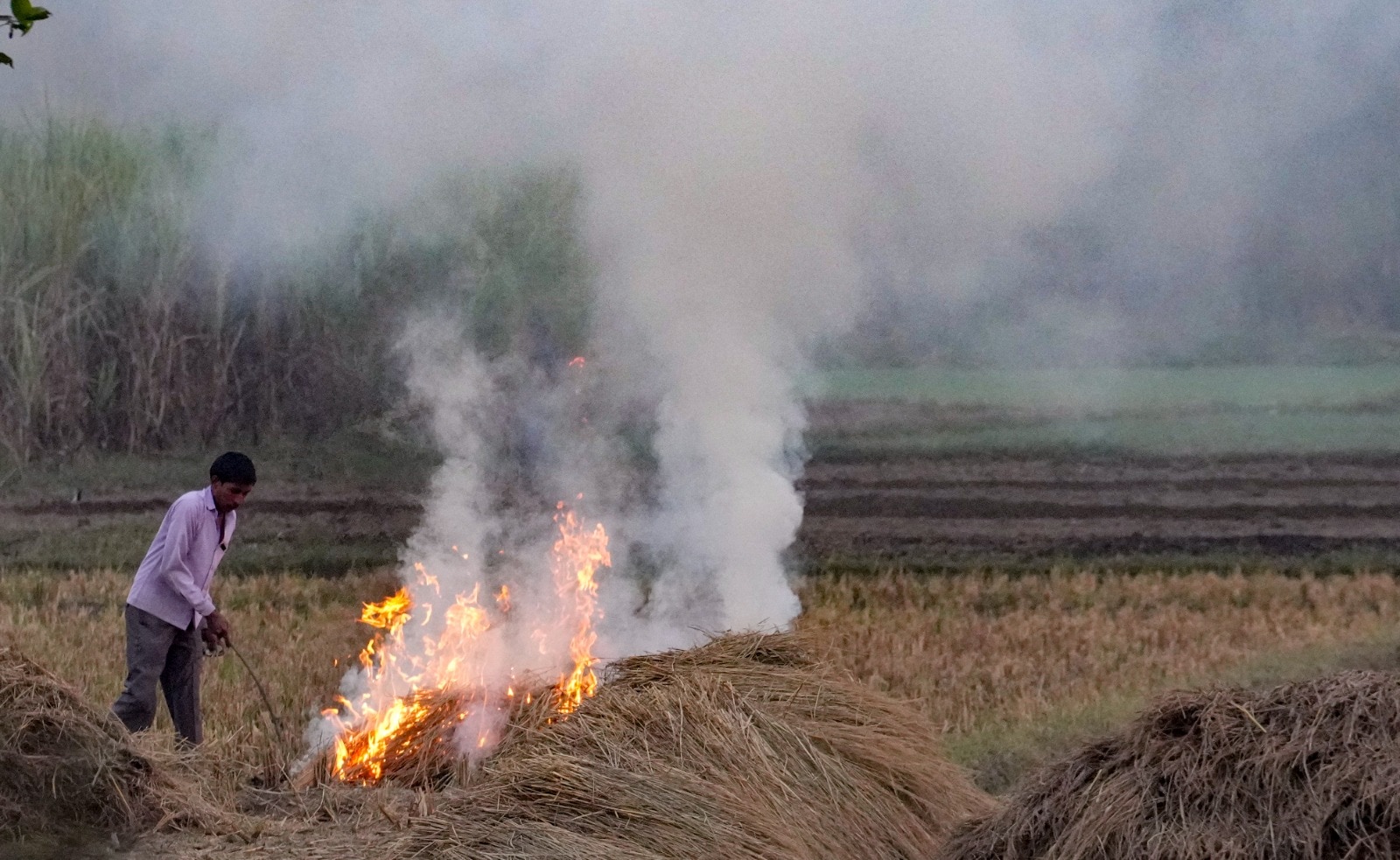
iFOREST stated that burnt-area mapping delivers a more accurate assessment
New Delhi:
According to a new analysis released on Monday, over 90 percent of major farm fires in Punjab and Haryana are now going undetected by official monitoring systems as farmers have shifted their stubble-burning activities to late afternoons.
The Stubble Burning Status Report 2025 by the International Forum for Environment, Sustainability and Technology (iFOREST) indicated that this has led to significant underestimation of stubble burning's contribution to Delhi's air pollution this year.
iFOREST explained that the government's current monitoring protocol, managed by the Consortium for Research on Agroecosystem Monitoring and Modeling from Space (CREAMS) of the Indian Agricultural Research Institute, fails to detect most farm fires because it primarily relies on polar-orbiting satellites that observe India only between 10:30 am and 1:30 pm.
This limited time window no longer aligns with farmers' burning practices, the report stated.
Nevertheless, the report identifies real progress on the ground, with burnt areas in Punjab and Haryana decreasing by 25-35 percent over recent years.
iFOREST emphasized that burnt-area mapping provides a more accurate representation than active fire counts, which currently suggest a much larger decline.
Chandra Bhushan, CEO of iFOREST, stated, "Our analysis provides incontrovertible evidence that India's current stubble-burning monitoring system is structurally misaligned with ground realities.
"Farmers have shifted burning to the late afternoon, while our monitoring relies on satellites that capture active fires only during a narrow time window (10:30 am to 1:30 pm). The result is a massive underestimation of fires, emissions and their contribution to air pollution in Delhi. We urgently need to overhaul the system."
The report utilizes India's first multi-satellite and multi-sensor assessment, combining MODIS and VIIRS data with high-resolution Sentinel-2 burnt-area mapping and 15-minute geostationary observations from the SEVIRI instrument on Meteosat-8 and 9.
SEVIRI data reveal the scale of undercounting. According to the analysis, in Punjab, more than 90 percent of large farm fires in 2024 and 2025 occurred after 3 pm. In 2021, only 3 percent of such fires took place after this time.
In Haryana, most large fires have occurred after 3:00 pm since 2019. iFOREST cautioned that missing fires during the late afternoon and evening result in major errors in estimating emissions and in air-quality forecasting for Delhi-NCR.
Despite the monitoring gaps, burnt-area mapping demonstrates genuine reductions in stubble burning.
Sentinel-2 data indicate that burnt areas in Punjab during the Kharif season decreased from a peak of 31,447 sq km in 2022 to approximately 20,000 sq km in 2025, marking a 37 percent decline.
In Haryana, burnt areas have reduced from 11,633 sq km in 2019 to 8,812 sq km in 2025, a 25 percent reduction, though without a consistent downward trend.
"Burnt areas provide a more reliable picture of stubble burning. Our analysis shows that Punjab and Haryana have reduced burnt areas by 25-35 percent, which is good news and indicates that in-situ and ex-situ stubble-management practices are being adopted. But this is not the time to become complacent," Bhushan said.
"Even in 2025, close to 30,000 sq km of paddy fields were burnt in Punjab and Haryana, making them a major source of air-quality degradation in Delhi-NCR and the wider Indo-Gangetic region."
iFOREST urged the government to urgently reform the national monitoring system and recommended that CREAMS begin publishing burnt-area data, not just active fire counts, and that air-quality forecasting models used by the Indian Institute of Tropical Meteorology revise their methodology to estimate the contribution of stubble burning more accurately.
Ishaan Kochhar, Programme Lead at iFOREST, said, "We cannot manage what we do not measure accurately. Policy decisions are currently being shaped by incomplete information. To solve the stubble-burning problem in the Indo-Gangetic plain, the government must urgently reform the monitoring protocol to integrate burnt-area mapping and geostationary data."
"We also need to expand our focus beyond Punjab and Haryana to the emerging hotspots in Uttar Pradesh and Madhya Pradesh." The report also mentioned that stubble burning is increasing in some other states, and active fire-count data already indicate rises in places like Uttar Pradesh and Madhya Pradesh.
Source: https://www.ndtv.com/india-news/satellites-missing-most-farm-fires-in-punjab-haryana-impact-on-delhi-highly-underestimated-report-9772410