
Putin's India Visit: Strengthening Strategic Partnership Amid Geopolitical Challenges
- Date & Time:
- |
- Views: 50
- |
- From: India News Bull
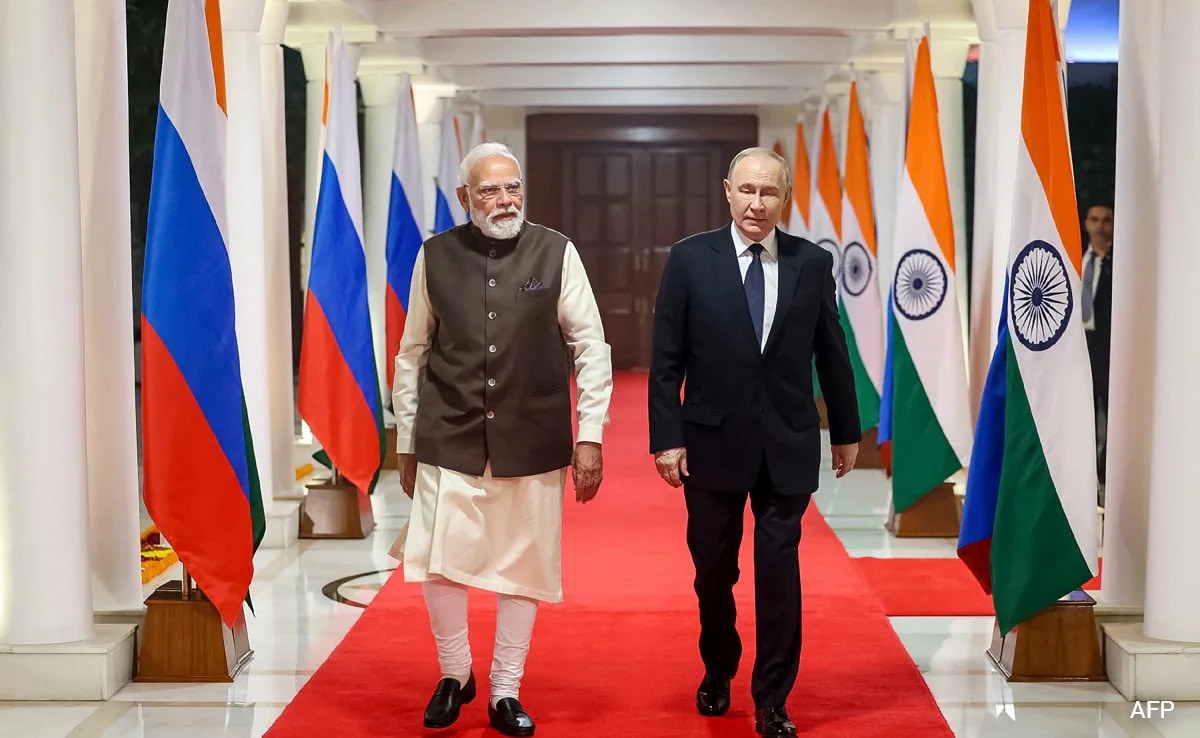
Russian President Vladimir Putin's landmark visit to New Delhi after a four-year gap marks a significant milestone in India-Russia relations. Prime Minister Narendra Modi's personal reception of Putin at Palam Airport highlighted Moscow's enduring importance in India's strategic framework. This diplomatic gesture gained additional significance against the backdrop of Washington's attempts to limit the development of India-Russia ties.
The 23rd annual India-Russia summit indicated an evolution in this longstanding partnership, with economic collaboration increasingly taking center stage. The true importance of this 27-hour visit lies not merely in formal agreements but in its strategic messaging: the bilateral relationship maintains its own momentum, largely protected from external pressures.
During the summit, leaders examined the multifaceted partnership spanning political, military, trade, investment, energy, connectivity, space, cultural, and educational dimensions. The economic aspect received particular emphasis, building on recent momentum created by Western businesses exiting Russia. Both nations adopted the Development of Strategic Areas of India-Russia Economic Cooperation programme extending to 2030.
The trade imbalance favoring Moscow was addressed, with the Russian delegation identifying potential areas for Indian exports including consumer goods, food, agricultural products, pharmaceuticals, and telecommunications equipment. An agreement on labor mobility was concluded in response to Russia's growing demand for skilled workers.
Both sides reaffirmed their commitment to enhancing trade facilitation and establishing smoother payment mechanisms. Removing logistical bottlenecks and addressing tariff barriers remained central priorities for achieving the ambitious $100 billion trade target by 2030. The leaders also expressed interest in finalizing a Free Trade Agreement with the Eurasian Economic Union.
Energy cooperation emerged as a significant priority given India's energy security needs. Discussions covered both existing projects and potential Indian investments in new ventures including oil refining, petrochemical technologies, oilfield services, and expanded nuclear energy cooperation. Science, technology, and space collaboration were also key topics of deliberation.
Regarding military technical partnership, India had expressed interest in acquiring additional S-400 missile defense system batteries and jointly producing the newer S-500 system, though no deals were finalized during the summit. Russia's continued willingness to support India's indigenous production through technology transfers and co-production arrangements remains unchanged.
Russia's offer of platforms like the Su-57 fighter with joint manufacturing possibilities suggests that its growing alignment with China hasn't diminished its strategic engagement with India. For New Delhi, this provides reassurance and strategic value, encouraging the continuation and deepening of defense cooperation.
The visit also highlighted ongoing strategic cooperation in the Arctic and Russian Far East regions. India has expressed interest in deepening involvement in these regions' political economies, given their resources of critical minerals, rare earths, and hydrocarbons. Moscow welcomes India's interest and views New Delhi as an important actor in Arctic affairs.
These developments indicate a sustained convergence of interests between the two nations. The visit carries significant symbolism, reflecting Russia's position as a reliable partner in India's strategic calculations. For Moscow, maintaining strong ties with an influential non-Western power like India while engaged in a prolonged Ukraine conflict enhances Russia's global standing.
Certain challenges will persist in the bilateral relationship, including questions about existing deliverables and trade imbalance. Nevertheless, in the current geopolitical landscape, New Delhi appears increasingly willing to deepen its relationship with Moscow despite external pressures.
(Harsh V Pant is Vice President, ORF. Rajoli Siddharth Jayaprakash is Junior Fellow, Eurasia, at ORF.)
Disclaimer: These are the personal opinions of the author
Source: https://www.ndtv.com/opinion/why-putins-visit-was-bigger-than-just-deals-9772623