
'Some High Court Judges Unable To Deliver On Their Tasks': Top Court
- Date & Time:
- |
- Views: 56
- |
- From: India News Bull
New Delhi:
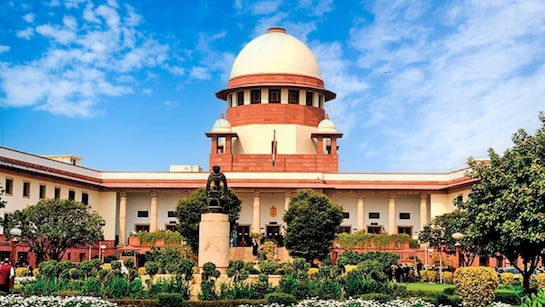
The Supreme Court expressed concern on Monday about some high court judges failing to "deliver on their tasks," and called for implementation of a "performance evaluation" system.
A bench comprising Justices Surya Kant and N Kotiswar Singh stated that while they did not wish to act as "school principals" for high court judges, a self-management system should exist to prevent "files piling up on their desks."
"There are judges who work diligently day and night with outstanding case disposal rates. However, some judges unfortunately are unable to deliver - for reasons we cannot determine, whether good or bad, and there may be certain circumstances behind this," the bench remarked.
The bench elaborated, "If a judge is hearing a criminal appeal, we don't expect 50 cases decided in a day, and resolving one criminal appeal daily is itself a significant achievement. But when a judge processes only one bail matter per day, that situation demands introspection." Consequently, the top court emphasized "performance evaluation" while highlighting concerns about the parameters and guidelines that should govern such assessment.
"We don't intend to function as school principals. There should be broad guidelines so judges understand their tasks and expected delivery standards. The general public holds legitimate expectations from the judiciary," the bench added.
These observations emerged during hearings of criminal appeals where some life and death row convicts approached the court alleging that the Jharkhand High Court had delayed delivering verdicts on their appeals despite reserving judgments for years.
The high court subsequently delivered verdicts in these cases, acquitting many of the convicts.
Advocate Fauzia Shakil, appearing in the case, presented a chart showing judgment delivery status across various high courts, highlighting that some courts had not provided data in the prescribed format.
The bench directed her to file comprehensive high court data within two weeks, including information on reserved cases, pronouncement dates, and verdict uploading dates.
Senior advocate Ajit Sinha was requested to provide assistance in the matter.
Justice Kant observed that certain judges habitually adjourn cases unnecessarily, warning this practice could damage judicial reputation as had occurred with some judges previously.
"Every judge should maintain a self-management system preventing case files from accumulating. Some judges, anxious to hear more cases, end up unnecessarily adjourning matters," Justice Kant noted.
The bench referenced an earlier Supreme Court verdict establishing that when only the operative part of a judgment is pronounced, the complete reasoning should follow within five days. The bench emphasized that high courts remain bound by this timeline unless modified by the Supreme Court.