
Western Media Analyzes India's Diplomatic Balancing Act During Putin's High-Stakes Visit
- Date & Time:
- |
- Views: 42
- |
- From: India News Bull
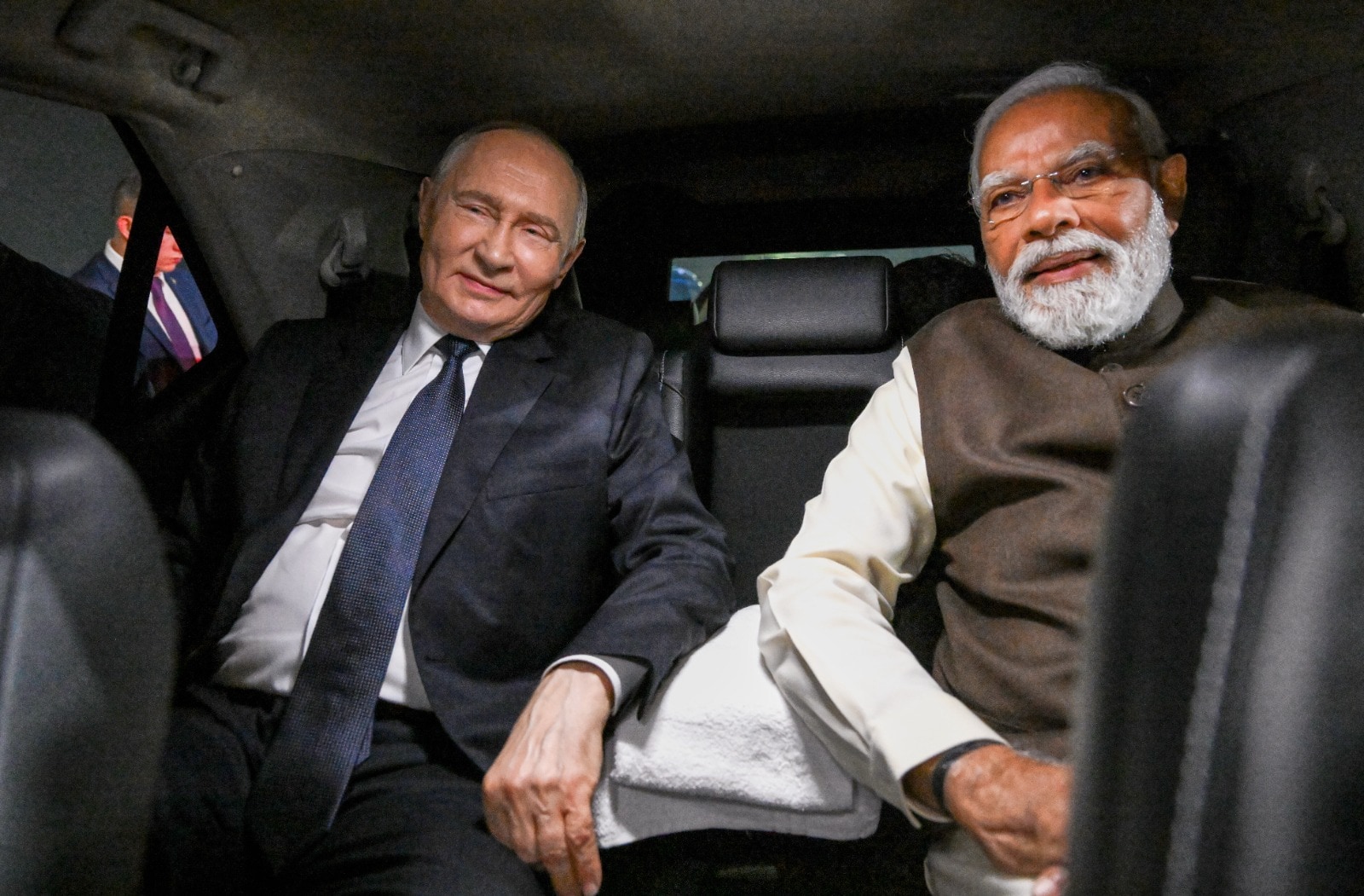
The New York Times emphasized the significance of PM Modi personally welcoming Putin at the airport, underscoring their strong personal relationship.
American media outlets portrayed Russian President Vladimir Putin's New Delhi visit as a critical juncture in India's foreign policy strategy, focusing on the Modi administration's efforts to maintain its longstanding strategic alliance with Moscow while managing significant pressure from Washington.
The Washington Post characterized the visit as posing a "delicate diplomatic challenge" for PM Modi, noting he must sustain relations with Russia "without riling President Donald Trump," who has imposed penalties on India for purchasing Russian oil and thereby "fueling its 'war machine' in Ukraine."
According to the Post, Indian refineries have begun decreasing their Russian oil imports as US and European sanctions intensify, a change analysts described as a "significant blow" to Moscow's wartime economic stability.
The New York Times drew attention to PM Modi's personal reception of Putin on the tarmac, interpreting it as a gesture intended to highlight "the strong personal rapport" between both leaders despite the complicated geopolitical context.
The Times reported that India is "searching for a way to resolve its economic tangle with the Trump administration," which has claimed New Delhi is helping finance Russia's military operations through discounted crude oil purchases.
The publication mentioned that trade, defense procurement, nuclear cooperation, fertilizers, and a proposed labor-mobility agreement are key topics on the summit agenda.
The Wall Street Journal provided one of the most critical assessments, stating that Putin's visit aims "to protect a partnership that is a crucial economic and diplomatic lifeline for Moscow but one that has drawn the ire of the Trump administration."
The Journal stated that Trump has implemented 50 percent tariffs on Indian exports as punishment for India's substantial Russian oil purchases. It further noted that India is expected to reduce its Russian oil imports to approximately one million barrels daily this month—down from 1.8 million barrels daily in November—amid new US sanctions targeting Rosneft and Lukoil.
The publication also mentioned that Putin is anticipated to offer "cheap oil and Russia's latest arms" to strengthen bilateral relations, although Indian officials have quietly tempered expectations regarding major new defense agreements. Analysts quoted by the newspaper suggested India could leverage Russian offers in negotiations with Washington, given a US law authorizing sanctions on countries purchasing major defense platforms from Moscow.
Despite uncertainties surrounding immediate arms deals, the Journal indicated that "the trajectory of the relationship is upward," with both nations seeking to diversify trade beyond energy.
CNN highlighted the Ukraine dimension. Before arriving in Delhi, Putin told India Today that Russia would "liberate Donbas and Novorossiya... by military or other means," adding: "We will finish it when we achieve the goals set at the beginning of the special military operation, when we free these territories."
CNN connected these statements to Putin's Moscow meeting with US envoy Steve Witkoff and Jared Kushner earlier in the week, reporting that Trump subsequently described the negotiations as "a perfect meeting" but acknowledged that "it does take two to tango."
Across major US media outlets, the visit is depicted as a test of India's strategic autonomy—its endeavor to maintain strong ties with Russia, its primary arms supplier, while strengthening a rapidly growing security partnership with the United States.
The Washington Post reported that New Delhi aims to signal to Moscow that "the fundamentals of the relationship remain strong," even as India adapts to global energy market shifts and US retaliation over Russian imports.
India and Russia have sustained a close strategic partnership since the Cold War, founded on defense cooperation, energy trade, and multilateral alignment.
Russia continues to be India's largest source of military equipment, although New Delhi has diversified its procurement sources in recent years.
The United States, now India's largest trading partner, has intensified strategic engagement with New Delhi amid China's increasing influence.
Putin's visit to India occurs during a period of heightened global tension, with US-Russia confrontation over Ukraine and changing oil supply patterns positioning India at the center of a complex geopolitical realignment.
Source: https://www.ndtv.com/world-news/balancing-act-in-focus-of-western-medias-coverage-on-putins-india-visit-9754828