
Indian Companies To Step Up Local US Hirings After H-1B Fee Hike: Industry Body
- Date & Time:
- |
- Views: 73
- |
- From: India News Bull
Indian Companies To Step Up Local US Hirings After H-1B Fee Hike: Industry Body
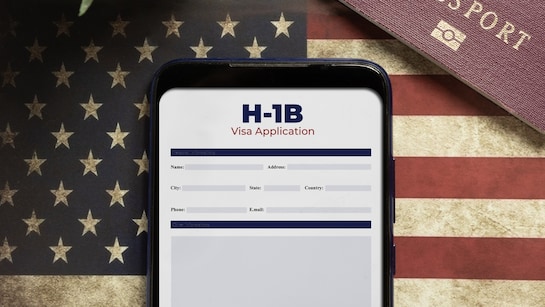
The tech industry is currently investing over USD 1 billion in local US talent development and recruitment.
New Delhi:
Nasscom stated Monday that the US clarification regarding the H-1B visa fee increase - confirming it won't affect current visa holders and will only apply as a one-time fee to new applications - has addressed immediate uncertainties about eligibility and implementation timelines.
This clarification alleviates concerns regarding business continuity and reduces uncertainty for H-1B holders who were outside American borders.
Additionally, Nasscom noted that Indian and India-focused companies operating in the United States have substantially decreased their reliance on H-1B visas while expanding local hiring initiatives, suggesting "we anticipate only a marginal impact for the sector".
"With the fee becoming applicable from 2026 onward, companies have adequate time to further enhance skilling programs in the US and increase local recruitment," the industry association explained.
The technology sector is investing more than USD 1 billion in developing local talent and recruiting within the United States, resulting in a significant increase in American hires.
"The clarification explicitly states that current visa holders won't be affected and the fee will apply only to new petitions as a one-time charge. This has resolved the immediate confusion regarding eligibility and implementation schedules," Nasscom added.
Over recent years, Indian and India-centric companies with US operations have progressively reduced H-1B visa dependencies while consistently increasing their local American workforce.
According to available statistics, H-1B visas issued to leading Indian and India-centric companies have declined from 14,792 in 2015 to 10,162 in 2024, with H-1B workers at the top 10 Indian and India-centric companies representing less than 1 percent of their total employee base. "Given this trajectory, we expect only minimal impact on the sector," Nasscom stated.
H-1B is a skilled worker mobility program and non-immigrant visa category that addresses critical skills shortages in the US market. Compensation for these workers remains comparable with local employees.
Nasscom emphasized that H-1B workers constitute merely a fraction of the overall US workforce.
"Nasscom has consistently advocated for predictable and stable frameworks for skilled talent mobility, which are essential for maintaining national competitiveness and have historically driven US innovation and economic growth. Skilled talent mobility will remain central to enabling businesses to make forward-looking investment decisions, accelerate research, and strengthen nations' positions in the global innovation economy," the organization further stated.
The Indian IT industry expressed relief on Sunday following US Government clarification that the H-1B visa application fee increase to USD 100,000 applies exclusively to new applicants without affecting existing visa holders or renewals. Currently, H-1B visa fees range approximately from USD 2000 to USD 5000, depending on employer size and additional costs.
While some industry experts indicated they don't anticipate immediate adverse impacts over the next 6-12 months as the increase only takes effect in the upcoming application cycle, others cautioned that despite the delay, a deferred impact might eventually necessitate strategic business reassessments by IT companies if the rule remains in place.
White House officials' clarification came several hours after President Donald Trump signed the proclamation increasing application fees for visas used by companies to bring workers, including from India, to live and work in the United States.
In its immediate aftermath, the proclamation triggered frantic responses among companies and H-1B holders traveling outside the US regarding the September 21 deadline, creating chaotic scenes at certain airports.
Social media platforms on Saturday were inundated with dramatic videos showing Indian technology professionals hastily disembarking from aircraft shortly after the US administration's unexpected announcement.
Numerous X users shared accounts of flight delays as H-1B workers, concerned about potential re-entry challenges, opted to remain in the US even after boarding flights; others, worried about field interpretations of the order, altered their travel plans while en route to India, where many typically travel during this season for Navratri celebrations.
Notably, Indian technology professionals represent the majority of H-1B visa holders, exceeding 70 percent.
According to USCIS data for fiscal year 2025 (as of June 30, 2025), Amazon leads with 10,044 H-1B visa approvals.
In the top ten beneficiary list, TCS ranks second with 5505 approvals, followed by Microsoft Corp (5189), Meta (5123), Apple (4202), Google (4181), Cognizant (2493), JP Morgan Chase (2440), Walmart (2390), and Deloitte Consulting (2353). The top 20 also includes Infosys (2004), LTIMindtree (1807), and HCL America (1728).
The Congressionally-mandated annual allocation stands at 65,000 visas, plus an additional 20,000 visas reserved for individuals with advanced degrees from US institutions.