
Delhi Air Pollution Crisis: Minister Highlights Central Oversight While Questions on Local Fund Utilization Remain Unanswered
- Date & Time:
- |
- Views: 50
- |
- From: India News Bull
New Delhi:
Union Environment Minister Bhupender Yadav informed the Lok Sabha today that a monitoring mechanism has been established to oversee the implementation of 95 directions issued by the Centre-appointed Commission for Air Quality Management. While addressing questions regarding the severe pollution crisis enveloping Delhi and surrounding areas, the minister notably avoided commenting on whether the Delhi government has underutilized the Rs 1,200-crore allocation meant for air quality improvement initiatives.
In his written response submitted to the Lok Sabha on Monday, Yadav refrained from directly criticizing the Delhi government for potential underutilization of Central funds, despite specific inquiries from Congress MP Dr Kirsan Namdeo Rao. The Congress representative had questioned the government's approach to addressing Delhi's alarming air pollution levels and their health consequences.
Instead, the minister shifted responsibility to the Commission for Air Quality Management in Delhi-NCR, a Central entity, stating that 95 statutory directives have been issued with monitoring mechanisms established to ensure "various agencies" in the National Capital Region comply with implementation requirements.
Regarding the critical question about Delhi government's utilization of funds provided under the National Clean Air Programme (NCAP), Minister Yadav merely stated that the GNCTD "has reported that they have started implementation of various activities," including acquiring 14 mechanical road sweepers, completing end-to-end road paving, and greening 2.6 hectares of land—all described as being at "various stages" of completion.
Additionally, the New Delhi Municipal Council has reportedly initiated procurement of four BS-VI CNG anti-smog guns and seven modified anti-smog water guns designed for high-rise buildings, alongside road improvement projects.
The response provided no specific figures comparing actual expenditures against sanctioned amounts.
When questioned about accountability for any underutilization and whether ineffective Delhi government policies have contributed to deteriorating air quality, the Minister's response avoided addressing either issue. Instead, he highlighted Central government initiatives—including stricter emission standards than national requirements, an enhanced Graded Response Action Plan (GRAP) notified on November 21, 2025, multiple high-level review meetings chaired by the Union Minister, and critical gap funding provided to NCT-Delhi under the NCAP framework.
The minister's statement claims significant improvement in Delhi's air quality this year—with 200 "good to moderate" days (AQI below 200) in 2025 compared to just 110 days in 2016, representing the lowest annual average AQI in eight years (excluding the 2020 COVID lockdown period).
The revised GRAP, whose details accompanied the response, has moved several restrictive measures to earlier implementation stages:
* Uninterrupted power supply, traffic synchronization, and enhanced CNG/electric bus services will now be activated at Stage I (Poor AQI 201-300) rather than Stage II.
* Staggered office hours have been moved from Stage III to Stage II.
* 50% work-from-home requirements for offices have shifted from Stage IV to Stage III.
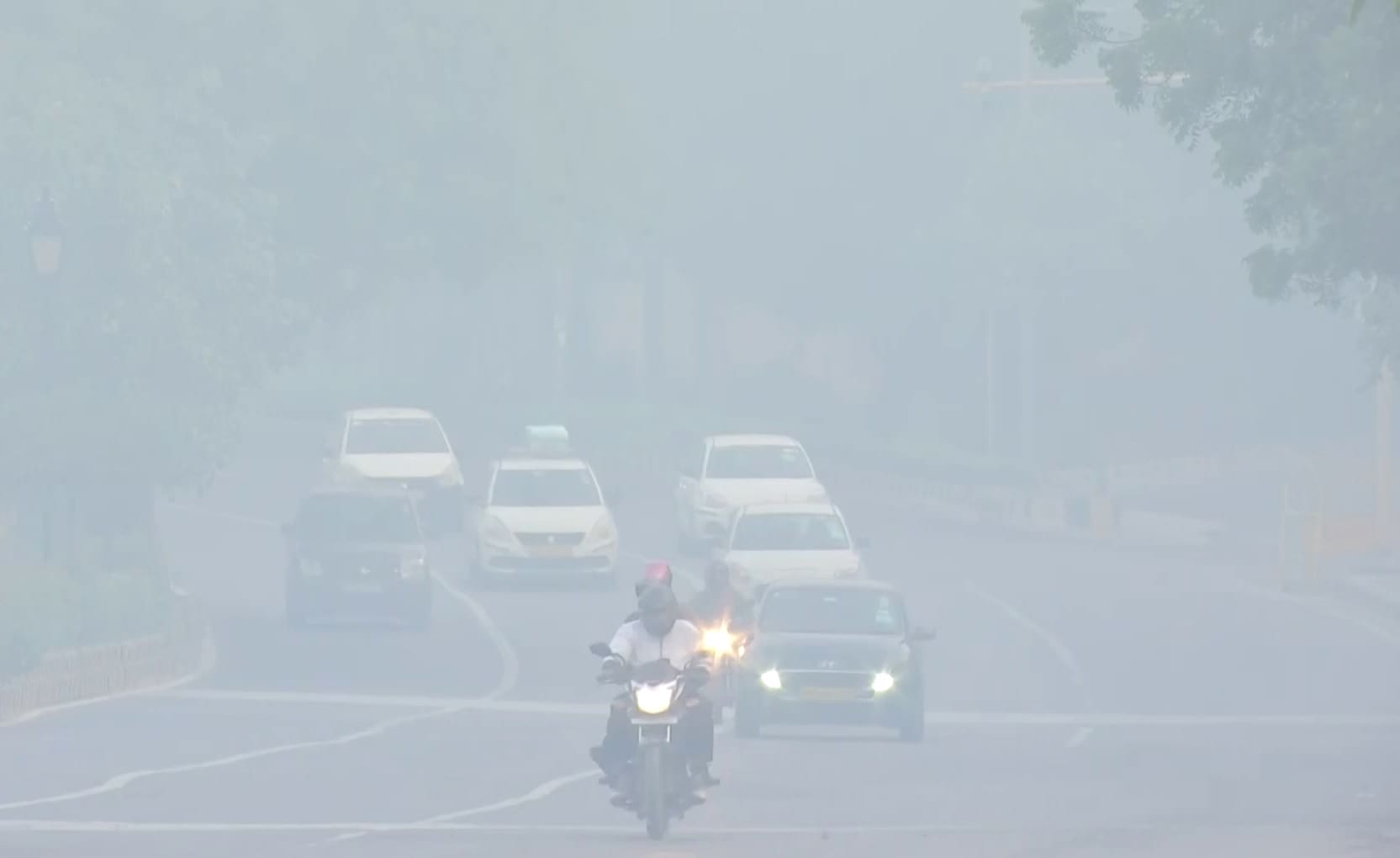
With Delhi's AQI consistently remaining in the "Very Poor" category throughout most of November and forecasts predicting "Severe" levels in the coming week, both the implementation of the enhanced GRAP measures and the actual utilization of Central funds by the Delhi government will likely face intense political and public scrutiny throughout this winter season.
Source: https://www.ndtv.com/india-news/on-pollution-minister-points-to-central-body-silent-on-delhi-government-role-9731316