
Tata Chairman Reveals: Air India Is a Responsibility, Not Just a Business Opportunity
- Date & Time:
- |
- Views: 36
- |
- From: India News Bull
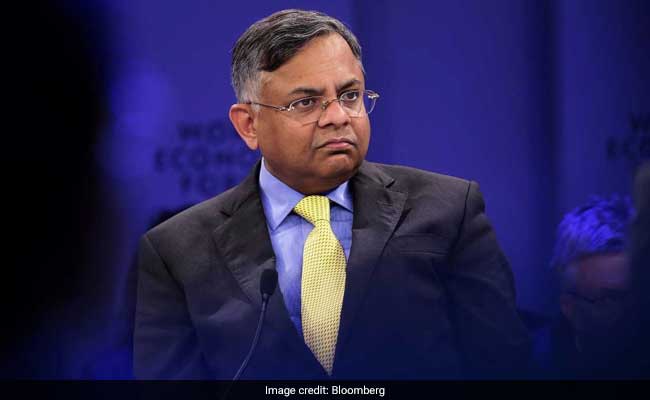
N Chandrasekaran stated that Air India should complete the retrofitting of its entire domestic fleet by the end of this year.
Mumbai:
Tata Sons Chairman N Chandrasekaran emphasized on Saturday that Air India, currently undergoing transformation, represents not merely a business venture but a significant "responsibility" for the Tata Group.
He highlighted that the aviation industry constantly faces challenges, with global supply chain disruptions making the availability of parts, infrastructure, and new aircraft highly unpredictable.
Chandrasekaran reflected on the acquisition decision, saying, "When the Tata Group decided to buy Air India in 2022, people both publicly and privately questioned me why. With the Group performing well, why enter this challenging sector?" He made these remarks during his keynote address at an event celebrating the 121st birth anniversary of Tata Group founder, JRD Tata.
"I firmly believe that for the Tata Group, Air India is not just a business opportunity. It's a responsibility," he affirmed.
The Tata Group acquired the loss-making Air India along with Air India Express in January 2022 and has since been implementing an ambitious five-year transformation strategy.
However, progress has been slower than anticipated due to various factors, including global supply chain difficulties that have delayed aircraft upgrades and deliveries.
"Every single percentage growth in GDP will generate a 2 percent growth in the domestic aviation sector. If India grows at 8 percent, the aviation industry grows at 16 percent. This pattern will continue for at least the next three decades. This represents an extremely exciting phase of economic growth, particularly for the aviation sector," Chandrasekaran explained.
"Yet it's not straightforward. The challenges facing the aviation sector are increasingly complex," he added.
He further elaborated that global supply chain issues make the availability of parts and infrastructure highly unpredictable, noting that "every plan becomes difficult to execute because of the situations faced in this area." Chandrasekaran also pointed out that aviation is extremely capital-intensive while industry profit margins remain thin.
Highlighting India's economic position as the fourth largest economy rapidly advancing toward becoming the third largest, he praised the 8.2 percent GDP growth in the July-September quarter as "simply fabulous." He projected that India would grow at approximately 7 percent during the current fiscal year.
According to Chandrasekaran, rising consumer confidence and consumption-driven growth, coupled with public infrastructure investment, will further accelerate economic expansion.
"We will achieve a $5 trillion economy and continue growing beyond that. We'll accomplish this faster, with each additional trillion dollars being added in shorter timeframes, creating exciting opportunities. However, for this to happen, connectivity must function effectively," he stated.
He explained that the aviation industry presents numerous aspects requiring management, some within one's control and others that arrive unexpectedly.
"Geopolitics presents constant surprises. Flight routes suddenly change because certain territories become restricted. When you cannot fly over particular territories, flights take longer. Longer flights increase fuel costs... We must manage all these factors," he explained.
Chandrasekaran observed that demand for air travel remains exceptionally high as the aspirations of Indians continue to grow, with everyone seeking connectivity and travel opportunities. "Our commitment is to build a world-class airline," he affirmed.
He stated that Air India should complete the retrofitting of its entire domestic fleet by year-end, with the wide-body fleet upgrades scheduled over the next couple of years.
Chandrasekaran acknowledged that this process should have been completed earlier but was delayed by supply chain issues. He added, "We will begin receiving new planes monthly over the next three years, by which time almost 95 percent or 99 percent of our fleet will be modernized. We are addressing each dimension systematically, working toward fulfilling our commitment, though it will require time."
Source: https://www.ndtv.com/india-news/air-india-not-business-opportunity-but-responsibility-n-chandrasekaran-9722786