
Opinion | Great American Exodus: Indian Scholars Are Fleeing US - But To Where?
- Date & Time:
- |
- Views: 72
- |
- From: India News Bull
As American politics increasingly impacts its scientific talent reservoir, India, traditionally an exporter of technical expertise to global research centers, may be positioned to experience a reverse migration wave of scientific professionals from the United States.
Growing concerns about immigration restrictions, declining federal funding, and the Trump administration's perceived anti-science stance are prompting early-career Indian scientists and engineers in America to reconsider their professional trajectories and prospects.
International researchers in post-doctoral positions and PhD programs - with Indians forming a substantial portion - are increasingly contemplating departures from the United States due to limited career opportunities and shrinking research budgets, particularly in federally supported areas like climate science, reproductive health, and AI regulation.
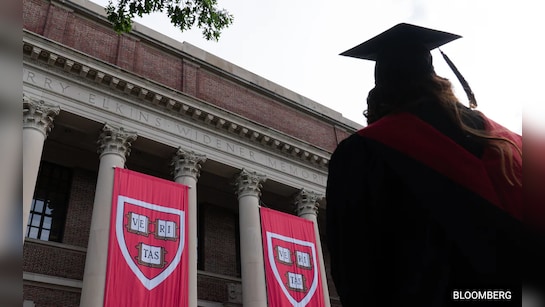
Tamil Nadu's government has recognized this opportunity by implementing one of the most robust reverse migration initiatives in recent memory to attract these professionals back to India.
Their comprehensive program offers internationally competitive salaries, startup research funding, relocation assistance including housing, and streamlined visa processing. A newly established "Tamil Talents Plan" will create a database of overseas scholars and host annual events to connect them with Indian educational institutions.
The state is also fostering collaboration between returning academics and local universities through co-supervised doctoral programs, joint research facilities, and various research engagements. Universities including the University of Madras and Madurai Kamaraj University are preparing to welcome returning experts in fundamental and applied sciences, with particular emphasis on AI.
The government's recent budget allocated Rs 100 crore for two new research centers in partnership with the Indian Institute of Science (IISc) and the Tata Institute of Fundamental Research (TIFR).
The discourse around reverse migration is particularly significant in Artificial Intelligence. Indian-origin computer scientists have been instrumental in Silicon Valley's AI revolution, but the sector now faces challenges amid political uncertainty under the Trump administration.
President Biden had established the AI Safety Institute in 2023 to support early-stage safety research and develop standards for emerging risks. However, the Trump administration quickly dismantled this initiative - rescinding Biden's executive order, rebranding the institute with reduced scope, and cutting funding sources. The institute was later renamed the Center for AI Standards and Innovation, with its focus shifted toward national security concerns rather than comprehensive safety protocols. These changes have left many early-career researchers with cancelled projects, limited opportunities, and increasing uncertainty about their American prospects.
The restrictive climate within American research is evident in measures targeting Chinese-origin researchers, including FBI raids and deportations that have driven hundreds of Chinese scientists from American institutions.
Simultaneously, the Trump administration's Department of Justice has issued directives to remove or defund Diversity, Equity, and Inclusion programs from federally supported institutions and launched investigations into universities maintaining such initiatives.
These developments have created an environment that constrains research in AI ethics, algorithmic justice, and socially beneficial technologies - fields disproportionately led by international early-career researchers.
India, meanwhile, is gradually developing a substantial AI ecosystem. From the INDIAai mission to establishing Centers of Excellence in Telangana and Karnataka, the intention is clear. However, intention requires talent to become reality.
This ecosystem is supported by infrastructure and institutional capacity. India's PARAM Siddhi supercomputer ranks among global leaders, while IITs and IISc are developing AI-focused research clusters. The Ministry of Electronics and Information Technology has initiated AI ethics frameworks balancing innovation with accountability - creating not merely signals of intent but foundations capable of accommodating world-class AI talent.
To effectively attract AI engineers back, India must act swiftly and strategically. First, other state governments should emulate Tamil Nadu by creating dedicated AI researcher positions with competitive compensation, computational resources, and equity in research spinoffs. Second, India should implement visa-on-arrival policies for families, similar to Canada and Singapore's tech-talent approaches. Third, to align expectations between returnees and local institutions, the government should establish liaison offices handling integration, laboratory placement, and intellectual property considerations.
Unlike many competitors, India can combine policy incentives with extensive computational resources and established research ecosystems. The expansion of national supercomputing facilities, AI centers at IITs, and ethical AI initiatives position India as a potential leader in responsible AI development.
However, India faces competition from China, South Korea, and several European nations offering similar repatriation packages including expedited residency, startup funding, and tax benefits. India's primary advantage remains emotional and cultural: it represents home for most of these scientists. The question is whether it can also become their research destination.
To achieve this, the Ministry of Science and Technology should implement a national diaspora scientist policy, including a centralized returnee portal, accelerated ethics approvals for impactful research, and cross-institutional mentorship for early-career scientists. CSIR and ICSSR could jointly host biennial reverse migration discussions on American campuses with substantial Indian graduate enrollment.
Critically, the government must shield returning scholars from institutional gatekeeping. Many top Indian scholars abroad fear losing autonomy within hierarchical structures upon return. Independent research clusters with lateral entry, autonomous financial management, and performance-based renewals could represent a paradigm shift in India's scientific governance.
Returning scientists bring not only their individual expertise but also networks, mentors, partners, and startups. India's "Startup India" ecosystem could incentivize US-registered startups to relocate through founder-track visas and tax-neutral reverse flips. Industry leaders advocate for tax neutrality on reverse-flipping shareholding, easing ESOP and capital gains burdens, and implementing deferred tax treatments for high-impact, job-creating ventures. These measures would align with India's long-term innovation and employment objectives.
Dedicated "AI-Startup Landing Pads" in Bengaluru, Chennai, and Pune could streamline regulatory processes, provide cloud computing resources, and facilitate hiring approvals. Philanthropic partnerships with organizations like the Gates Foundation could support this transition through blended research affiliations and flexible fieldwork arrangements.
Furthermore, returnees value rigorous scholarship and meaningful work addressing challenges in clean energy, public health, and ethical technology development. This represents India's competitive advantage against wealthier research environments: providing substantive problems and complexity.
The exodus has begun. Historically, India has served as a launching pad for scientific careers rather than a destination. However, such opportunities remain temporary. For India to transform brain drain into brain gain, substantive action beyond rhetoric is required. The country must provide scale, support, and dignity to its diaspora's talented professionals. By positioning itself as a center for socially responsible AI focused on fair algorithms and inclusive data, India can foster both stability and growth in this critical sector.
[Deepanshu Mohan is Professor of Practice and Director, Centre for New Economics Studies, Jindal School of Liberal Arts and Humanities, O.P. Jindal Global University, Sonipat, Haryana. Geetaali Malhotra and Anubhi Srivastava are Research Assistants with Centre for New Economics Studies (CNES), O.P. Jindal Global University, Sonipat, Haryana.]
Originally published under Creative Commons by 360info.
Disclaimer: These are the personal opinions of the author