
Opinion | India To Kabul To Pak: The Plot Behind Chinese Foreign Minister's Many Tours
- Date & Time:
- |
- Views: 66
- |
- From: India News Bull
Opinion | India To Kabul To Pak: The Plot Behind Chinese Foreign Minister's Many Tours
Diplomatic activity has intensified across Asia. S. Jaishankar, India's Foreign Minister, recently concluded meetings in Moscow with his counterpart and the Russian President. Meanwhile, Ajit Doval, India's National Security Advisor, has just returned from Russia, and Prime Minister Modi is scheduled to attend the Shanghai Cooperation Organisation Summit in Tianjin. Chinese Foreign Minister Wang Yi recently departed from Delhi after signing an unexpectedly cordial joint statement, only to immediately fly to Kabul for a Pakistan-Afghanistan trilateral meeting. These rapid diplomatic movements reflect how nations are navigating the emerging contours of what might be called the 'new world disorder'.
The trilateral engagement between China, Pakistan, and Afghanistan has evolved significantly since its inception in 2017. Though initially dormant, it gained momentum in 2022, a year after the Taliban assumed control of Afghanistan. By this point, China had developed enough confidence to engage directly with Afghanistan without Pakistan's mediation. Chinese Ambassador Zhao Sheng received an elaborate welcome in 2023, though this fell short of formal diplomatic recognition. Beijing's influence expanded rapidly, culminating in a role reversal by 2025, with China now facilitating improved relations between the Taliban and Pakistan, their former patron. During an informal trilateral meeting in Beijing in May 2025, China explicitly communicated to the Taliban that their future prosperity depended on reconciliation with Pakistan. The meeting emphasized exchanging ambassadors and jointly combating terrorism, with China offering development assistance as incentive.
Also Read | Opinion: The India-China Thaw Needs Eyes Wide Open
Wang Yi's recent meetings continued this theme, with China offering to "work with Afghanistan and Pakistan to deepen good-neighborliness and mutual trust" while firmly opposing "interference by any external forces in the region, as well as any organization or individual engaging in acts within their countries that undermine the national sovereignty, security and territorial integrity of the other sides." While the "external" force remains unspecified, Pakistan likely raised concerns about India. Another dimension involves Russia's long-standing accusations that the United States supports elements of Islamic State Khorasan in Afghanistan—a claim recently highlighted by The Economist, citing Pakistani officials who suggest American support for IS-K aims to undermine Russian and Chinese interests. The mysterious abandonment of American weapons during the US withdrawal has contributed to arms proliferation across the region.
Wang Yi's message to the uneasy partners was clear: "safeguard regional peace and stability, and strive to create a sound external environment for the development and revitalization of each side." In simpler terms: cease hostilities and focus on trade.
Afghanistan's substantial mineral resources represent a significant attraction for foreign powers. The US Geological Survey estimates these resources to be worth "trillions." The Hajigak iron ore deposit, where an Indian consortium led by the Steel Authority of India has interests, potentially contains up to 2 billion metric tons of high-grade ore. China secured rights to the Mes Aynak copper deposit in Logar Province, which holds over 12 million metric tons of copper valued at more than $50 billion. Despite India's entry in 2011 and China's in 2008, neither has successfully extracted resources due to security concerns and infrastructure limitations. This explains Wang Yi's emphasis on completing railway connections to Pakistan and integration with the China-Pakistan Economic Corridor (CPEC).
Afghanistan also possesses substantial lithium reserves, primarily in Ghazni, Nuristan, and Helmand provinces, as well as 47 oil wells concentrated in the Sar-e Pol, Sheberghan, and Amu Darya basins.
Despite Pakistan's Foreign Minister Ishaq Dar's enthusiastic declarations of "shared determination" for regional peace, the reality differs. Afghan trucks carrying fruits and other goods face prolonged delays at border crossings like Torkham, causing severe economic losses, even after trading points were officially reopened. Reports suggest Dar received a deliberately downgraded welcome in Kabul, being met by a Deputy Foreign Minister instead of his direct counterpart.
Kabul clearly prefers closer ties with China over Pakistan. This explains why Beijing's proposal to connect Afghan trade routes with CPEC may not appeal to Afghan leadership. They would prefer either northern connections through the Belt and Road Initiative linking to Chinese highways or utilizing Iran's Chabahar port, which comes with fewer complications.
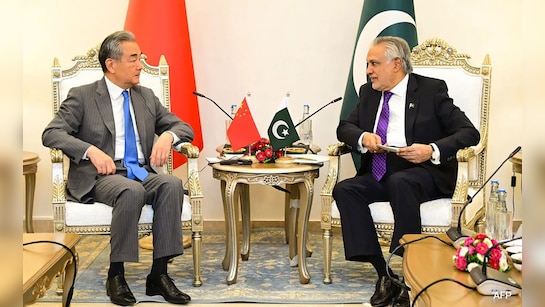
Wang Yi's final stop was Pakistan, where he held a notably brief meeting with his counterpart. His statements explicitly linked India, Pakistan, and Afghanistan, noting that despite their "different national conditions, they all recognize that development is the top priority and the broadest consensus among them." He emphasized that "a peaceful, stable and prosperous South Asia serves the common interests of all parties" and that faced with "pressure from unilateral bullying," these countries "should adhere to multilateralism, safeguard their legitimate rights and interests, and strive to promote equal and orderly multipolarization of the world." Significantly, he added that "the three countries are willing to strengthen good-neighborly friendship with China, their largest neighbor, deepen exchanges and cooperation, and seek mutual benefit and win-win results."
Also Read | China, Now Trump: Pakistan And The Art Of Somehow Finding Patrons
Wang also met with Pakistan's real power center, Chief of Army Staff Field Marshal Asim Munir, who appeared visibly enthusiastic despite Wang's more reserved demeanor. While Pakistani media portrayed the visit positively, China's specific objectives remain unclear. Both sides expressed readiness to proceed with CPEC's long-delayed second phase, which references several vaguely defined "corridors" for innovation, green energy, "Digital Pakistan," and an "Inclusive Regional Development" program purportedly aimed at reducing regional disparities. This implies connectivity extending to Afghanistan and Iran. Pakistan continues to seek Chinese investment in the Mainline-1 railway project, whose budget has been reduced from $9.85 billion to $6.678 billion despite maintaining the same fundamental scope—suggesting ongoing complications in the partnership.
China appears to be capitalizing on the uncertainty created by Trump's policies, viewing South Asia as an integrated regional challenge. Beijing has consistently advocated for regional peace and emphasized ending terrorism to create favorable conditions for economic development. This doesn't mean China will abandon Pakistan, especially with US Secretary Rubio's upcoming visit. However, Beijing has recognized something Washington hasn't: engaging with South Asia's major powers collectively is more effective than pursuing divisive strategies. Whether this approach succeeds remains to be seen.
Meanwhile, Afghanistan's lithium deposits may prove as geopolitically significant as oil was for the Middle East—attracting international interference and political complications. Delhi should prepare for regional instability and anticipate increased diplomatic engagement. It's time to prepare conventional approaches while simultaneously thinking innovatively.
(Tara Kartha was with the National Security Council Secretariat)
Disclaimer: These are the personal opinions of the author