
Chinese State Media Gives Wide Coverage To PM Modi's Visit
As the spotlight shone brightly on PM Modi's visit to China after seven years, Chinese state media has given significant coverage to the visit, highlighting both countries' growing cooperation and proactive approach to foreign policy
- Date & Time:
- |
- Views: 83
- |
- From: India News Bull
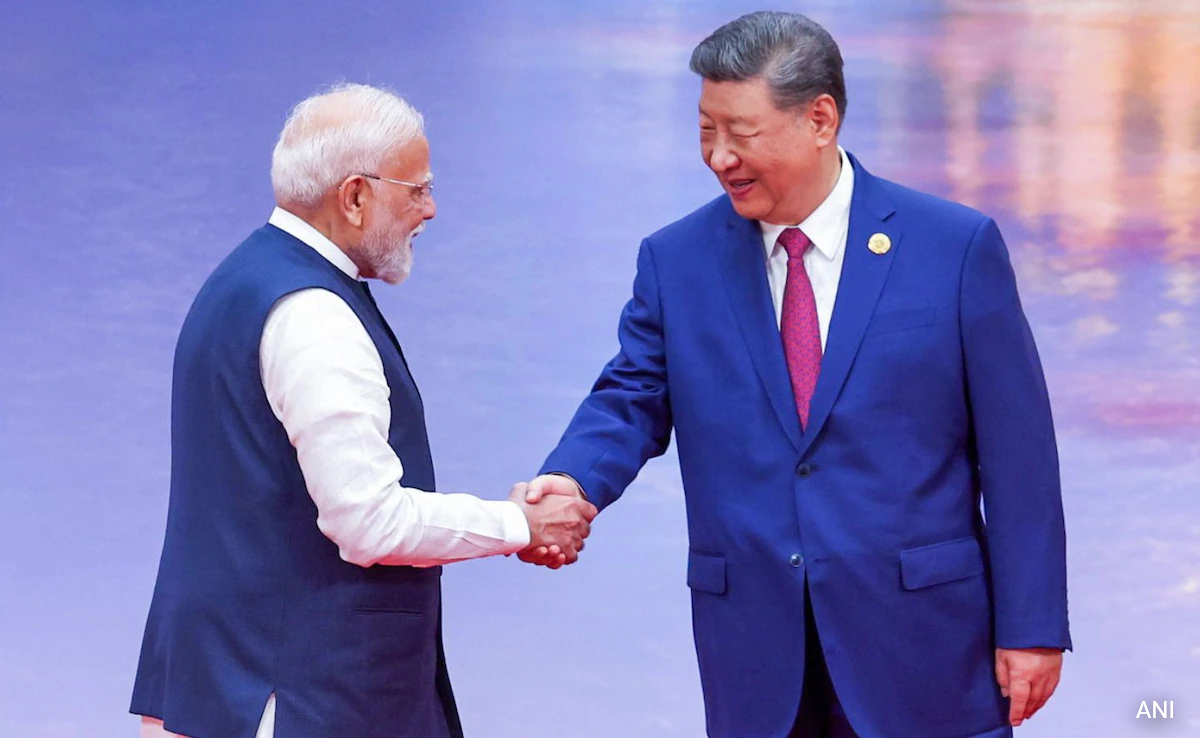
Prime Minister Narendra Modi met with President Xi Jinping today on the sidelines of the SCO Summit.
Tianjin:
Chinese state media has provided extensive coverage of Prime Minister Narendra Modi's first visit to China in seven years, emphasizing the strengthening cooperation and proactive foreign policy approaches between the two nations.
The Global Times, a leading Chinese state-run publication, featured an article titled "China and India are cooperation partners, not rivals: Xi," which highlighted President Xi Jinping's comments about the bilateral meeting. Xi noted that "as long as the two countries adhere to this overarching direction, China-India relations can maintain steady and long-term growth."
Additionally, the Global Times reported Xi's statement that China and India should strive to be good neighbors and partners supporting each other's success.
According to The Global Times, Xi referred to the relationship as a "cooperative pas de deux of the dragon and the elephant," employing his frequently used metaphor where the dragon represents China and the elephant symbolizes India.
Prime Minister Modi and President Xi Jinping held their meeting this morning during the SCO Summit.
In his post on X, PM Modi stated, "Had a fruitful meeting with President Xi Jinping in Tianjin on the sidelines of the SCO Summit. We reviewed the positive momentum in India-China relations since our last meeting in Kazan. We agreed on the importance of maintaining peace and tranquillity in border areas and reaffirmed our commitment to cooperation based on mutual respect, mutual interest and mutual sensitivity."
Xinhua, China's official news agency, reported that Xi welcomed PM Modi to the SCO summit and emphasized the need for both countries to view their relationship from a strategic and long-term perspective, seeking continued improvement following the Tianjin meeting, and working toward sustained, sound development.
During their bilateral talks, Xi called for enhanced "strategic communication to deepen mutual trust, expand exchanges and win-win cooperation, heed each other's concerns to seek harmonious coexistence, and enhance multilateral collaboration to safeguard common interests."
Xi also emphasized that the two Asian neighbors must ensure "peace and tranquillity in their border regions, and should not let the border issue define the overall China-India relations."
This high-level meeting occurs amid growing global uncertainty and US President Donald Trump's decision to impose 50 percent tariffs on Indian imports, including a 25 percent duty targeting India's purchases of Russian oil.
Xinhua also highlighted Xi's characterization of India and China as two pillars of the Global South.
Beyond official media reports, Chinese journalists covering the summit offered perspectives on the meeting's significance.
Zhang Xiao, a Hindi-speaking Chinese journalist who introduced herself as "Anjali," advocated for deeper bilateral cooperation.
Speaking fluently in Hindi, she remarked, "We are neighbouring nations and leading developing countries of the world. We are two of the largest economies. Our trade cooperation is extensive...So, the opportunities are immense. We should not have tensions between us. We should join hands and work together...I believe China's high technology is well-known across the world. We can cooperate on this."
Regarding the SCO Summit, Zhang noted, "SCO provides a good platform to further strengthen India-China relations. Tianjin is an important city."
Wu Lei, Chief Editor at China's CGTN, emphasized the importance of keeping border issues from overshadowing broader bilateral relations. "Indian Prime Minister Modi also reaffirmed that the two countries should move on to boost their bilateral ties and border issues shouldn't be affecting the bilateral relations and the direct flights between the two countries are expected to resume and the hope to expand the collaboration from security to economic and people to people exchanges and as member states of the SCO as well as the BRICS collaboration. They are expected to share more responsibility as global South partners," Wu stated.
Wu added that both leaders' participation in the SCO was significant amid shifting global dynamics. "They are expected to meet with global leaders and to strengthen the collaboration to uphold multilateralism, especially when the world is facing a lot of challenges, including unilateralism and protectionism. So collaboration upholds solidarity as the key to tackling these problems."
Highlighting the event's scale, Wu mentioned, "This is the fifth time for China to hold the SCO summit, and they are going to deliver a Tianjin declaration highlighting the latest results, the fruitful outcome of the SCO over the years. China has been rotating the presidency of the SCO over the last year. Over 100 activities have been held, from agricultural to training to cultural exchanges, even media collaboration. This time, over 3,000 journalists are expected to cover the SCO. You can imagine that the SCO really attracts a lot of global attention."
Wu also noted the summit's historical significance, saying, "And these global leaders also expected to release a statement highlighting the world anti-fascist wars, 80th anniversary of the Chinese people's war against Japanese aggression and world anti-fascist war, as well as the founding of the United Nations. So it's a very important moment for the whole world to stand together to continue the collaboration and uphold multilateralism."