
Donald Trump's 50% Tariff A Challenge To 'Make in India' Push, Says Moody's
US President Donald Trump's punitive 50 per cent tariff on imports from India could pose a serious challenge to New Delhi's self-reliance ambitions under the Atmanirbhar Bharat mission.
- Date & Time:
- |
- Views: 58
- |
- From: India News Bull
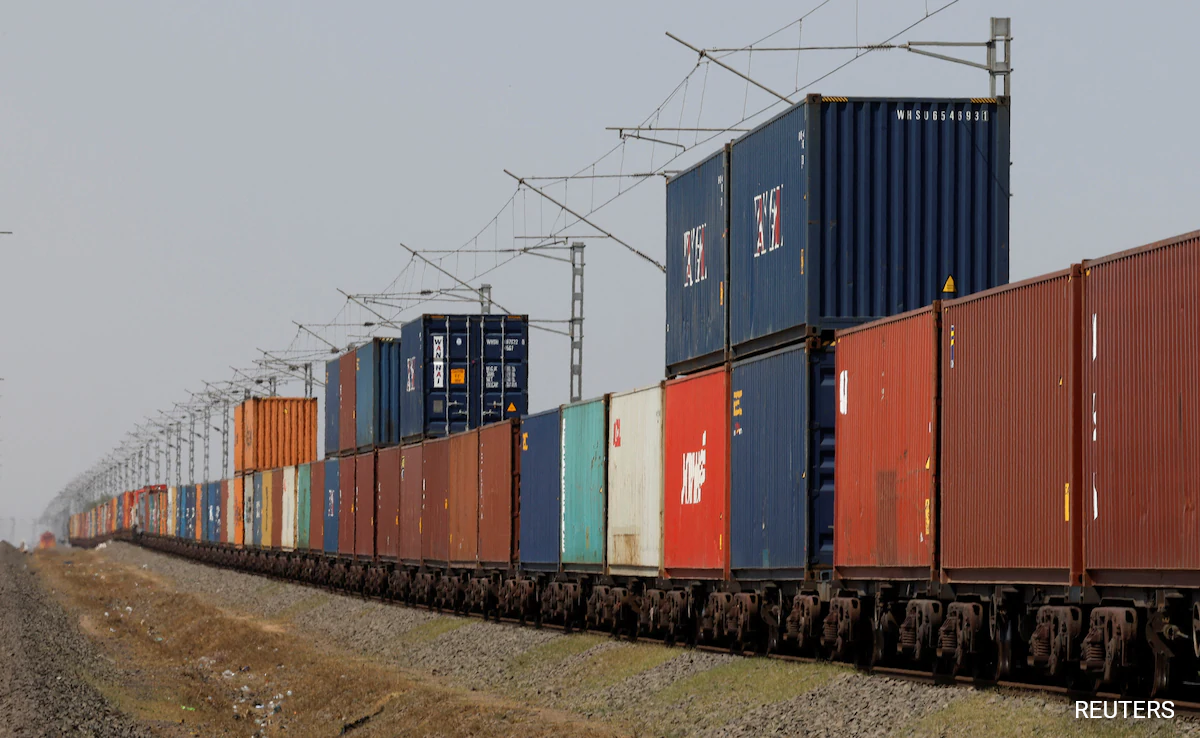
President Trump imposed additional 25% tariff on Indian imports on Wednesday
New Delhi:
The newly implemented 50% punitive tariff by US President Donald Trump on Indian imports threatens to undermine India's self-reliance initiatives under the Atmanirbhar Bharat program. This tariff action, reportedly connected to India's ongoing purchases of discounted Russian oil, could potentially weaken India's manufacturing competitiveness and reduce GDP growth by 0.3%, according to a recent Moody's Ratings analysis.
Despite these challenges, Moody's suggests that India's robust domestic demand and strong services sector will help cushion the economic impact.
"We estimate real GDP growth may decrease by approximately 0.3 percentage points compared to our current forecast of 6.3% for fiscal 2025-26 (ending March 2026). Nevertheless, strong domestic demand and a resilient services sector will help mitigate these pressures," the report stated.
The analysis highlighted that manufacturing will face significant challenges, particularly in high-value industries like electronics and textiles, due to diminished demand in US markets. The United States represents India's largest export destination, accounting for 18% of exports and 2.2% of GDP.
"Looking beyond 2025, the substantially wider tariff gap compared to other Asia-Pacific nations would significantly hamper India's manufacturing sector development ambitions, especially in higher value-added industries such as electronics, and might even reverse some recent gains in attracting related investments," Moody's further noted.
The ratings agency cautioned that reducing Russian oil imports to avoid tariff penalties could complicate India's efforts to secure sufficient alternative crude supplies. Moving away from discounted Russian crude might increase the import bill, expanding the current account deficit, particularly amid reduced tariff competitiveness that could discourage investment inflows. This situation could potentially trigger higher inflation and widen the current account deficit.
"We anticipate there will likely be a negotiated solution somewhere between the two scenarios outlined above," according to Moody's.
"The extent of growth impact from tariff barriers will influence government decisions regarding fiscal policy responses, though we expect the government will maintain its focus on gradual fiscal and debt consolidation."
However, Moody's emphasized that India's substantial foreign exchange reserves provide protection against external economic shocks.
Trump Tariffs And India's ResponseTrump imposed an additional 25% tariff on Indian goods on Wednesday, bringing the total tariff to 50% - significantly higher than those imposed on other Asia-Pacific nations. Moody's indicated that India's response will be crucial in determining the ultimate impact on growth, inflation, and external balances.
On Thursday, Indian Prime Minister Narendra Modi declared his readiness to "pay a very heavy price" to resist US attempts to dictate the country's trade policies, as India adopted a defiant stance following Trump's pressure tactics.
To minimize the US tariffs' impact on India's economy, the Reserve Bank of India (RBI) maintained its key rates unchanged as expected and preserved its "neutral" policy stance after a surprising 50-basis-point rate cut in June.
Global trade uncertainties, exacerbated by US tariffs, have already disrupted foreign investor confidence. Foreign portfolio investors have divested $900 million in Indian equities during August so far, following $2 billion in outflows during July, according to Reuters reporting.
India's Russia ImportsIndia has dramatically increased Russian crude imports since 2022, benefiting from discounted prices as traditional buyers withdrew following Moscow's Ukraine invasion. Russian oil now constitutes 35.5% of India's total crude imports in 2024, up from merely 2.2% in 2021, with import expenditures rising to USD 56.8 billion from USD 2.8 billion during the same period. Only China purchased more Russian crude than India last year.
Affordable Russian oil has been instrumental in controlling India's inflation, currently at multi-year lows. Abandoning these purchases could potentially reverse this trend.
(With inputs from ANI and Reuters)