
Trump's Tariff On India To Do Little To Upset IPhone Manufacturing Plans
President Donald Trump's 25% tariffs on Indian goods will do little to slow the role of the Asian country as a key hub for manufacturing iPhones, even when it means more expensive smartphones for US consumers, analysts and industry executives said.
- Date & Time:
- |
- Views: 61
- |
- From: India News Bull
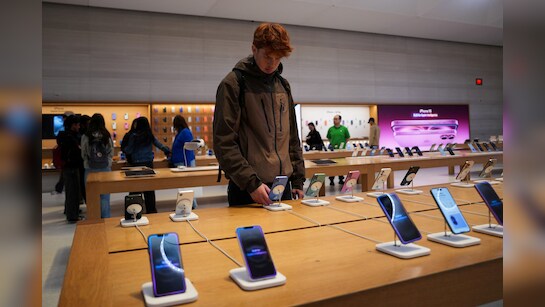
India remains pivotal in Apple's manufacturing diversification strategy beyond China.
Bengaluru:
Analysts and industry executives suggest that President Donald Trump's newly imposed 25 percent tariffs on Indian imports will hardly disrupt India's emerging role as a crucial iPhone manufacturing hub, though American consumers may face higher smartphone prices as a result.
Recent data shows Apple has strategically redirected its India-produced devices, with Foxconn's Indian facilities exporting nearly all of their $3.2 billion worth of iPhones to the United States between March and May.
An industry insider familiar with Apple's operations stated it's "too early to say" whether Trump's recent actions or future policy shifts would alter the company's manufacturing strategies in India. "These plans are developed with long-term perspectives in mind."
On Wednesday, Trump announced a 25 percent tariff on goods imported from India, effective Friday, causing concern across Indian industries, though some view this as merely a negotiation strategy.
India has become increasingly essential to Apple's manufacturing diversification efforts away from China, where geopolitical tensions have necessitated exploring alternative production bases.
According to Counterpoint Research, India-manufactured iPhones accounted for 71 percent of all iPhones sold in the US market between April and June, a significant increase from 31 percent during the same period last year, corresponding with decreased shipments from China.
Despite the new tariffs, analysts note that manufacturing iPhones in India remains cost-effective, with production expenses lower than when Apple initiated operations there eight years ago, substantially narrowing the cost difference with China.
Several factors have positioned India as one of the top two iPhone-producing countries alongside China, including growing availability of local components, government incentives, and labor costs approximately half those in China.
"Supply chain modifications, especially with new iPhone models approaching release, are improbable due to the complexity involved. Business continuity is expected, particularly with Apple's adaptable supply chain," explained Tarun Pathak, research director at Counterpoint.
Trump's FrustrationTrump has consistently criticized Apple for manufacturing US-bound iPhones overseas, threatening company-specific tariffs, though challenges including high costs, technological limitations, and legal complexities have prevented domestic production.
In May, Trump recounted telling Apple CEO Tim Cook: "we put up with all the plants you built in China for years ... we are not interested in you building in India, India can take care of themselves".
According to Faisal Kawoosa, chief analyst at Indian research firm Techarc, Apple would likely absorb the increased costs for US-sold iPhones rather than halt its expansion in India.
"Since US sales are predominantly operator-driven and included in service plans, this might mean adding a few extra dollars to monthly payments rather than imposing an immediate cost burden on consumers".