
Tariffs On India, Trade With Pakistan: Rewinding Latest Round Of Trump Deals
US President Donald Trump has announced 25 per cent tariffs on imports from India plus a "penalty", while his administration struck a deal with Pakistan in which Washington will work with Islamabad in developing the South Asian nation's oil reserves.
- Date & Time:
- |
- Views: 59
- |
- From: India News Bull
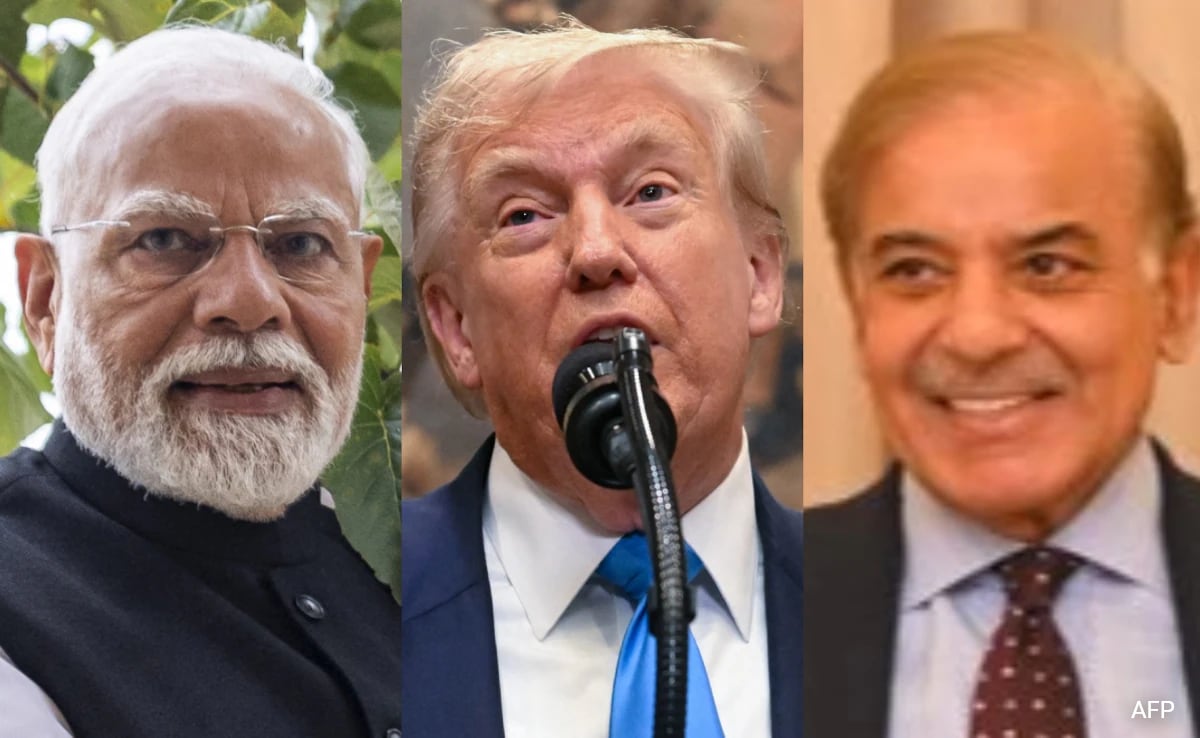
US President Trump announces hefty tariffs on Indian imports while securing oil development partnership with Pakistan.
Washington:
In a significant shift in trade relations, US President Donald Trump has declared a 25 percent tariff along with an additional "penalty" on imports from India, while simultaneously announcing a collaborative deal with Pakistan to develop their oil reserves.
Here Are Key Developments On US Trade Relations With India And Pakistan
On Wednesday, Trump revealed plans to impose 25 percent tariffs on Indian imports, coupled with an unspecified penalty citing India's purchase of Russian weapons and energy resources. Through his Truth Social platform, Trump stated these measures would take effect on August 1, alongside various other tariff increases—some reaching up to 50 percent.
In a subsequent statement, Trump described India as a "friend" and indicated that negotiations were ongoing between Washington and New Delhi. "They currently maintain one of the world's highest tariff rates, but they're willing to reduce it substantially...We're in discussions with India now - we'll see the outcome... The situation will be clearer by this week's end," Trump remarked.
"While India remains our friend, our business relations have been limited due to their excessively high tariffs, among the world's steepest, and their particularly stringent and troublesome non-monetary trade barriers...They have historically acquired most of their military equipment from Russia, and along with China, are Russia's largest energy purchaser at a time when there's international pressure for Russia to END THE CONFLICT IN UKRAINE - ALL FACTORS NOT CONDUCIVE to good relations," Trump posted on Truth Social.
The 25 percent tariff specifically targets India more severely than other major trading partners, potentially disrupting months of diplomatic discussions between the two nations, weakening a strategic Washington ally and potential counterweight to China. The White House had previously expressed concern about India's high average applied tariffs—nearly 39 percent on agricultural products—with rates reaching 45 percent on vegetable oils and approximately 50 percent on apples and corn.
In response, New Delhi stated it was analyzing the implications of Trump's announcements while remaining committed to achieving an equitable trade agreement with Washington. "India and the US have been engaged in negotiations on concluding a fair, balanced and mutually beneficial bilateral trade agreement over the last few months. We remain committed to that objective," the statement read.
Russia maintained its position as India's leading oil supplier during the first half of 2025, constituting 35 percent of total supplies. The United States, as the world's largest economy, currently faces a $45.7-billion trade deficit with India, the world's fifth largest economy.
Shortly after announcing the India tariffs, Trump revealed a deal with Pakistan to jointly develop its oil reserves. "We have just concluded a Deal with the Country of Pakistan, whereby Pakistan and the United States will work together on developing their massive Oil Reserves...We are in the process of choosing the Oil Company that will lead this Partnership," Trump shared on social media.
Washington's total goods trade with Islamabad was estimated at $7.3 billion in 2024, according to the Office of the US Trade Representative, an increase from approximately $6.9 billion in 2023. The US goods trade deficit with Pakistan reached $3 billion in 2024, representing a 5.2 percent increase over 2023.
The businessman-turned-politician provided no additional details regarding the Pakistan arrangement but made a pointed remark toward India, saying, "Who knows, maybe they'll be selling oil to India some day!" Washington has been working to strengthen relationships with Asian nations in recent years to counter China's growing regional influence. Pakistan holds the designation of "major non-NATO ally" from Washington.
Through his strategy of leveraging US economic power to pressure trading partners with tariffs and incentivize foreign companies to relocate to the United States, Trump has significantly disrupted the global economy. He has already announced preliminary deals with five countries—Britain, Vietnam, Japan, Indonesia, and the Philippines—as well as with the 27-member European Union.