
Opinion | Beyond Hesitations: Why The India-UK Trade Deal Is An Inflexion Point
For long, Indo-UK relations have been shadowed by the echoes of a colonial past. While that history must never be forgotten, it is crucial to acknowledge the evolving dynamics of a modern, democratic India and a globally engaged Britain.
- Date & Time:
- |
- Views: 90
- |
- From: India News Bull
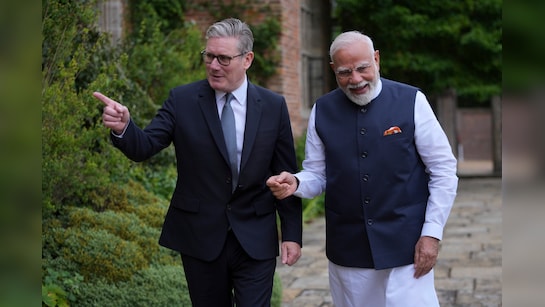
The recently concluded Comprehensive Economic and Trade Agreement (CETA) between India and the United Kingdom represents much more than a simple tariff reduction exercise. It stands as a genuine inflexion point - a strategic realignment that promises to transform the landscape of a historically significant yet often complicated relationship.
This momentous agreement, projected to nearly double bilateral trade to over $112 billion by 2030, extends beyond immediate economic advantages; it represents a profound statement about an evolving partnership and a vital investment in the prosperity and future opportunities for citizens of both nations.
Transcending Historical ContextFor decades, India-UK relations have been overshadowed by colonial history's persistent influence. While this past must be remembered, it's equally important to recognize the dynamics of contemporary India as a thriving democracy and Britain as a globally engaged nation. The CETA deliberately moves beyond historical constraints, establishing connections based on mutual respect, common values, and reciprocal economic benefits. It acknowledges India's rise as a global economic force and Britain's post-Brexit ambitions to create fresh, dynamic trade partnerships. Thus, this agreement represents not a vestige of history, but a framework for a forward-thinking, modern alliance.
Mutual BenefitsFor India, the agreement delivers unprecedented access to one of the world's most advanced economies. With 99% of Indian exports gaining duty-free entry to UK markets, industries such as textiles, leather goods, marine products, gems and jewellery, and engineering sectors will experience substantial growth. These labor-intensive sectors will not only see increased export volumes but also significant job creation across India. This powerfully supports the 'Make in India' initiative, enabling Indian manufacturers to compete more effectively globally and integrate more deeply into international supply chains. Indian farmers also stand to benefit from premium UK market access, with tariffs eliminated on 95% of agricultural and processed food exports, offering diversification opportunities and improved pricing. Additionally, the enhanced professional mobility for skilled Indian workers across 35 UK sectors for up to two years, without requiring a local office presence, represents a transformative development for India's services sector, promoting cross-cultural collaboration and knowledge exchange.
For the United Kingdom, the agreement provides substantial access to India's growing market of 1.4 billion people, with its expanding middle class and increasing disposable income. The significant reduction in India's traditionally high tariffs on key British exports like Scotch whisky, automobiles, and medical devices creates extensive opportunities for British businesses. The immediate halving of whisky duties, with further reductions to 40% planned over a decade, particularly benefits a flagship British industry - a point Prime Minister Keir Starmer was quick to highlight.
Similarly, the substantial tariff reduction on electric vehicles from 110% to 10% under specific quotas creates strategic opportunities for UK automotive manufacturers. Beyond physical goods, the agreement's comprehensive provisions on services and digital trade are essential for the UK's service-oriented economy, providing greater certainty and transparency for businesses. The commitment to streamlining customs procedures and reducing technical barriers will enhance trade efficiency, benefiting enterprises of all sizes, particularly small and medium-sized businesses.
Beyond Commercial ExchangeThe agreement's true significance extends beyond immediate economic gains, lying in its potential to cultivate a qualitatively superior relationship for future generations. By formalizing frameworks for cooperation beyond traditional trade - including innovation, research, climate action, and education - the CETA establishes a solid foundation for a truly comprehensive partnership. The 'Vision 2035' roadmap, established alongside the CETA, emphasizes collaboration in defense, technology, and green energy, recognizing shared strategic interests and global challenges facing both nations. Defence cooperation represents a new development and, considering the "hesitations of history," a particularly noteworthy advancement.
This holistic approach ensures the agreement's benefits will extend far beyond financial transactions, fostering deeper mutual understanding and shared progress.
Intergenerational ImpactFor young citizens of India and Britain, this agreement unveils a world of interconnected possibilities. Enhanced access to each other's markets will introduce greater variety in goods and services, potentially reducing consumer prices. It will stimulate cross-border investment, driving job creation and economic dynamism. Provisions for professional mobility and mutual qualification recognition will facilitate educational and career pathways, allowing future generations to learn from and contribute to each other's societies. The agreement will nurture collaboration in cutting-edge fields including artificial intelligence, clean energy, and healthcare, addressing global challenges through joint research and development.
Furthermore, the CETA's inclusion of progressive chapters addressing social and developmental issues, including labor rights, gender equality, and anti-corruption measures, establishes a new standard for India's trade negotiations. This commitment to ethical and sustainable trade practices underscores a shared vision for responsible globalization, presenting a positive precedent for future international agreements. It signals to coming generations that economic prosperity need not compromise social justice or environmental responsibility.
Legacy of PartnershipIn an increasingly divided and uncertain global landscape, the India-UK Trade Agreement stands as compelling evidence of the enduring value of international cooperation and open markets. It boldly demonstrates that nations with diverse historical backgrounds can forge new collaborative paths based on mutual benefit and shared aspirations.
Prime Minister Narendra Modi has emphasized the trade agreement's significance for future generations. Indeed, for young people, this agreement transcends being merely a trade deal; it represents an inheritance of expanded opportunities, deeper cultural understanding, and a more interconnected and prosperous world. It marks an inflexion point - truly, a turning of the page - toward a qualitatively superior and brighter shared future.
(Shashi Tharoor has been a Member of Parliament from Thiruvananthapuram, Kerala, since 2009. He is an author and a former diplomat.)
Disclaimer: These are the personal opinions of the author