
India Demands Bangladesh "Rein In Terrorists" After Tagore's Home Vandalised
India has strongly condemned the "despicable" and "disgraceful" act of violence and vandalism on poet, polymath, and Nobel laureate Rabindranath Tagore's ancestral home in Bangladesh, describing the perpetrators of the act as "terrorists".
- Date & Time:
- |
- Views: 64
- |
- From: India News Bull
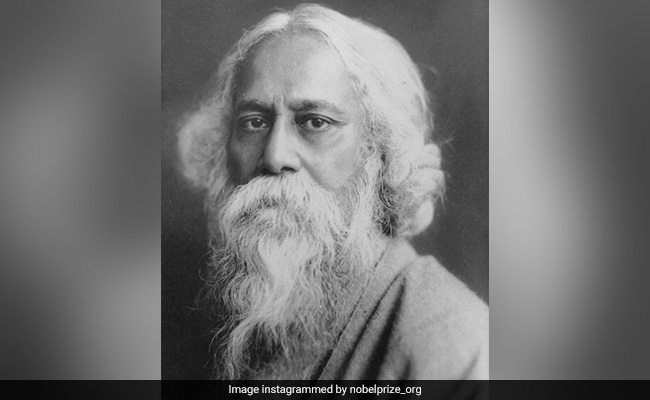
A mob vandalized Kutcherybari, the ancestral residence of Rabindranath Tagore in Bangladesh.
New Delhi:
India has vehemently denounced the "despicable" and "disgraceful" vandalism of Nobel laureate Rabindranath Tagore's ancestral home in Bangladesh, referring to those responsible as "terrorists".
On Sunday, a mob vandalized Kutcherybari, Tagore's ancestral home now preserved as a museum in Bangladesh's Sirajganj district. The incident began with a dispute between a visitor and museum staff over motorcycle parking fees. The visitor was allegedly detained and beaten during the altercation, which sparked public outrage. What started as a protest at the entrance escalated as a mob invaded the premises, causing significant damage to the museum and its auditorium.
'EXTREMISTS MAKING SYSTEMATIC ATTEMPTS'
India's Ministry of External Affairs expressed profound dismay over the incident. Spokesperson Randhir Jaiswal stated, "We strongly condemn the despicable attack and vandalism of the ancestral home of Gurudev Rabindranath Tagore by a mob on June 8, 2025," further noting that "The violent act is a disgrace to the memory, the inclusive philosophy, and the teachings that the Nobel laureate espoused in Bangladesh."
Attributing the incident to growing extremism in Bangladesh, Mr. Jaiswal remarked, "The attack falls in the broad pattern of systematic attempts made by extremists to erase the symbols of tolerance and eviscerate the syncretic culture and the cultural legacy of Bangladesh."
Characterizing the perpetrators as terrorists, Mr. Jaiswal urged the Yunus government "to rein in the terrorists and take strict action against the perpetrators in order to prevent the recurrence of such incidents that sadly have become a repetitive feature."
BANGLADESH'S RESPONSE TO THE INCIDENT
While Dhaka has not yet issued an official statement, Bangladeshi authorities have temporarily shuttered the museum and initiated an investigation. The Department of Archaeology has established a three-member committee tasked with submitting a report within five working days.
Md Habibur Rahman, curator of the Rabindra Kutcherybari museum, confirmed that the site is completely closed to visitors and the entire facility is under surveillance.
Meanwhile, the incident has triggered numerous reactions from India.
INDIA EXPRESSES OUTRAGE
Uttarakhand Chief Minister Pushkar Singh Dhami posted on X, calling the incident "Shocking and Unacceptable," occurring "under the silent gaze of Mohammad Yunus's government." He described it as "far beyond mere vandalism. It is a premeditated hate crime, an attack on the civilizational spirit and cultural heritage of Bharat."
He added, "Tagore is a global figure, but he remains a treasured symbol of India's soul. What we are witnessing is the ongoing marginalisation of Hindu Bengalis in Bangladesh, their identity, history, and legacy being systematically eroded. The international community cannot afford to remain indifferent. This is a moment that demands attention, condemnation, and action."
West Bengal Chief Minister Mamata Banerjee, shocked by the incident, wrote to Prime Minister Narendra Modi urging him to "kindly take up the matter very strongly with the neighbouring country's government, so that no stone is left unturned to swiftly bring to justice the perpetrators of this heinous and mindless act."
In her letter, Ms. Banerjee emphasized that "For the people of Bengal, this is an attack on a shared legacy," and that "the invaluable treasure of Bengali language and literature owes significantly to the majestic contributions of Tagore."
Rabindra Kutcherybari, now known as the Rabindra Memorial Museum, served as the administrative hub for the Tagore family estate. Acquired in 1840 by Dwarkanath Tagore, Rabindranath's grandfather, for 13 rupees and 10 annas at an auction, this property was designated a protected archaeological site in 1969. Built in distinctive Indo-European architectural style, the house features seven main rooms, spacious corridors, and an expansive garden. It overlooks a river and is surrounded by open fields and verdant landscapes.
The damaged auditorium, with 500 seats, regularly hosts numerous literary and cultural events, including the annual Rabindra Festival.
(Editorial contribution by Anjali Kumari Jha)