
Trump Transforms G-20 Summit: Exclusive Miami Golf Resort Gathering Sparks International Controversy
- Date & Time:
- |
- Views: 78
- |
- From: India News Bull
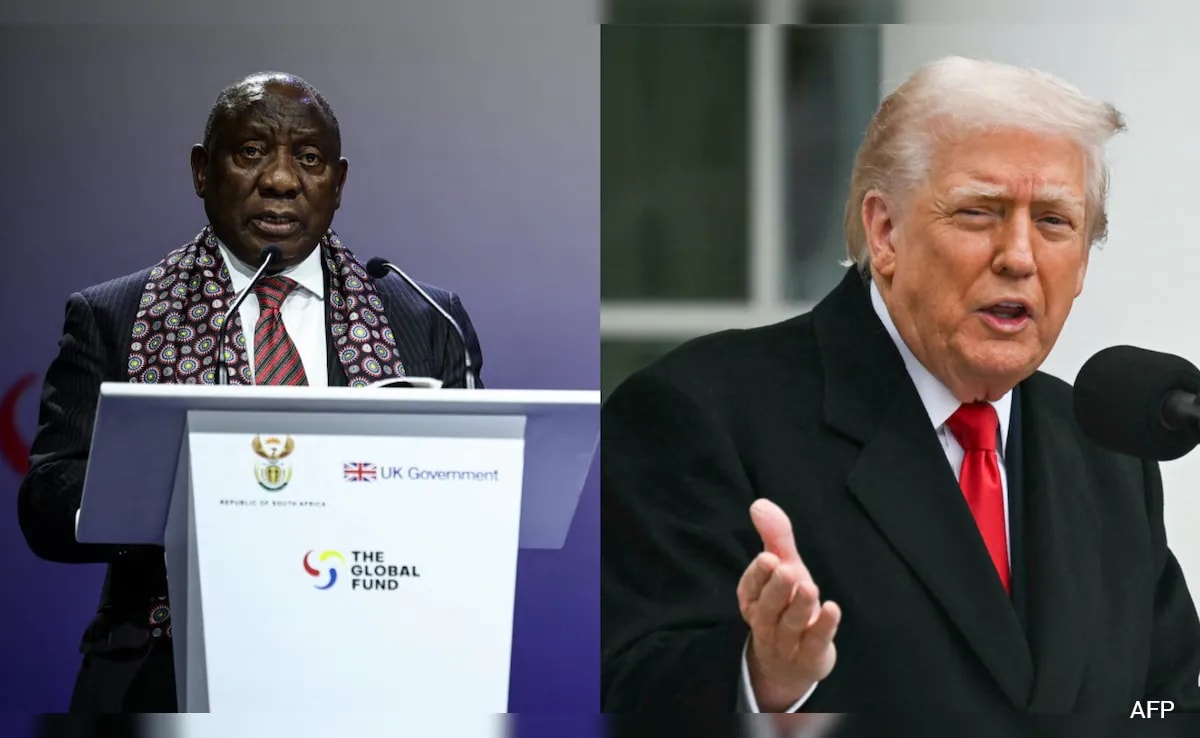
Donald Trump has announced his intention to host the Group of 20 summit at his private golf resort in Miami next year, where he will personally determine the attendee list.
The US president made his position clear in a Wednesday social media statement, declaring that South Africa—the current G-20 presidency holder—would not receive an invitation. This unprecedented move breaks with established protocol where summit participation is determined by group membership rather than host preference.
Hosting the prestigious event at his own property while selectively excluding established members represents a significant departure from diplomatic norms, yet aligns with Trump's demonstrated disregard for conventional multilateral frameworks.
This situation creates a dilemma for other G-20 nations: attend despite the controversy or boycott in solidarity with South Africa and potentially face economic retaliation through trade tariffs, technology restrictions, or other punitive measures.
German Chancellor Friedrich Merz criticized the approach on Thursday, stating, "This is one of the most important multilateral forums we still have in the world," and a format that "we should not diminish unnecessarily." Merz added that by boycotting the recent Johannesburg summit, "the American government unnecessarily relinquished influence, including in a part of the world that is becoming increasingly important."
South African officials had anticipated this exclusion from the Trump National Doral Golf Club event but remain concerned about potentially being removed from the group entirely. However, any membership changes would require consensus among all G-20 members, similar to the process that admitted the African Union as a full member before the 2023 India summit.
Trump's decision escalates an ongoing feud with President Cyril Ramaphosa, fueled by Trump's unsubstantiated claims that South Africa is committing genocide against White Afrikaners. When Ramaphosa visited the White House in May attempting to address these allegations, he was instead confronted with a video montage promoting these theories.
This treatment of Africa's largest industrialized economy—and the first African G-20 host—exemplifies Trump's willingness to leverage America's global position for domestic political advantage.
Ramaphosa's office released a statement describing Trump's comments as "regrettable," asserting that South Africa "does not appreciate insults from another country about its worth in participating in global platforms."
The diplomatic fallout may benefit America's rivals. By undermining relationships with Global South nations, Trump risks strengthening China and Russia's position—fellow BRICS members that Trump has labeled as anti-American.
C. Raja Mohan, distinguished professor at India's Institute of American Studies, observed: "This bullying of major non-western states makes the task of China and Russia easier in winning wider support in the Global South. There is nothing to suggest that Trump is eager to reclaim a leadership position in the Global South."
While the enforcement mechanism for Trump's exclusions remains unclear, the State Department could potentially deny visas to officials from unwelcome nations.
This approach reflects Trump's broader vision to reshape global institutions according to his preferences, with little consideration for established diplomatic procedures or other governments' concerns.
Just last week, the US suggested potentially inviting Russia back to reconstitute the former Group of Eight as part of a proposed Ukraine peace plan, surprising Kyiv and its allies. Russia had been expelled in 2014 following its annexation of Crimea, transforming the G-8 into the current G-7.
Trump's selective approach may benefit certain nations, such as Poland, which has long sought G-20 membership. In September, Trump extended an invitation to Poland's new right-wing nationalist president, Karol Nawrocki, to attend the Miami summit in an unspecified capacity.
Poland's economic growth—surpassing $1 trillion this year—and substantial defense spending on American weaponry have earned Washington's approval. President Nawrocki's preference for stronger US ties over European relationships aligns with Trump's vision, contrasting with Prime Minister Donald Tusk's long-standing criticism of Trump.
"Poland has been great, and the man who won the election is fantastic," Trump told GB News this month.
Ziyanda Stuurman, a Cape Town-based geopolitical risk analyst, predicts that Trump's dismissive treatment of established partners foreshadows a "combative and uncooperative stance" during the US presidency.
She anticipates that the US will use its chairmanship to dismantle previous progress on climate, health, and equality initiatives. Trump's G-20 events "are unlikely to be framed or conducted as meetings between equals, but rather as a platform to showcase what the US believes to be the group's limited utility for its own ends."
Bill Emmott, author of "The Fate of the West" and former editor of The Economist, warns of an even more concerning scenario where multilateralism is abandoned in favor of a world dominated by Trump and Chinese leader Xi Jinping. With Trump scheduled to visit China and meet Xi in April during his G-20 presidency, Emmott describes Trump's America as "a coercive ex-partner that we cannot live without," adding that "our even bigger nightmare would be if he turned out to favor a G-2 world, one in which far from fighting each other, the US and China decided to carve the world up between them."
Source: https://www.ndtv.com/world-news/trumps-g-20-at-his-miami-golf-resort-will-be-an-invite-only-event-9715233