
Afghan Refugees Face Uncertain Future as US Suspends Visa Processing After DC Shooting Incident
- Date & Time:
- |
- Views: 41
- |
- From: India News Bull
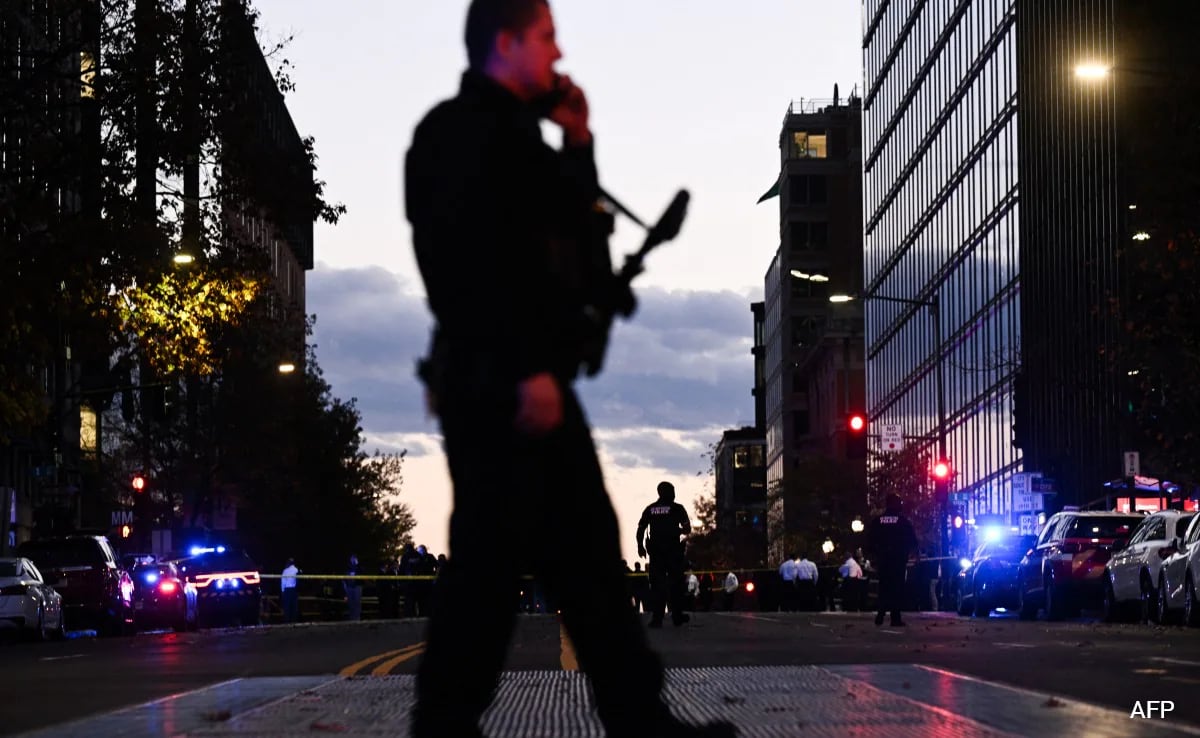
A law enforcement officer stands at the crime scene of a shooting incident in downtown Washington, DC, Thursday.
Afghans who have escaped Taliban rule and have been waiting for years on US resettlement decisions report that their final avenue to safety has been blocked after Washington suspended all Afghan immigration cases following a shooting incident near the White House.
The US Citizenship and Immigration Services (USCIS) announced late Wednesday an indefinite halt to processing applications for Afghan nationals, shortly after an Afghan individual shot and critically wounded two National Guard soldiers in Washington.
President Donald Trump described the attack as "an act of terror" and ordered a comprehensive review of Afghans who entered the United States during Joe Biden's administration.
For the thousands of Afghans currently taking refuge in Pakistan while awaiting US resettlement decisions, this announcement felt like the closure of their last remaining path to safety.
'RETURNING HOME MEANS FACING ARREST OR DEATH'
Ahmad Samim Naimi, a 34-year-old from Afghanistan's Panjshir province who previously worked as a television presenter and press adviser under the former US-backed government, expressed profound distress upon hearing the news.
"I was deeply distressed when I heard this news. We have completed all the required review procedures," said Naimi, who fled to Pakistan after the Taliban began targeting journalists and former government employees.
"If I go back, one day you will certainly hear news of either my arrest or my death," he added.
Remaining in Pakistan has become increasingly challenging as authorities have intensified their crackdown on Afghans without formal refugee status. Pakistan has deported over half a million Afghans in the past year and stepped up detentions in major urban centers. Even Afghans with valid visas or UNHCR documentation have faced harassment at checkpoints, eviction from homes, or demands for bribes.
Pakistan's information and interior ministries did not immediately respond to requests for comment. Similarly, Afghanistan's refugee and foreign affairs ministries offered no immediate response. Taliban authorities have previously maintained that Afghanistan is now peaceful and safe for citizens to return.
'FACING DESTRUCTION RISK'
Human rights organizations report that former government officials, journalists, military personnel, and individuals with connections to Western forces face detention, disappearance, or execution under Taliban governance. Women additionally face extensive restrictions on movement, employment, and education.
A 40-year-old former civil servant from Kabul, who requested anonymity for security reasons, described how the visa processing freeze had destroyed everything he had built his family's future around.
"I cannot put myself and my family at risk of destruction," he stated regarding the prospect of returning to Afghanistan.
ONE INCIDENT CLOSES DOORS FOR THOUSANDS
During America's longest war, US forces and aid organizations employed thousands of Afghans as interpreters and local staff. This ended when the Taliban seized power in 2021.
Following the withdrawal from Kabul, the Biden administration established Operation Allies Welcome to provide refuge to Afghans facing particular risk of persecution due to their association with the United States.
However, lengthy waiting periods have persisted, even for those granted priority treatment—"P1" for individuals who worked directly for the US government and "P2" for those who worked on US-funded projects or for media, aid, or civil society organizations.
Officials identified the suspected Washington shooter as Rahmanullah Lakanwal, 29, who arrived under Operation Allies Welcome and received asylum earlier this year. Authorities report he served in the Afghan army and had no criminal history.
Shawn VanDiver, president of AfghanEvac, a volunteer organization helping Afghans who assisted US forces, noted that approximately 200,000 Afghans have arrived in the United States since 2021 through refugee and special visa programs after thorough vetting.
"These folks don't deserve this—they're just trying to get their shot at the American dream," he said. "This is going to cause a lot of harm across the Afghan community in the United States."
VanDiver indicated that another 265,000 Afghans remain in processing abroad, including about 180,000 in the Special Immigrant Visa pipeline for those who worked for the US government. Many wait in countries such as Pakistan, Qatar, and North Macedonia, while others remain inside Afghanistan.
Naimi expressed continued hope that Washington would reconsider: "I hope that the United States will reconsider the cases of those with P1 and P2 status and restart the process."
Source: https://www.ndtv.com/world-news/afghans-say-last-path-to-safety-shut-as-us-halts-visas-after-dc-shooting-9713057